As I have said several times now, there is simply no need for a control line for the clouds, They are already well figured with plenty of detail and contrasts.
Especially when it is totally superfluous to requirements.
As I have said several times now, there is simply no need for a control line for the clouds, They are already well figured with plenty of detail and contrasts.
Especially when it is totally superfluous to requirements.
I guess I’ve been trying to find a solution which is searching for a problem.
Time to shift gears.
…but thanks for all the helpful advice!!
I’ll go along with that last part - Photography - use an adequate camera, learn how to use it, compose an image in the viewfinder and capture it at the proper moment. Edit if as desired.
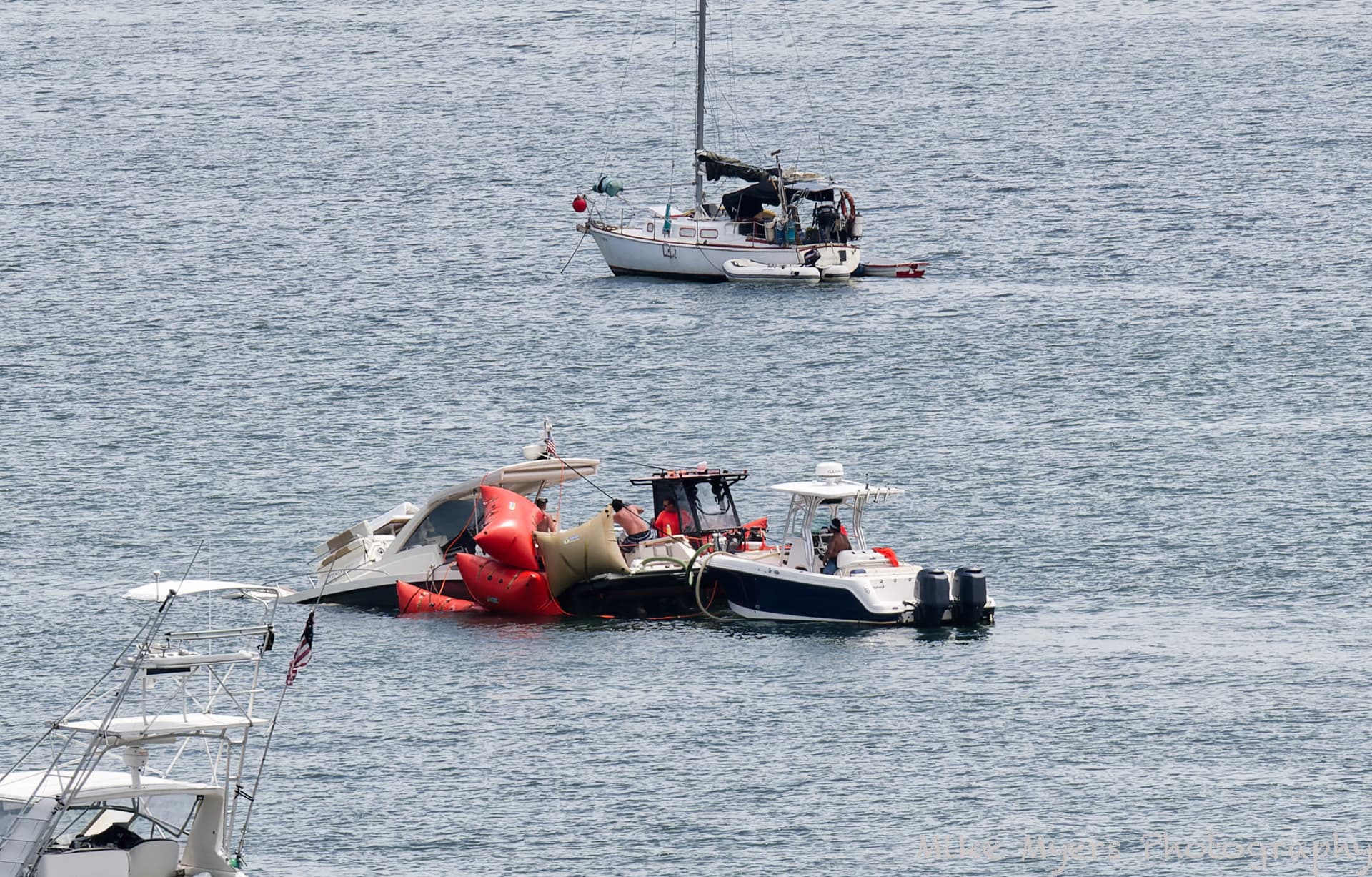
I did use PhotoLab to edit these three photos, but the action was far too far away to get good photos. One of the boats in Biscayne Bay near my home sank, and the workers raised it using huge orange “balloons”, hosed it off, checked it over, and a tow boat came to tow it back to a place where it could be fixed.
Here are the three images that show the highlights:
…reminds me of what I used to do, sending the images off for publication.
Now, if I only had a 2,000mm lens… 
You would probably had sharpness issue 
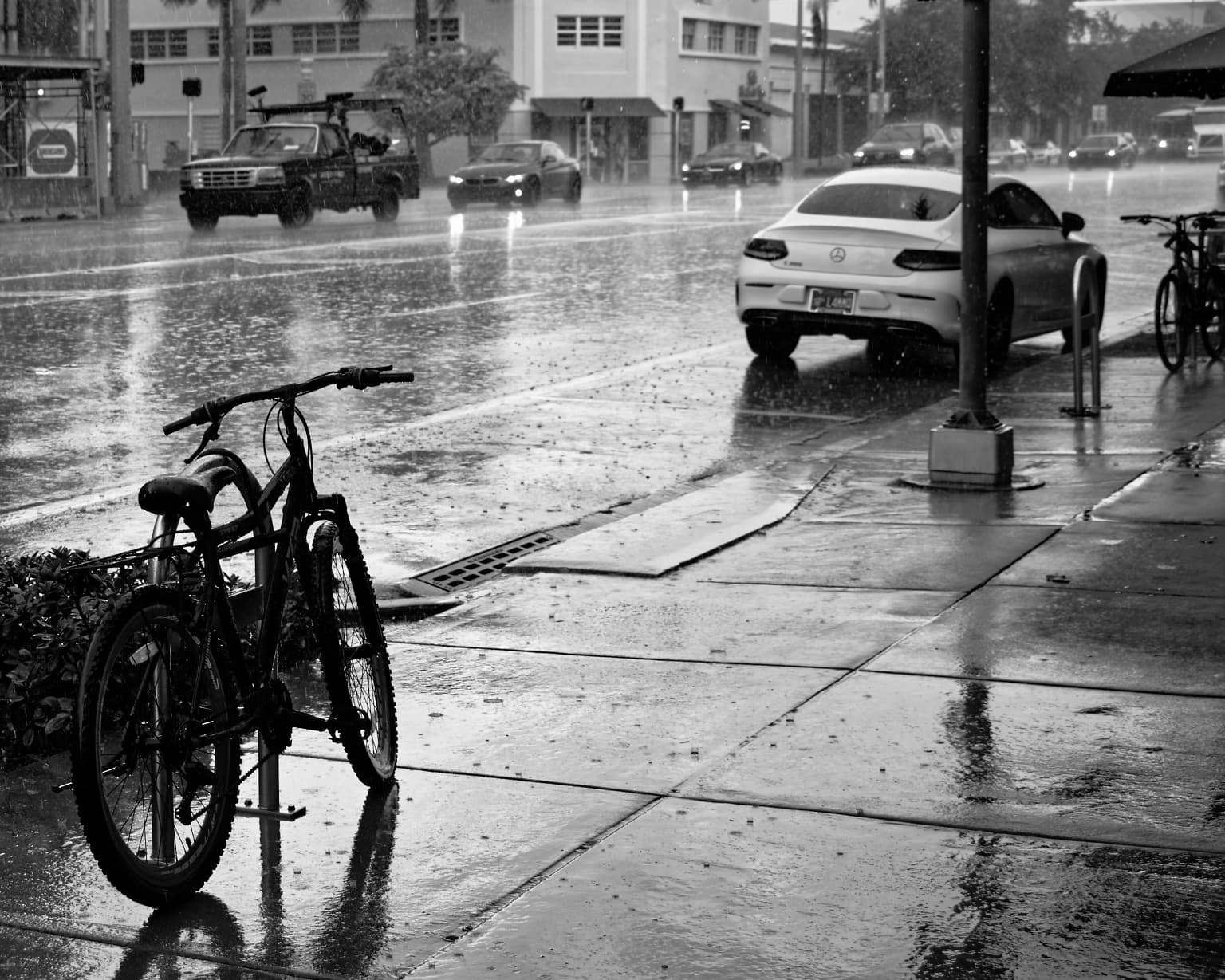
I like that more than my (limited) color version.
B&W works great.
The 4x5 - not sure how to express it, but yes - that works better too.
But for the white car, it could pass for a very old image.
Without color, it is far more effective.
4x5, 5x7, 8x10, 16x20… Those numbers used to be a big part of my life.
It took forever until I got trays for 16x20, and mistakes were expensive!!
I was thinking about what you wrote, and why this is has been such a problem with my Nikon Df. That led to an interesting discovery last night.
I bought the Df used, as an “open box sale” several years ago. The viewfinder didn’t look right, and after a lot of reading, I found out that someone had replaced the standard viewfinder with a “magnifying viewfinder”. I didn’t understand the details back then, but this is what was in the camera:
Nikon DK-17M Review
More info:
https://www.robertotoole.com/blog/2012/06/07/nikon-dk-17m
It appeared damaged, so B&H sent me a replacement - also a “DK-17m”.
I wear glasses, and I have been struggling to see the edges of the image. If I remove my glasses, things are better, but not still not good. In all the reading I did last night, I found one article that explained the trade-off for a magnified view is that I need to move my head around to see the edges of the image.
Anyway, thank you for writing what you did - I did a lot more reading last night, and found that the same DK-17 is used in most of my cameras, D2x, D3, and so on. So I unscrewed the DK-17 from my D2x, and screwed it into my Df (after a good cleaning!). Problem solved - my eye feels like it is half an inch closer to the camera, and the full image, along with edges, is easily visible while wearing glasses.
To me, it’s more important that I see the whole image, than it is to get a magnified view (which apparently is most useful for manually focusing lenses).
I feel rather stupid now for not having figured this out many years ago. For $15 I could have bought the standard viewfinder, and screwed it into the camera. Live and learn…
Candid photography was one of my favourite types of photography. With the experience gained you can find after all, you are able to get closer to a person/s and they eventually ignore you and carry on doing what they were doing then the picture opportunity will re-present itself.
In answer to your question of what do you gain by perfectly filling the viewfinder. Greater detail and definition.
In reply to your latest posting I am glad I have been able to help in some way. In all the years that I have been teaching and coaching. I have always found it much better to make suggestions rather than try and force one’s knowledge on to somebody.
Most of the time though, I have no excuse. If I’m more careful in keeping the camera level, this is a non-issue. Yesterday’s shot during the rain is an example of doing it correctly, as I was very aware of what was in the picture, and what was excluded, and that the camera was level. With what I’ll call “action photos”, I usually don’t have the time, so I make sure I have a little “space” around what I want to capture.
For images I really care about, as in composition, timing, and all the rest, I try to do just what you suggest - which left me feeling frustrated about why I couldn’t see the full frame in my Df. I have no such problems with my D780, or for that matter with my old D750 or D3, or D2, or my old film cameras.
(…and what you suggest is so true of my rangefinder cameras, as the viewfinder just gives me a rough idea of what will be in my captured image.)
Considering the cost of sheet film, and the lovely viewing screen in large format photography, I imagine Joanna doesn’t release the shutter until both everything in the image is perfect, and if timing is involved, at just the right moment.
Because of all my experience at “sports photography”, I decided to “shoot first, and think later”, and do it enough so it should be right in at least some of my images.
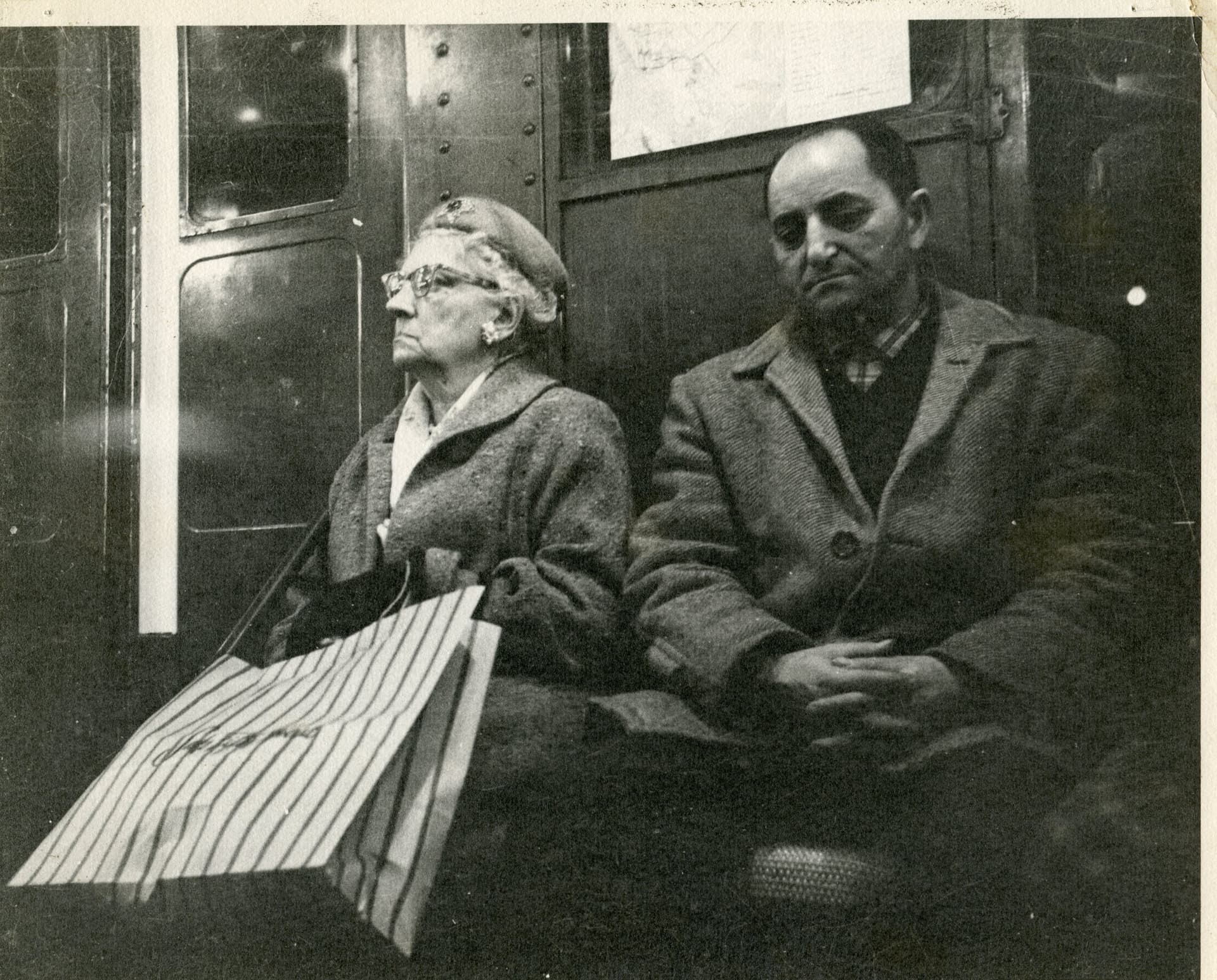
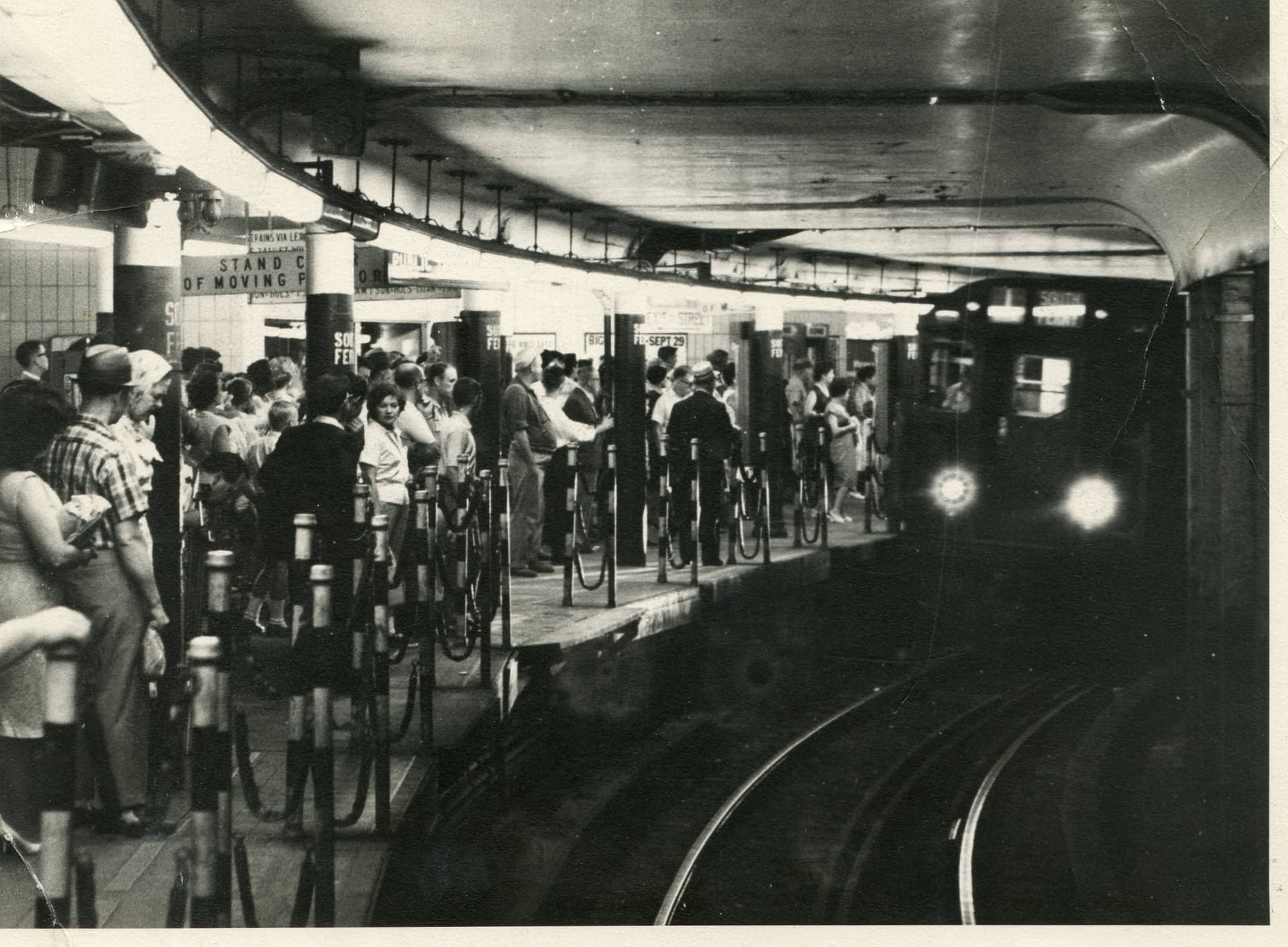
Something else I find very difficult. I used to enjoy taking photos in the New York subways, with my camera in my lap, and me looking at the reflection in the window along side of me… In the subway, the shutter sound was drowned out by the noise, and I pretended I was just playing with the camera, never looking through the viewfinder.
I think both those photos were taken with my old Contax II, probably with Plus-X film.
I like the first one and it certainly looks like plus X. I always felt plus X was just a little too contrasty for me that is why I mainly used Panatomic X and Tri x and I used to print on Agfa Brovira papers.
I’m not sure if I understand what you mean, but to me it sounds like viewing a scene, and emphasizing the things about that scene that fascinated me. It doesn’t even need to be a photo “of” something, but how my brain becomes aware of all the bits and pieces, and tries to capture the “feeling” in a photograph.
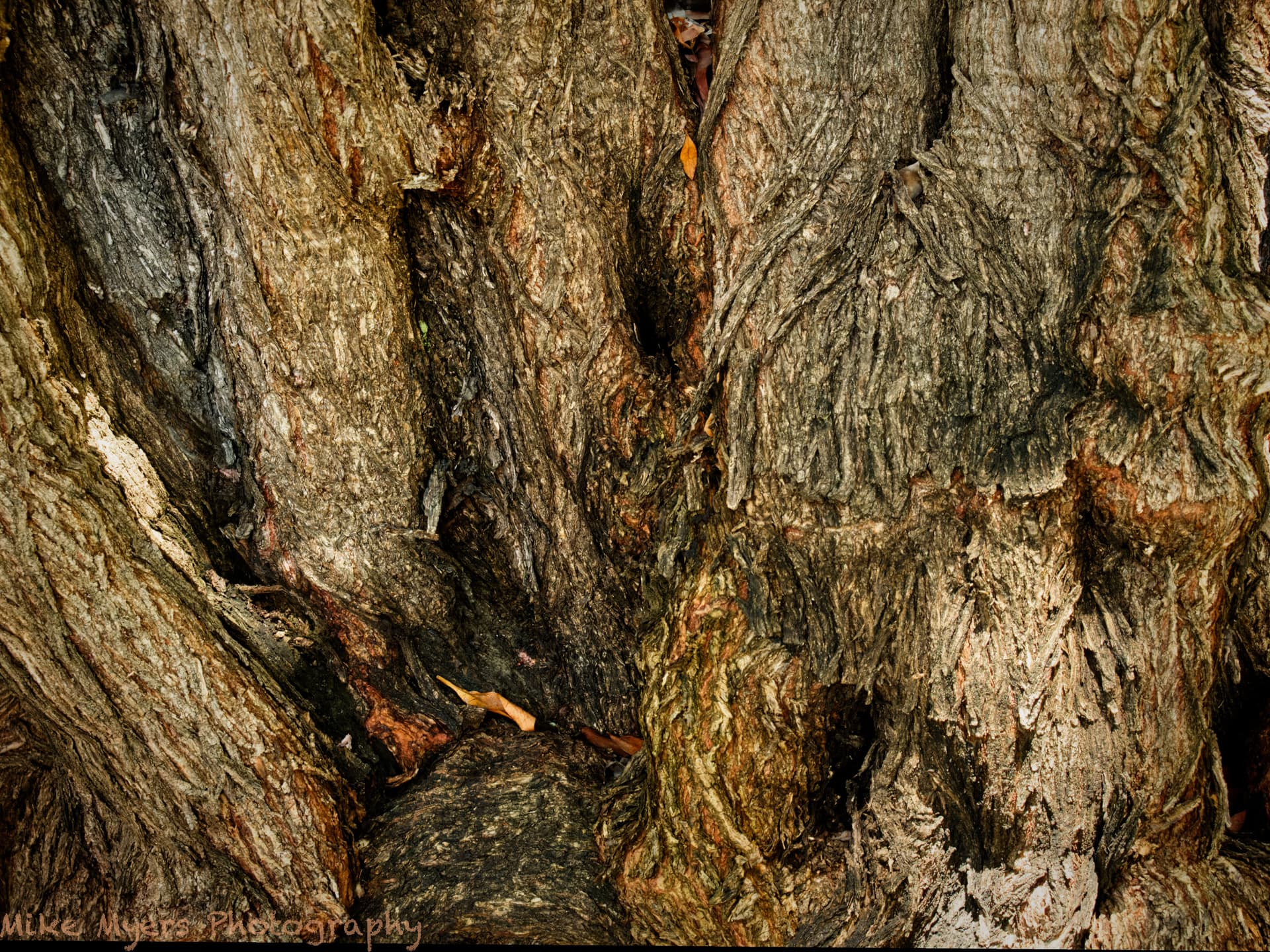
The other day, before I was overwhelmed by my friendly squirrel, I was walking home from the food store, and since it was still morning, the lighting on several huge trees I was walking by was very different from when I used to take photos of them later in the day. I set my food bags on the ground, and tried to capture what I felt, while looking at three of the most interesting trees. This photo fascinated me, because of the colors, the texture, the shapes, and a few colorful leaves that were caught in the tree.
Most people I know would say it’s just a boring photo of a tree, what’s the big deal? For reasons I can’t explain, I find pictures like this as fascinating, as I think most people here see “art”. To me, it’s beautiful - and the photo below was the best I could do to capture what I saw in a photograph.
I was able to use all the tools I needed in PhotoLab to dial in an image that represents what I felt. I’ve got photos of the other two trees, but I think this one is the best.
DF1_3215 | 2023-06-29.nef (34.2 MB)
DF1_3215 | 2023-06-29.nef.dop (14.6 KB)
This is where conceptual thinking and understanding of 1000 year history of composition, lighting etc matters. I like it because I like it, is not enough. You can take the picture of anything you want and make it work, but learn the rules like a professional first, so you can break or bend them as an artists.
Otherwise, every snapshot would be equal to another one. And yet it is not the case is it. Clearly, there are better and worse ones.
“There are three classes of people: those who see. Those who see when they are shown. Those who do not see.” ~Leonardo da Vinci
I guess I’m a mixture of all three of these.
My Nikon Df is a simple example.
A week ago, I thought I understood it.
Over the past several days, reading a lot, watching instructional videos, and testing it, I thought I understood it very well.
Then I went to DxO Mark to read about its capabilities, and realized how little I still knew.
Or, let’s consider this forum. When I post an image here, I usually think I understand what it is, why I edited it the way I did, and whether or not I got the result I wanted. Then Joanna or someone else points out things I was oblivious to. Then, the next night, I try to improve on what I did before, based on what I thought I had learned, and maybe it doesn’t work - meaning I thought I understood, but didn’t really.
My goal here (besides learning new things) is to show how I learned how to do something reasonably well…but then I find out there is more to learn…so I try again.
It’s good for me, as I’m learning, just as I did in the classes I attended over the years. But it’s also bad for me, as I come to realize I’ll never be as good as what I want to be.
I could challenge Arnold Schwarzenegger to a wrestling match, and no matter how long I worked at it, or how much I practiced, or how many tutors or coaches I worked with, it would take him less than five seconds to put an end to such a foolish idea.
I could spend 24/7 trying to be the best photographer possible, but I would never have all the past history and experience of someone like Joanna.
So, I just do the best I can with what I’ve got, and try to continue learning and getting more experience.
I don’t need to be another Michelangelo; I just need to be able to express myself in ways that people around me will understand, and in ways that satisfy me, even if others don’t understand.
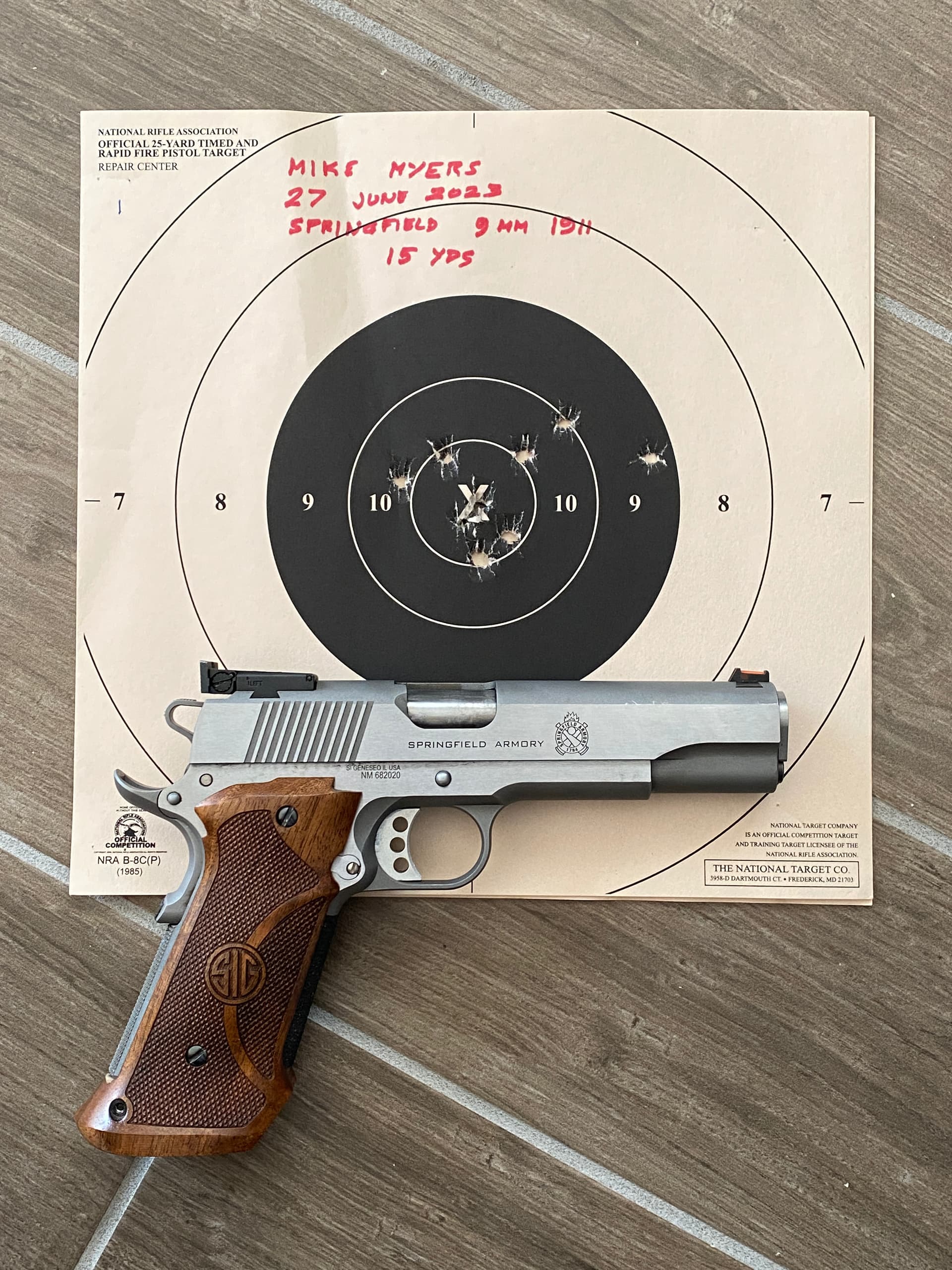
…or, my other main hobby, I can go to the Bullseye Shooting Range with a 1911 handgun, and place five rounds into a grouping around 5" diameter. Better than most people can do, but the really good shooters can put those five rounds into a two inch diameter group. I’m happy with what I can already do, but want to get better - just like with photography.
Obviously, your handling of Colt and precision shooting is impressive. Also obviously you are not using it under battle conditions and under stress of such conditions, so there is always another level above. I mean, you are not under intense shelling at the battle of Bakhmut / Artemivsk when you are using your skills, nor I think anyone should be. But there is always that extra level of difficulty. So better we don’t get all complacent.
Its important to be confident with what we can prove what we are good at, but also open minded and open to learning. Most people though are a lot like what Churchill said.“I love learning, but hate being taught.” Which is natural self deference mechanize.
In this forum sometimes I feel, when you are confused about someone advising something, you retreat to the safe zone of talking points like what camera you have , what you wanted or didn’t wanted etc Or you say; I could never be this good etc. It can become self fulfilling prophecy. Because those who think they can and those who think they can’t are both right. aren’t they?
See what I mean?
I’ve suggested before, that you should focus on the basic principles and think more conceptually. But that alone seem to be something you are struggling with. Thinking conceptually or in principles.
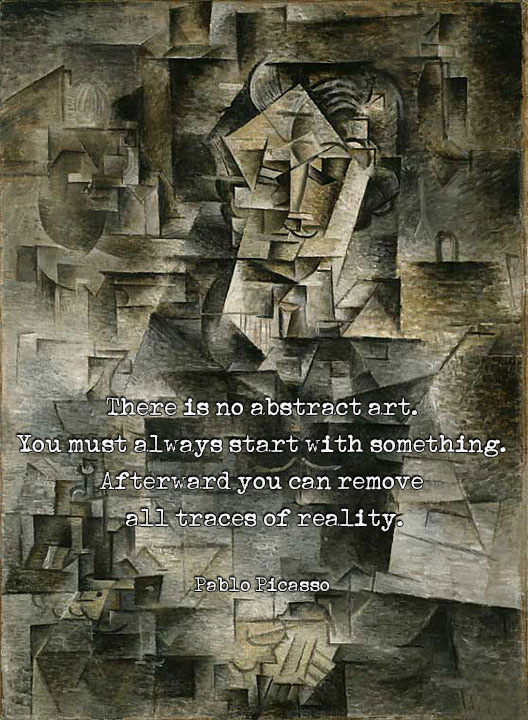
Here is a good example. I’m no fan of cubism, but it serves to make my point.
“Cubism is no different from any other school of painting. The same principles and the same elements are common to all. The fact that for a long time cubism has not been understood and that even today there are people who cannot see anything in it, means nothing. I do not read English, and an English book is a blank to me. This does not mean that the English language does not exist, and why should I blame anyone but myself if I cannot understand what I know nothing about?” - Picasso on Cubism
What cubism represents is an attempt to do two things. One was to escape the threat of photography. Once Picasso saw a young 13 your old girl using a camera to capture a photo, he felt there needs to be something new done in world of painting that camera cannot capture.
One of his attempts along with co founder of cubism, was attempt to paint the impossible. To paint the object from all perspectives all at once. Result was in a nutshell cubism. Like I said, I do not like the style myself, but because I can think in principles and conceptually, it has though me an important lesson about thinking outside the box.
Most people learn the rules and are afraid to deviate from the beaten path, therefore remain followers. Others think they know everything, their ego preventing them from seeing that everyone knows more than them. They often surround themselves with the YES men, in order to protect and maintain this fiction. But the true leaders and innovators.
Exceptions exists for the exceptional.
“Learn the rules like a pro, so you can break them like an artist.” ― Pablo Picasso
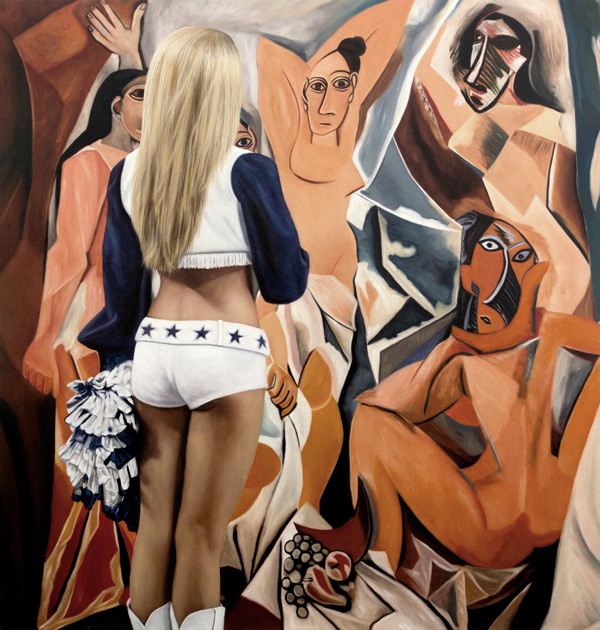
Les Demoiselles d’Avignon (The Young Ladies of Avignon, and originally titled The Brothel of Avignon) is a large oil painting created in 1907 by the Spanish artist Pablo Picasso (1881–1973). The work portrays five nude female prostitutes from a brothel on Carrer d’Avinyó (Avinyó Street) in Barcelona. Each figure is depicted in a disconcerting confrontational manner and none are conventionally feminine. The women appear as slightly menacing and rendered with angular and disjointed body shapes. Three figures on the left exhibit facial features in the Iberian style of Picasso’s native Spain, while the two on the right are shown with African mask-like features. The racial primitivism evoked in these masks, according to Picasso, moved him to “liberate an utterly original artistic style of compelling, even savage force.”
In this adaptation of Primitivism and abandonment of perspective in favor of a flat, two-dimensional picture plane, Picasso makes a radical departure from traditional European painting. This proto-Cubist work is widely considered to be seminal in the early development of both Cubism and Modern art. Les Demoiselles was revolutionary and controversial, and led to wide anger and disagreement, even amongst his closest associates and friends. Matisse considered the work something of a bad joke, yet indirectly reacted to it in his 1908 Bathers with a Turtle. Braque too initially disliked the painting, yet perhaps more than anyone else, studied the work in great detail. And effectively, his subsequent friendship and collaboration with Picasso led to the Cubist revolution
Before you learn the tricks of the trade, learn the trade. - Banti Singh
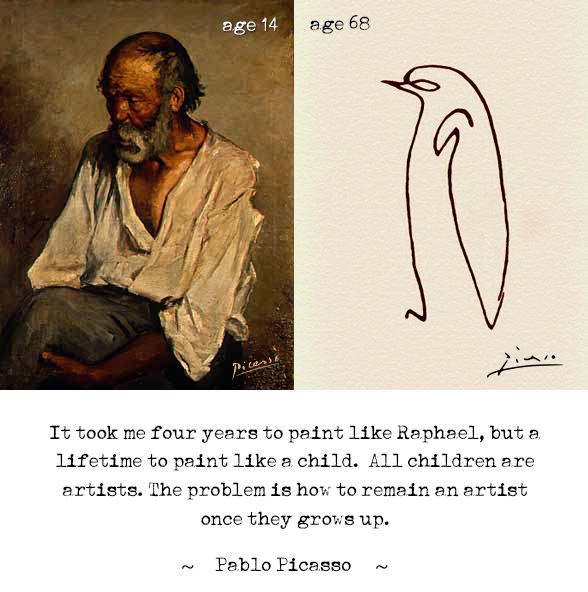
It took me four years to paint like Raphael, but a lifetime to paint like a child.
Pablo Picasso
“The natural inclination of a child is to take pleasure in the use of the mind no less than of the body. The child’s primary business is learning. It is also the primary entertainment. To retain that orientation into adulthood, so that consciousness is not a burden but a joy, is the mark of the successfully developed human being.” ― Nathaniel Branden
“What a genius, that Picasso. It is a pity he doesn’t paint.”
― Marc Chagall (1887-1985), French Painter, Illustrator
Before cubism, impressionism was similar movement that as the name suggests tried to paint the impression they had of the thing itself.
As Claude Monet (1840–1926), founder of French Impressionist painting movement. would say:
“I would like to paint the way a bird sings.”
“I want to paint the air in which the bridge, the house and the boat are to be found - the beauty of the air around them, and that is nothing less than the impossible.” he said.
Growing older he was losing his eyesight, so he painted blurry as the impression he had of the world. He bought himself a pond and he painted impressions of the pond.
Now many come to see his world famous water lilies.
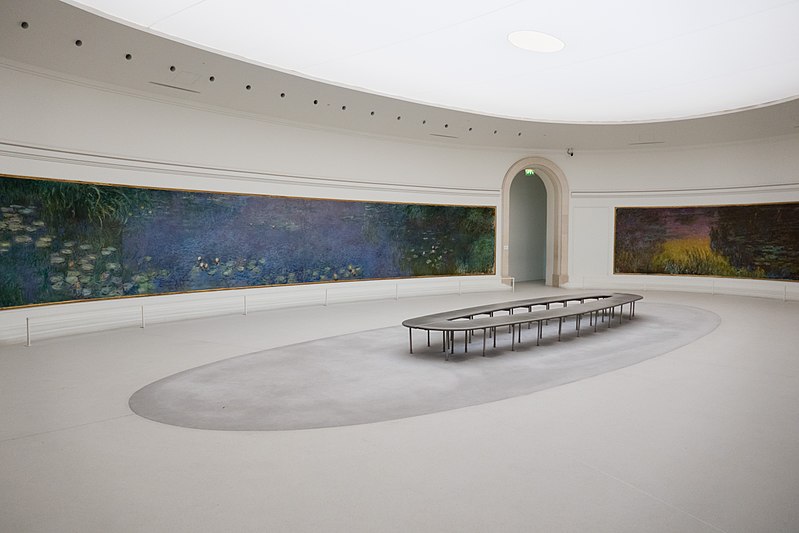
Water Lilies on display in the Musée de l’Orangerie in Paris
Here is the kicker. He did not abandon rules of lighting, composition, color theory. He simply used it in a new way. Just like Picasso could paint photo realistically, but he was striving for something harder.
This brings me to your examples. No one can blame you if you want to capture the feeling of a rainy street of a tree bark that made you feel a certain way. But most will blame you for doing it like an amateur.
In other words. the learn the rules like a pro, so you can break them like an artist. Otherwise you end up with uninteresting snapshot. Whatever camera you carry, otherwise known as recording device, will faithfully try to record your worldview. So really if you want to improve change the world view, keep the camera is my advice.
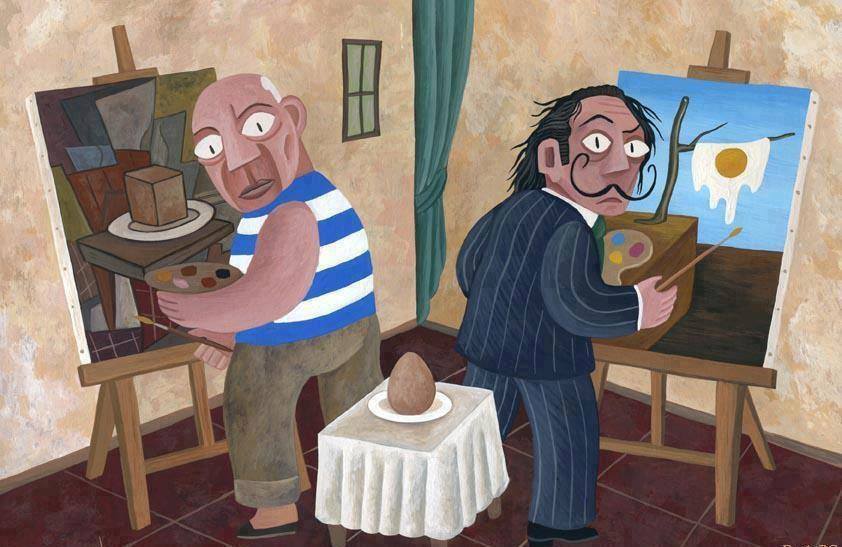
Both Claude and Pablo use same or similar brushes and yet they paint so differently.
An artist is paid for his creative vision, not labor. No, sometime you claim you are not an artists and you only take photos to learn something. That’s fine. But why not learn from artists? Why limit yourself to dull photos, that lack building blocks of compelling image. If by learning you are expressing yourself, that’s great. but sometimes you might be using “I’m not an artists” comment as an excuse to limit yourself. “I will never be that good” etc. Say, yes I will be the best I can be and I will learn from anyone and anything I can.
I posted her artistic examples, not because they are related to DXO photolab or photography in a technical sense, but because the rules that make images compelling are same across all visual mediums, and if you can think in conceptual way and in principles, it won’t matter what tool you use. And that will improve your work a lot more than any feature your Nikon will have or DXO will develop. They are just tools.
“The most seductive thing about art is the personality of the artist himself.”
― Paul Cézanne (1839–1906)
Medium of choice and tools of choices are just there to share that with others. That’s all. And if you do it well people will be grateful because you have shown them a new way to see. That valuable. Number of pixels and all that. Not so much.
I hope you won’t go back to your old habits and will consider what I wrote, as a way to learn something outside of what you have been doing and hopefully, next time will see the result of that as a new photo.
There may be some truth in that, but if that was a 100% , you would not be sharing photo on this forum and asking for interactions. You would like to express yourself, as we all would and you would like to be understood as we all would. How about we meet half way. You understand some of the things we say and we will do our best to understand some of the thing you say with your camera. Otherwise, whats the point of even being here?
This was something Picasso could do that most others could not.
Me? I’m the exact opposite. What I want to deal with is “the reality”. I don’t do well with abstract stuff, like that painting.
Bullseye Shooting is nothing like art - targets are scored, and the target below was scored as a 99 (out of 100) and 8 holes touching the “X”. I shoot at 15, 25, and 50 yards. This target was shot at 15 yards.
There is no psychology, or war, or distractions - all there is, is a target paper at a certain distance, and I’m only allowed to shoot 5 rounds at a time, for a total of 10 shots. Lots of other stuff “matters” I guess, but the bottom line is ONLY about scoring the holes in the paper.
Photos are different - so many things to consider, and take into account. The photo has to be technically correct, and it has to be interesting, and to look good to the people who were expected to see it - and a whole lot more. All the complicated stuff includes finding a suitable subject, taking the photo, editing the photo, and so on - and then it’s a question if people viewing the photo enjoy/like it - or maybe hate it.
That’s why I spent ages and years learning photography, at least the mechanics of photography, but how people feel about the photos is up to them… unlike targets, where the end result is immediate, no interpretation needed or desired.
I need to stop and make dinner. I will re-read your post, and think about it, and while I understand it is important, the importance depends on the type of photography being done. PhotoJournalism is a lot simpler, with simple rules. Art is… gee, I don’t know how to answer the, other than art is in the eye of the beholder.
I disagree - this forum is the best learning tool I have found, for how to get the most out of my editor of choice, PhotoLab. …which is why I joined the forum in the first place.
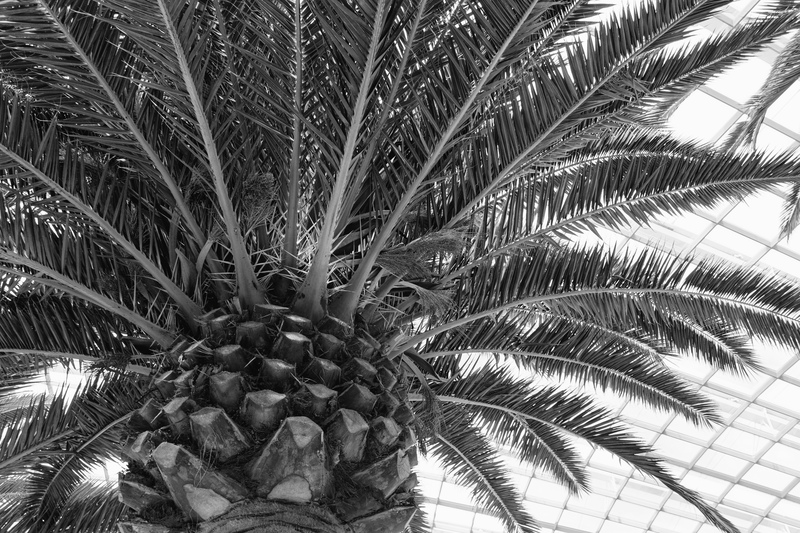
For the past several years, when I visit my brother at his home in Fellsmere, there is one palm tree that has always intrigued me. It was just a “normal” tree until a few years back when these “tentacles” started coming out, which apparently are “seed pods”. I usually take a “normal” photo of the tree, but on this last visit I stood beneath the tree, shooting upwards at the bright blue sky. I guess I could call this “natural art”.
D780, set to ISO 200, and then 1/400th at f/9 which I thought was adequate. I had to play around with the controls in PhotoLab to get all the details to show up better. I also took a photo zoomed in more, but I prefer this version.
I expect there are things I could have done better, but as of this moment, I think this is the best I know how to do. I thought about bringing out more detail in the clouds at the top right, but decided not to. This may or may not be a good rendering, but it is exactly what I had in mind.
780_1351 | 2023-06-12.nef (29.3 MB)
780_1351 | 2023-06-12.nef.dop (16.9 KB)
Or, trying to use what Joanna and. PhotoJoseph have shown me…
Lots of fun to do, but maybe I went too far…
780_1351 | 2023-06-12.nef.dop (34.8 KB)
If you’re like me, you looked or glanced up, and said to yourself wow!!!
Your version shows something mine didn’t - the symmetry.
Both images show a view most people never get to see - as in “look up!”
Did you have a reason to show it in b&w rather than color?