I’m mostly a landscape shooter. For stage productions I’d suggest checking out Nikon’s ‘protect highlights’ metering mode. On both my D750 and 850 it’s a box with a dot in the middle and another dot to the top right, outside the box. No idea if it’s the same with a Z8 but I’d be surprised to learn it hasn’t got that. That metering mode was designed specifically for the stage (bright actors with a dark background) essentially matrix mode with protect-highlights.
I’ve been using it for birds in flight and it seems fine for that. What I was talking about was for squeaking out as much dynamic range as possible (like the ZS) that takes a bit of fiddle for each shot (also like ZS). the cameras I have now have enough DR that I don’t bother metering ZII, just ZIX. It’s like transparencies (w/o reciprocal failure); but for these cameras if you get the high key right then you’ve got everything.
That’s what I had in mind in my post - using “protect highlights” on stage lighting with metal reflections can underexpose the raws so heavily, to make them useless, even when shooting ISO <12k on Z8 (and yes, the mode is present on Z8, but Z8 uses the sensor instead of out-of-sensor metering like in D850). In my case, spot metering, combined sometimes with negative EC (depending on distance/contrast conditions) works better. YMMV, as I’ve found this mode usefull indeed in other situations. Camera specific thing. Looks just like one of those minor misunderstandings between people shooting different things in different conditions
EDIT: Perhaps I got it wrong and you meant “protect highlights” metering with EC=+2EV?
Didn’t try that, but sounds risky for me for concerts (e.g. drums occupying 1/2 of frame). Too much useful light could be lost.
That’s total dependent on the difference of the bit depth.
I still have the D700 and the D750. And then I had to watch the blinky screen or the histogram after I took the picture. I bought a Z6ii a while ago. That has live histogram in the viewfinder. A wonderful way to correct the exposure. Looking in the viewfinder and just use a wheel. I had several discussions with @Joanna, she sticks to her method, which works also.
I think it’s better to stay away a little from the high maximum, just to get some room for editing.
You still have to use your own eye and editing experience to supplement camera metering. Understanding RAW data and demosaicking helps but it’s not mandatory. Just learn your camera by your faults.
You didn’t get that wrong. I meant ‘protect highlights’ w/o EV adjustment
That said, I do dial in about +.5 to +1 EV when using it for BIF, but that only affects the ISO as I’m keeping control of speed and DoF. Our cameras are pretty much ISO invariant so all raising ISO does is make the review more visible - and potentially blow out a highlight. Probably not the best tradeoff - and I’m very much not a Z expert.
Thanks for sharing your experience, I’ll give it a try, although I’m rarely shooting BIF. For swallows I’ve used something like 1/4000-1/8000 sec, spot metering. I had too few tries to share anything worthy. It was important to shoot at the right light angle, of course, otherwise DR would be too big. If you were lucky to get the focus, then the spot metering was usually more or less “correct”. That was with D4 and old “dust-sucker” 300/4. With Z8, all I have in the long range is 70-200/2.8, so BIFs are mostly out of question (TCs don’t work too well with this lens)
For cameral concerts and stage lighting the story is clearly completely different.
To my eye, this is a simply astounding paper and well worth investigating.
No, unfortunately, I gather that Epson no longer do such ink cartridges, relying on a coating that has to be applied after printing.
My personal testimony to the Canson Baryta Photographique II (with the CA ink) is that it is no different to the finish that I get from Picto labs when they print on Ilford photographic paper with their Lambda (wet process) printer.
Yes, George, I do stick to my tried and tested methods - because they are guaranteed to work
Seriously though, I still can’t see the need for a histogram on the camera. We never used to have them on film cameras - we simply got to know the range and sensitivity of the film we were using and adjusted the exposure to suit, using the Zone System to “place” the exposure correctly. Either on zone 3 for B&W negative film or around zone 7 for transparency film.
In 25 years of digital photography, I have never inspected the histogram to check for exposure. With each new camera (only four so far) I did a series of tests for dynamic range and exposure limits and then simply applied the appropriate over or under exposure to the manually measured exposure.
My only exception, for a while, is that I used Nikon’s Highlight-weighted measuring mode for concerts with bright spotlights and moving performers.
…and it’s there anyways and can be used, if need exists. Need is not defined per se, but it’s something someone has or has not.
Taking pictures is not necessarily made better by inspecting histograms, but it can help to push captures to the limit of what the camera’s sensor and electronics can do under a certain set of requirements, e.g. lowest possible noise floor and linear highlights.
Inspecting a histogram can only help partially, because it shows statistics of the jpeg/preview and all the processing that has gone into it. Some of it can be compensated for by UniWB. UniWB helps to see which channel goes clipping and therefore sets the limit for exposure under difficult lighting.
The lesson to be learned here is, that there are different ways to Rome and all are equal in that they take us to Rome. Some like to cross mountains, dig tunnels or take a boat, so what.
Returning to the thread topic: Imo, the key is “practice”. Practice in exposing properly (whatever that means), using the tools, leaving the path and finding it again… Learn from experience and others, and take care to not follow something blindly.
Olympus, now OM Systems, cameras have come a long way in metering. There are now five methods including ESP (Evaluative Metering). The camera’s ESP metering correctly exposes for a wide range of subjects e.g. white snow - turns out white, no adjustments necessary.
I have never used the other modes because ESP “Just Works”
Also, I never use the Histogram. While it will indicate an over exposure, it will not tell you where in the image the over (or under) exposure is.
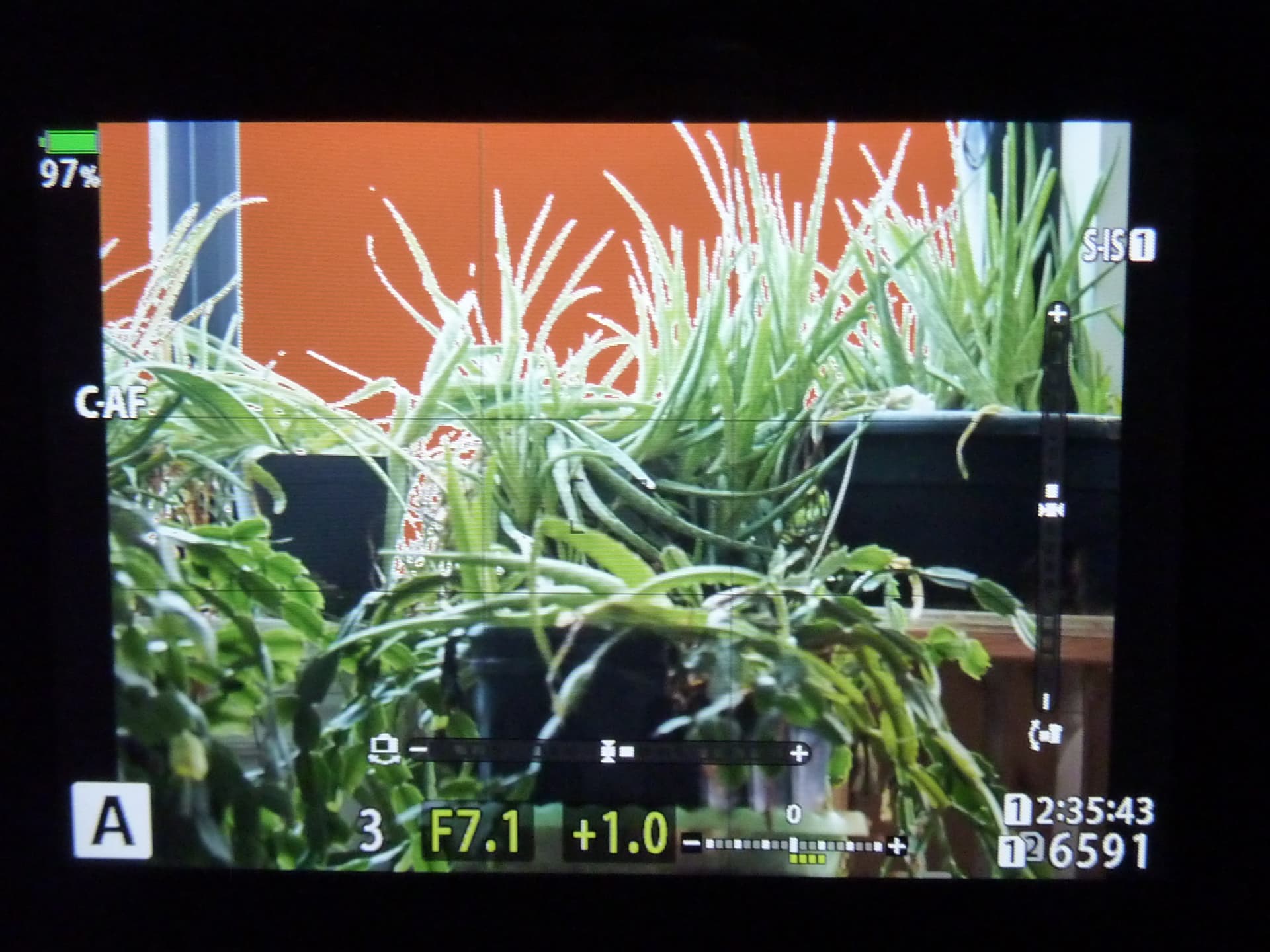
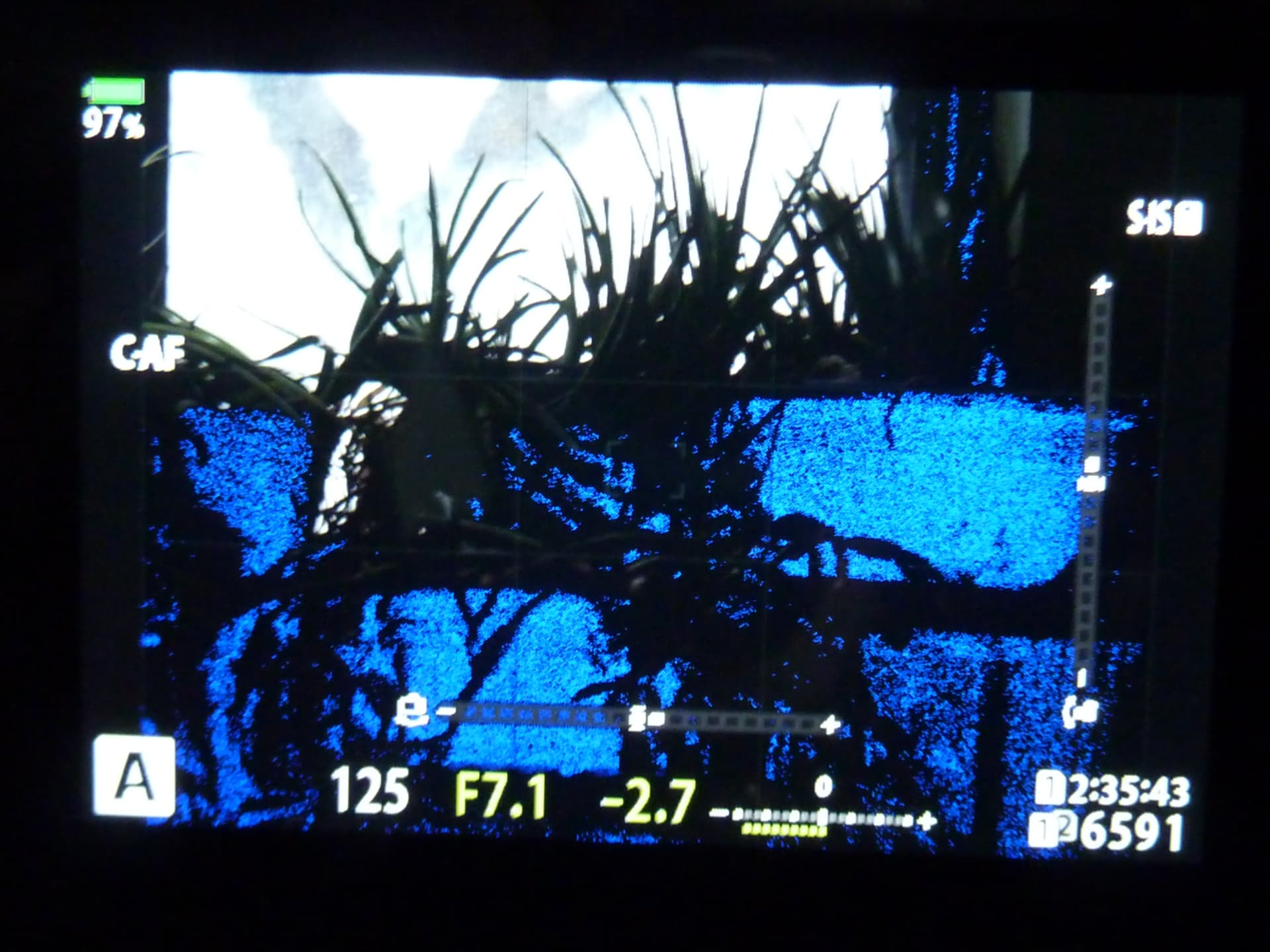
I use the LIVE Highlights and Shadows, the Blinkies, all the time. These are Orange for over and Blue for under exposures. I can also dial exposure compensation as desired.
The Histogram and Blinkies are LIVE so that I can see whats-what BEFORE I take the photo. Other makes have something similar and are called zebras.
The result is that I very seldom have an over exposure because I can see the indicators and make an adjustment if necessary.
An important factor in this is the camera has an Electronic Viewfinder (EVF). I can evaluate the scene as I look through the viewfinder, or rear screen.
The Histogram and Blinkies are based on the JPEG values, however, these can be adjusted closer to the raw values if desired. I have never felt the need to do this.