I am on the trial with PureRaw 5 and really like it. Even on noisy images I really don’t see much of difference between DeepPRIME 3 and DeepPRIME XD2s. DeepPRIME 3 is faster while DeepPRIME XD2s uses more GPU resources. From what I have read DeepPRIME 3’s big selling point is speed, while DeepPRIME XD2s’ is "“extra detail” and better de-noise for high noise images. What are other people’s feelings?
I tend to agree; the difference is negligible.
I’d break out XD2s for particularly high-ISO shots.
2 Likes
DP3 removes some color details that might be attributed to CA or similar “noise” in some cases, such a feather details. For my photos, the differences are ususally negligible in most cases, but might be something to watch for.
1 Like
XD2s can also give more satisfying results for images with a lot of fine detail, especially when cropping.
Mark
3 Likes
Default to DeepPRIME 3. If you wish for more detail (or think it may be possible), then switch to XD2s. As others have said, if you’re cropping into a shot of an animal, XD2s can often resolve finer details. Especially, play around with the Force Details slider. That makes a significant difference in the same situations.
2 Likes
In my case, XD2s introduces significant color changes, but it may be because it doesn’t play nice with my video card (Intel Arc A770). I have a ticket open with DxO. The same image doesn’t create the same problems for others, so your mileage may vary.
1 Like
How high do you consider “particularly high?” I’ve been doing a lot of ISO 10000 photos lately. (5yo grandson playing basketball in gyms with mediocre lighting)
1 Like
To be honest I seldom shoot that high, but I just edited a ‘test’ shot I took at ISO2500 and somewhat incredibly I’m seeing more detail in the DeepPrime3 shot than in the XD2s shot (all other settings identical)!
1 Like
Yeah, I typically use DP3 as well
2 Likes
I use DP3 by default because of the built in CA removal and keeping a bit of grain in the image. XD2 on the other hand handles noise a lot better than DP3. Also, the Xtra Details are nice, too, if needed.
However, by default i use DP3 for most of my images because the CA removal is WAAAY better than XD2 that destroys some of the reds.
1 Like
Do you also enable CA as a separate tool? I tend to leave it disabled unless I really notice CA.
“How high” for ISO is heavily dependent on your camera equipment. The camera I had 10 years ago produced terrible images at 3200. The camera I use today produces better images than that at 12800.
Also, consider that many modern cameras don’t really produce a lot more noise with higher ISOs. They just amplify what noise is always there. As ever, the solution to lots of noise is more light.
2 Likes
With DP3 i leave it disabled, there is no need for it anymore and it looks quite good.
With XD2 i have to enable it because the CA is then noticeable. However, the CA removal tool makes everything in red look very ugly. Need to adjust it for every picture.
1 Like
@Fineus Is it really a difficult decision? These are from a collection of 49 images collected from older cameras, this image was from a Lumix G80 almost certainly with a 14-140 lens
The combinations are DP3 versus XD2s and NO NR versus DP3 and NO NR versus XD2s.
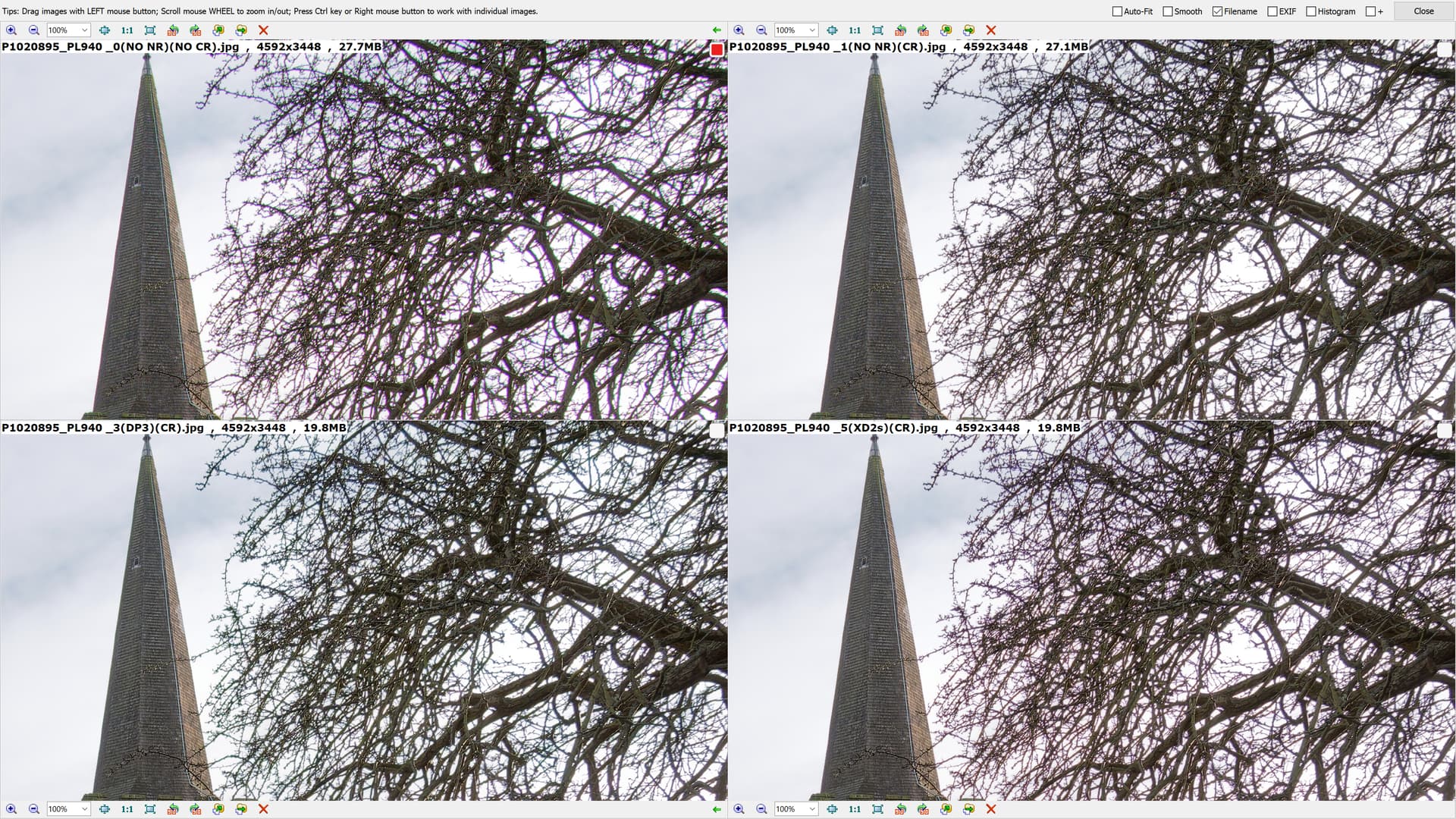
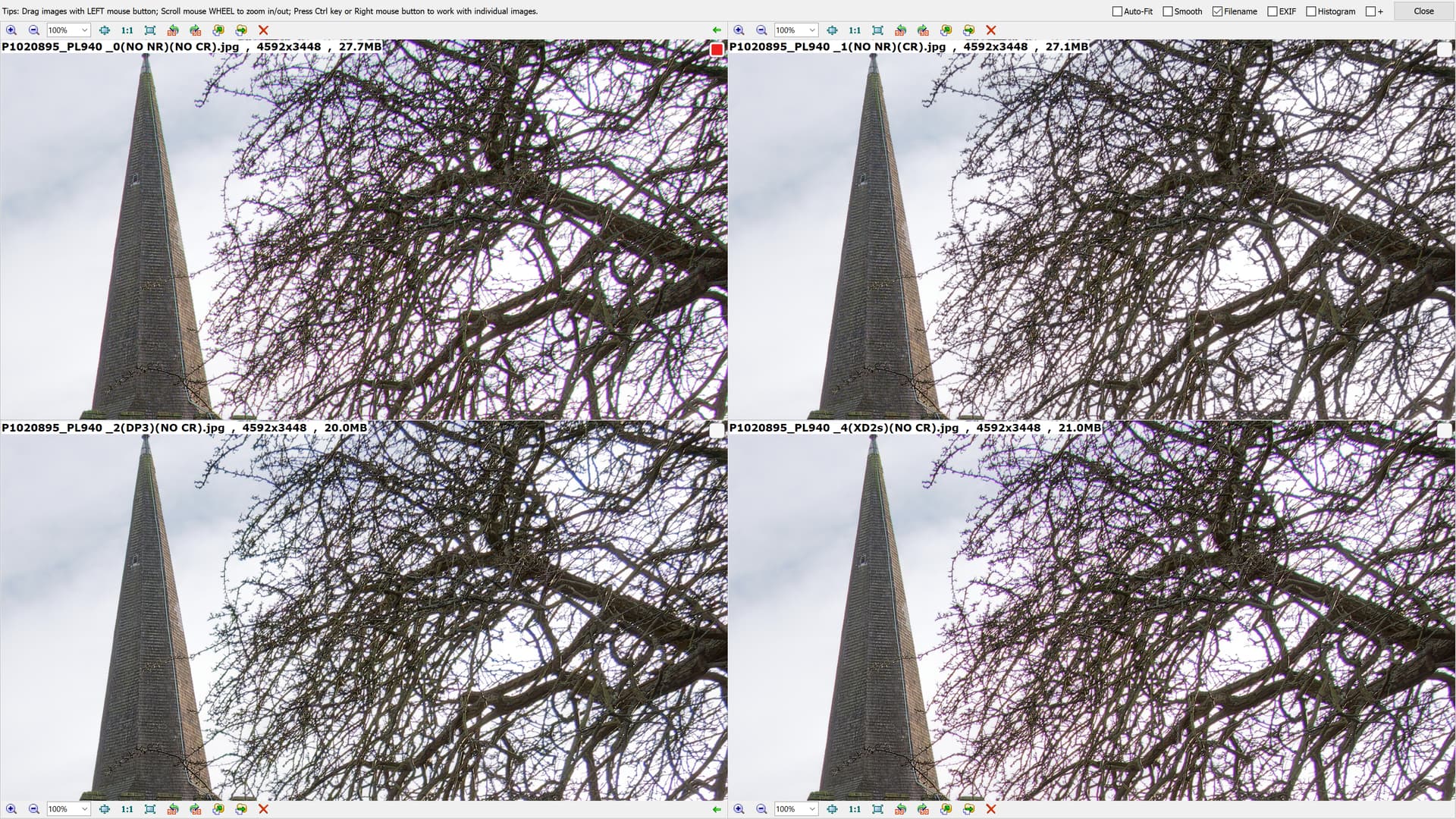
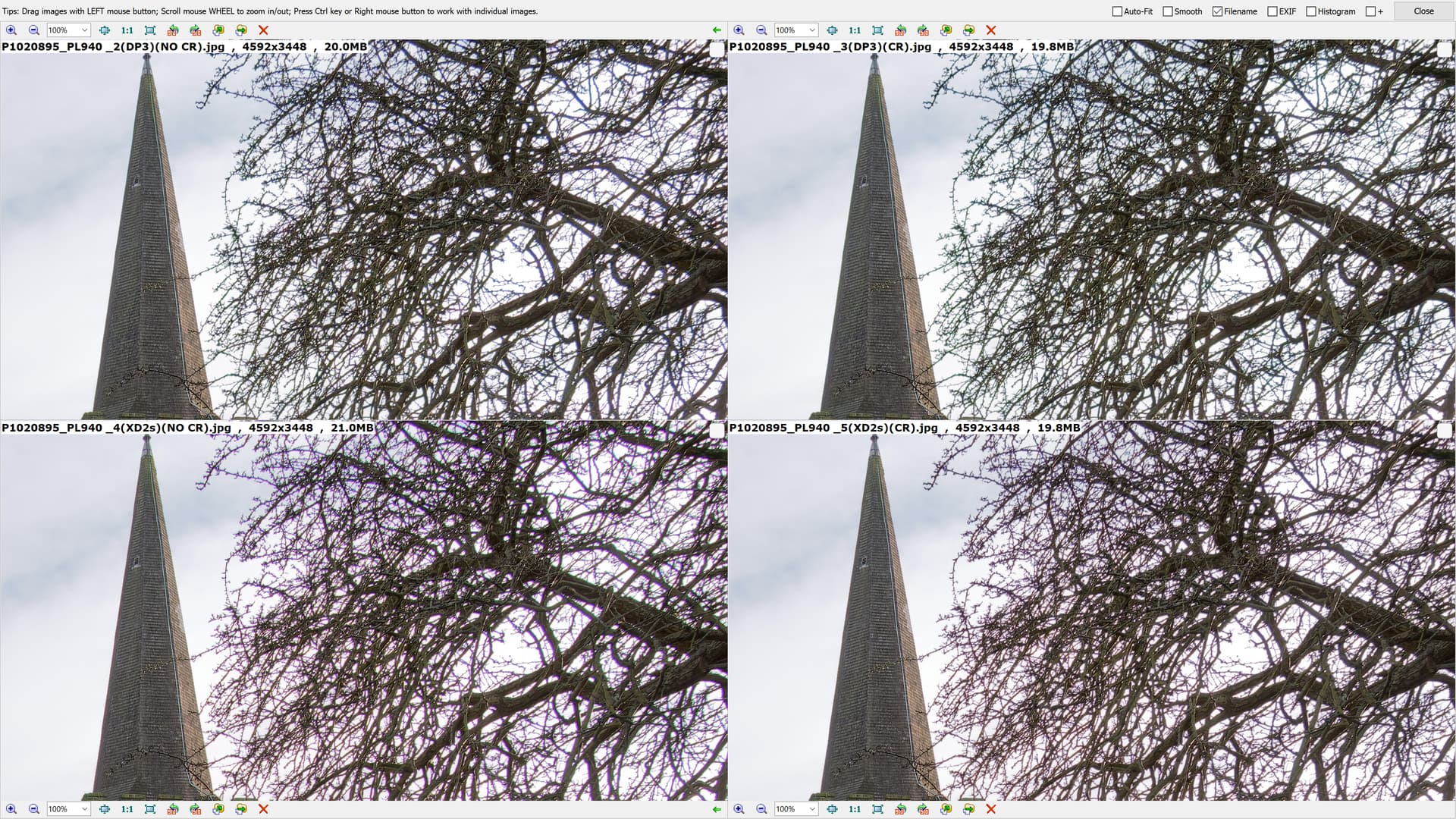
It shows how bad XD2s is and the benefits or otherwise on applying CR
@zkarj That is simply not always possible when the lighting levels are kept dim to protect the wallpaper and fabrics from being faded. This is NO NR versus DP3 versus XD2s with an image from my G9. ISO 25600.

@Chris5 I don’t think my examples above fit with this statement?
I think I often can see som “uncleanlininess” in the skies of my pictures even in daytime and Deep Prime has a role to play even then.
Mostly in mobile pictures but I can add that goes for even when shooting with my FF-houses Sony A III and Sony A IV here in the north in the winter time. The first three weeks of December 2025 here out in the Baltic Sea islands we had half an hour of sunshine during these three weeks according to the Swedish weather service SMHI.
I also often crop and crop increases those effects. Then Photolab can make a lot of difference.
Here a few picture taken recently:
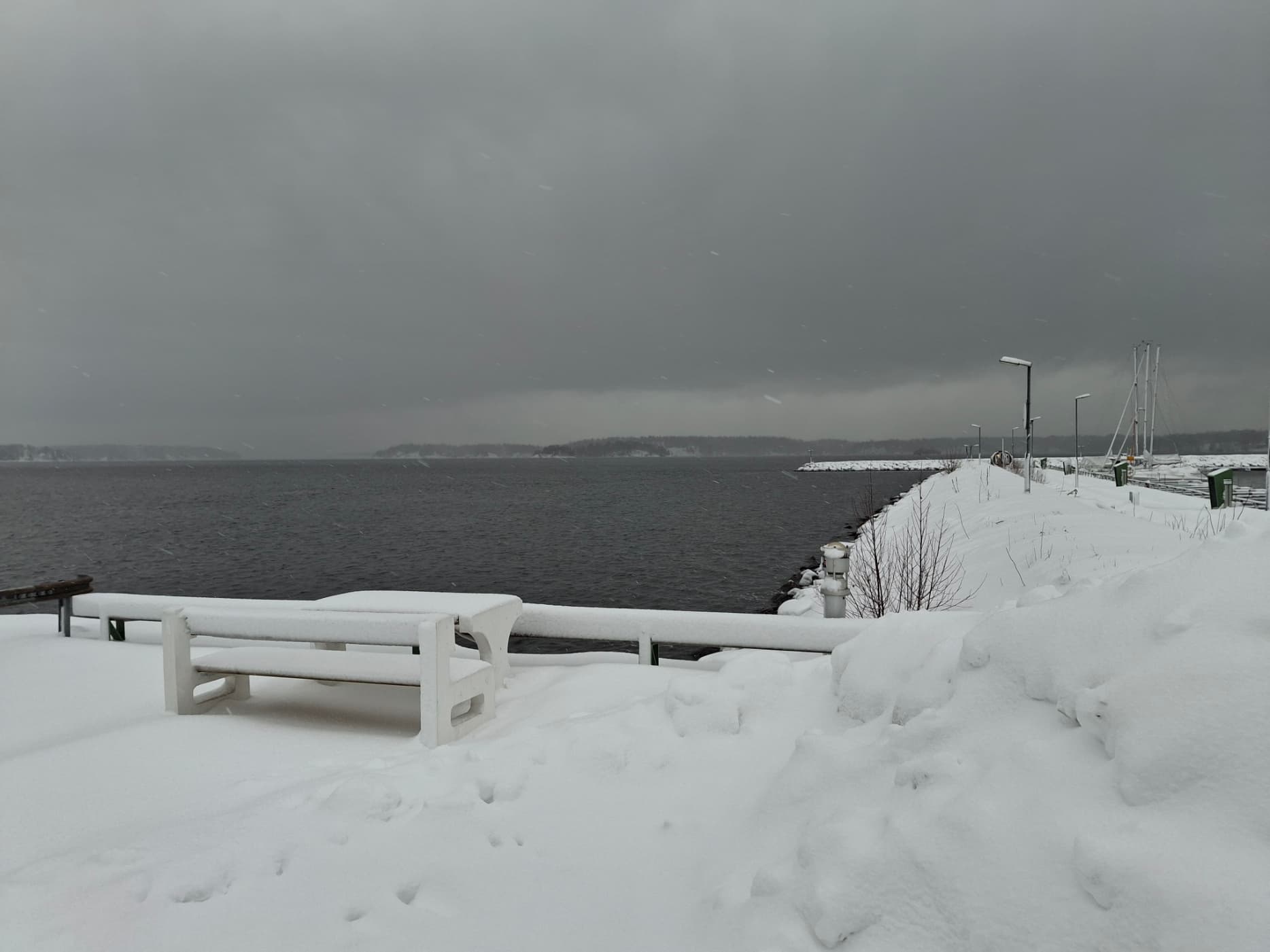
The harbor at Rindö in daytime: You might think this is a B&W-picture - it is not.
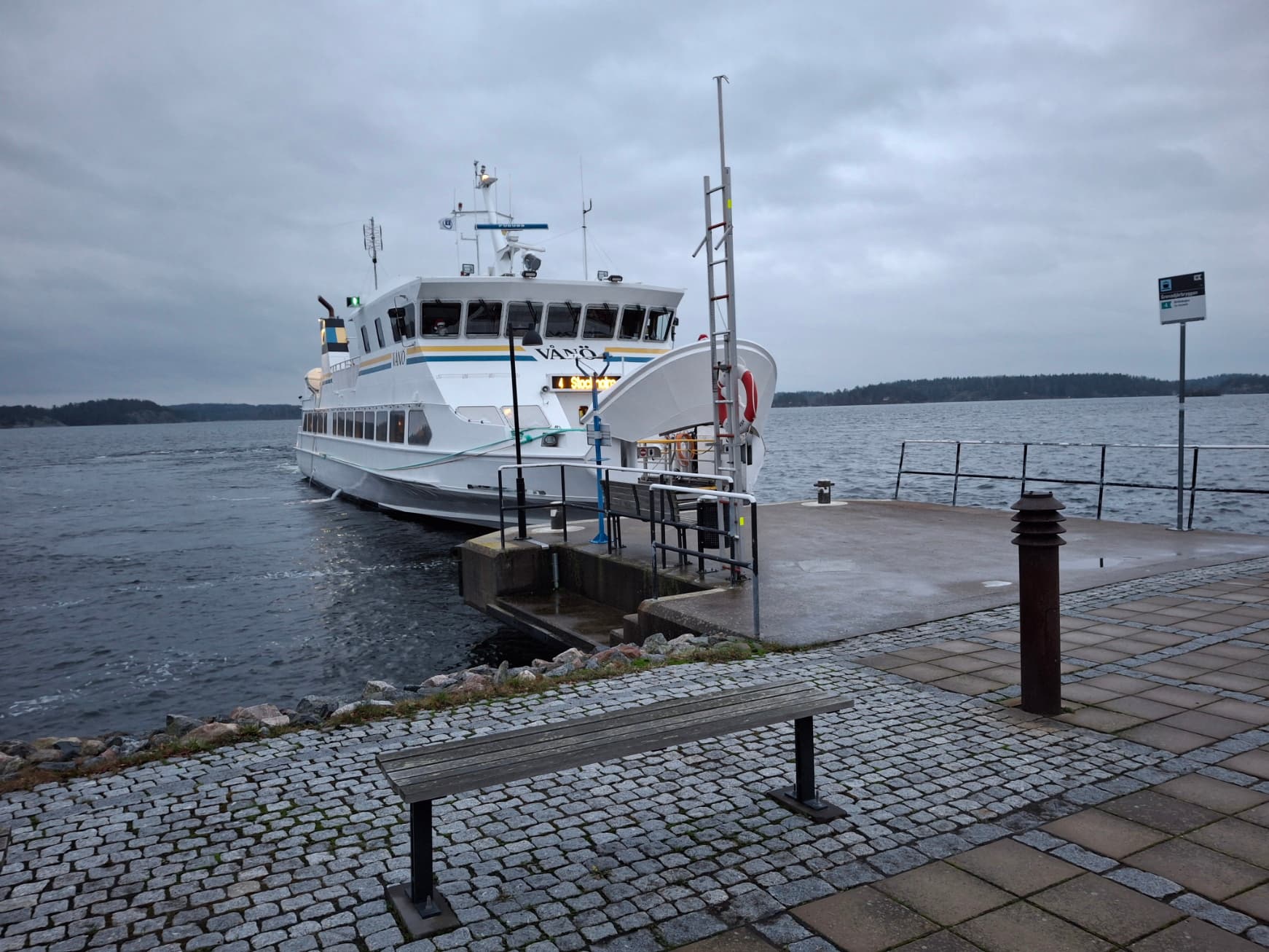
The commuter boat at Grenadjär Jetty at Rindö in daytime

In the summertime the traffic is carried out in the daytime with STORSKÄR a houndred years old steam boat - here approaching the same jetty
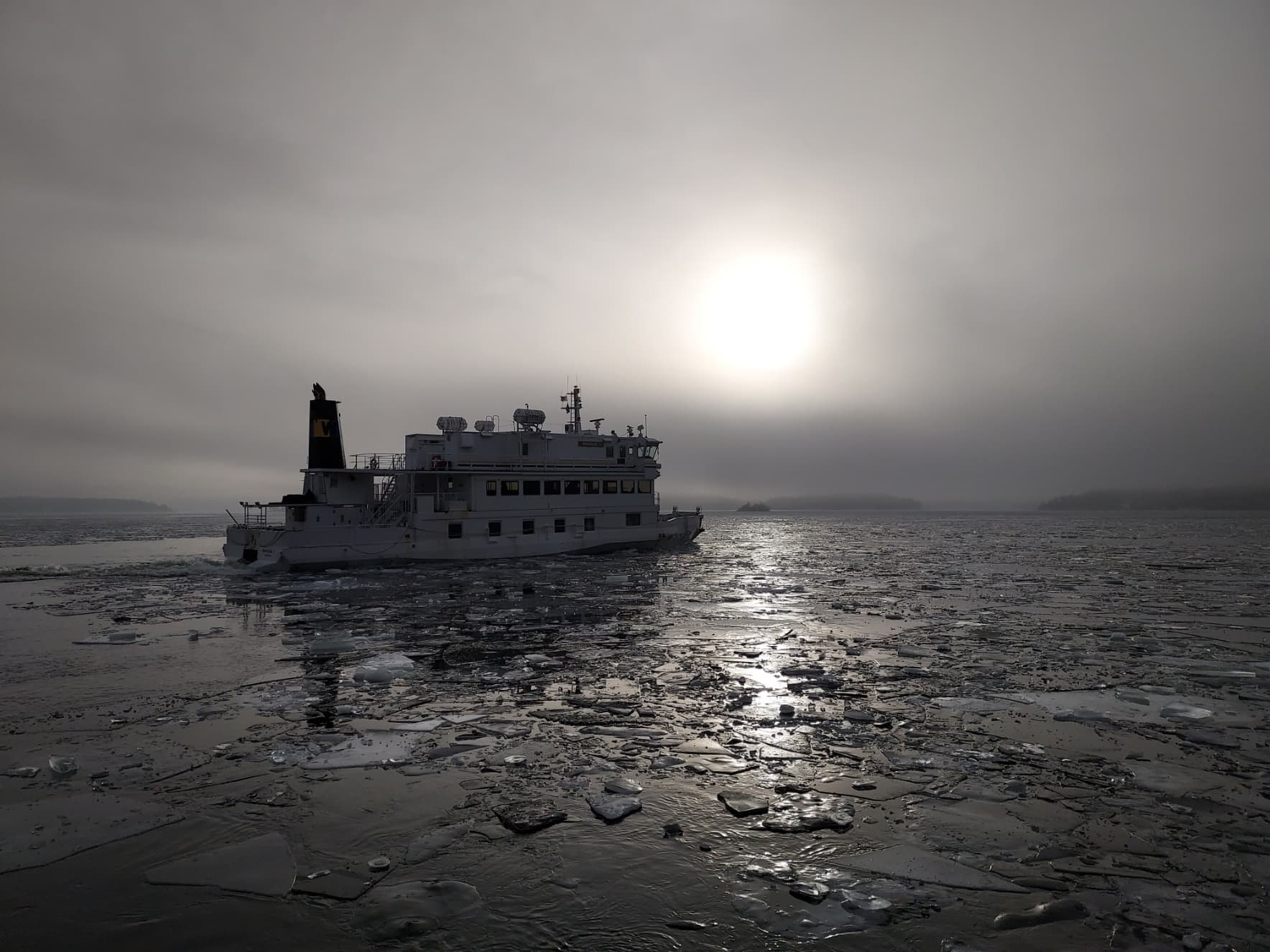
The communter boat SOLÖGA (Sun Eye) leaving Rindö Island during the winter. Even this is a NOT a B&W picture. They use tuffer and slower icebreaking boats during the time when the water is covered by ice.
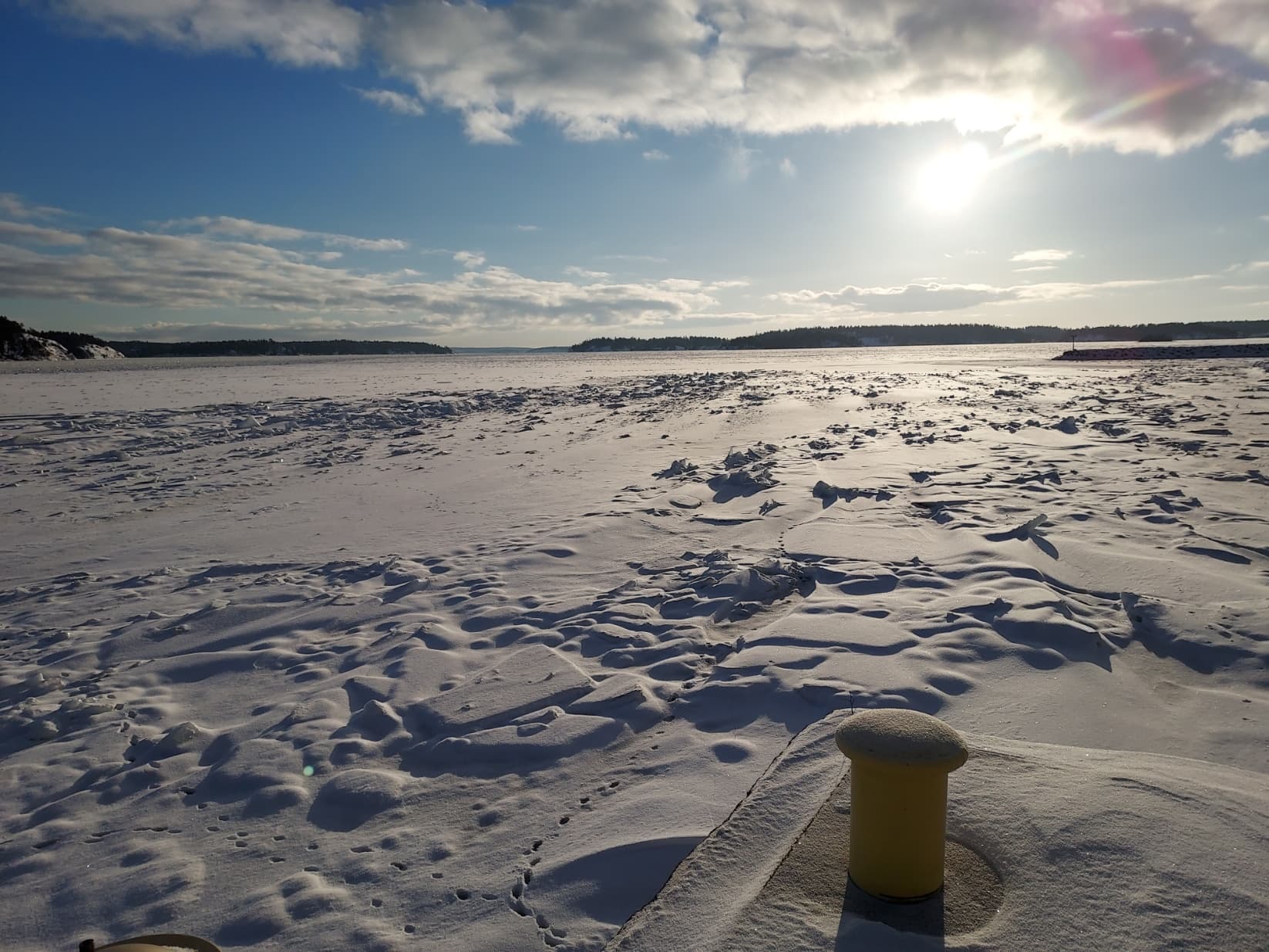
2023 the ice was so thick that the boats could not get through. I had not seen as much ice in my 60 years out here. The commuter boat traffic stopped all together during a couple of weeks. So much for that global heating  - some years it feels lioke the opposite and a new Ice Age.

Construction works at Vaxholm Harbor 2025 where the whole harbor is getting rebuit for the the next season.
During the winter our days are “very short” and the sun is very rare to see so there are not all that many pictures taken this time of the year - unless there is snow that lightens up the environments. Now we have a real winter instead with lots of snow.
These winterdays it is very hard to believe Vaxholm is geting more than 1 miljon visitors a year - Vaxholm is the main boat commuter hub in the Stockholm Archipelago - an area with around thirty thousand islands. Totally they are around 240 000 after the whole coast.
1 Like
To me the DP3 (CR) shots look superior to the XD2s (CR) shots in that first batch?
But then in your interior shot, the detail and smoothness in the XD2s shot look superior to the DP3 shot…
If you don’t see the difference, then use DP3 all the time, perhaps adjusting the ‘Luminance’ setting for portraits. In general, DP3 compared to XD2s brings less microcontrast to details, and retains more luma grain in smoother areas.
For “standard” photos, which do not require too much exposure tweaking, the difference between DP3 and XD2s starts to be seen at about ISO 6400 with my 4K monitor and Nikon Z8 – 45mpx, FF, good but not the best at readout noise. If shadow recovery is required, the ISO threshold to see the DP3/XD2s difference is lower, and can be MUCH lower. Even for some ISO 64 photos you may see the difference, e.g. in the sky when there’s a lot of “atmospheric noise”. If you don’t see the difference, just use DP3 all the time, perhaps using smaller Luminance values for portraits, like 10-30 to prevent “waxy” look. DP3 is quite safe to use, and even in some cases of low ISO photos you’ll still get “cleaner” images than without Denoising. For ISO 20,000+ I would use XD2s only (targetting FullHD or smartphone users) and watch for green/magenta smears in smooth shadows, like in the G9 examples provided by @Stenis. On my machine DP3 exports are only 5-10% slower than with no Denoising. Hence I use DP3 or XD2s all the time, about 50-50 in my case (mostly fast action in low light, but also vacation photos and other events in better light). YMMV.
I very rarely see problems with Chromatic Aberrations and for most of my lenses I can safely switch off CA corrections, e.g. for Z135/1.8S. In my case CAs appear only when using Z24-120/4S at 24-30mm and then DP3 really helps. Depending on lens/photo, enable LaCA corrections and set ‘Size’ to 4 or use “magic wand” (beware, results may substantially differ in certain cases). See the post by @BHAYT above for a good example, but bear in mind it’s gear/photo-specific. Test yourself.
If you specify your type of photography and camera/lens, you may get more responses.
3 Likes
Thank you for your example pictures!
They show that DP3 hast builtin CA removal but not neccessarily 100%. Still, for my case (landscape photography) it is more than enough CA removal straight out the box.
1 Like
I think my comfort zone with my FF gear (that I recently have sold in order to get lighter gear with even more reach and even better AF (Sony A6700)) has been ISO 10 000 to 12 800). With APS-C it is a stop lower at 6400 to 8000 but I have tried to compensate a bit for that with a couple of fast Viltrox-lenses with 1.2 apertures, that gives a bit more light than I have had with APS-C before.
I felt really already with Photolab 4 that Deep Prime could save my day and later since Deep Prime XD2s came I have never been worried about noise on high ISO
I also have Topaz Photo AI 4 which I need for my repro photographed color slide films and when I have seen how cumbersome it is to handle Topaz I really appreciate that Deep Prime is much more of a black box that does the job fatastically well and rarely need my manual help. In my world Topaz sometimes makes wonders with film but it almost always takes a lot of semi manual tweaking to get it right. So Deep Prime is just so much more efficient than Topaz.
2 Likes
Oh, I know. It’s not possible when under a dense forest canopy capturing fast-moving birds, either. I was just commenting that, possible or not, it’s the only real cure.