Beginner Workflow Help

Hi All, I am a hobbyist photographer who has been taking photos for a year. This will be the first time i start editing photos and planning to use Dxo Photolab 9 and Mac M5 Pro. Here is the workflow I have come up with and I am wanting expert advise on tips to improve it and avoid pitfalls.

  1. Use SDXC port on Mac to Copy Files to Local Library

  2. Use DXO Photolibrary to rate and cull RAW files ( Will also delete from Local Storage)

  3. Use DXo to edit photos

  4. Export to JPEGS and Save on external HDD

  5. Export favorites from the Shoot onto Apple Photos and Local Storage.

  6. Copy Out RAW and DOP files into an external HDD.

    Any big things I am missing here and any pitfalls that are quite obvious. I am a hobbyist and do not do this for a living, but rarely have time to edit and look at my photos so do not want to spend ages fixing my storage. I eventually plan to add shortchuts to these tasks that they happen in the background everytime and spend major time actually editing. My current library is close to 2000 RAW photos that will get down to about 10% of that after rejection and possible end up with 200 good RAWS and 20 Edited Photos.

Hi, Sounds like you have a good handle on a decent “storage” workflow…your actual editing workflow will become just as important.

1 - there is no Local Library for PL. You’ll just place your photos in a folder somewhere and point PL to that location - Huge plus in my opinion, you organize your photos whatever way you want on your hard drive, network or removable media. When you open the photo in PL, all your edits get stored in a sidecar file right next to your image file. Your original RAW image is intact (non-destructible edits)

2 - rate and cull away. Most photographers who shoot RAW will follow the 3-2-1 backup rule. 3 copies, 2 different type of storage (hard drive and external SSD for example), and 1 copy offsite (cloud based is easiest). If you can afford the storage, I personally wouldn’t delete anything - some would! It’s always interesting to go back every now and again and see how your style or quality has improved/changed.

3 - If you’ve never used a RAW photo editor before, watch some videos about how to build a proper editing workflow so you’re not making conflicting edits to your images. You’ll find this is even more important than how you store your post edit images.

4 - Export to JPEG…this is fine for posting online, but if you’re not posting online and you can afford the storage space, don’t bother exporting at all. It’s just a “crushed” version of your RAW file. Keep the RAW and export only if (and when) you need to.

5 - if you plan on using Apple Photos as a viewer, you can just drag your RAW image directly from PL9 into Photos and it will drop them into the Import Utility (at least it does on my Mac Mini M4) - I don’t really use Apple Photos, but it is handy for it’s integration into Messages for sending a quick shot of something to someone.

6 - If you build a good storage system and keep to it, you’ll find that you’ll spend very little time moving images around. Culling photos by deleting them is definitely one way to go, but as you continue to shoot, you’ may find that you’re doing yourself a disservice by deleting. By all means, trash the out of focus and shots of the top of your shoe, but consider keeping the “meh” shots to measure your growth - you can learn from them! Delete them in a year if you need the storage space.

Friendly advice (and good on you for asking for advice!) - don’t set a task or goal of images to keep for yourself. By keeping yourself organized with a good workflow (both storage & editing), you can enjoy Photography as the art form it is and not make it into a competition with yourself or others.
1 Like

Folder Structure: Please note that reorganising a photo library can be fairly cumbersome. It helps to devise a possible structure first, before populating the drive with folders here and there.

I propose you set up a tree with folders per year and shooting occasions within those. Time based trees seem boring, but they rarely need to be redone. Example

  • Archive
    • 2026
      • 2026-05-Trip To Mountains
      • etc.

When you reorganise with Finder, PhotoLab’s database/catalog will…suffer (search forum for details)

3 Likes

I like to go one further and have my shots segmented by years AND months, then individual folders for each shoot.

I guess it depends how much you shoot / how you like to break things down.

You’re right about having a system in place before you get too deep in to it though. It’s a PITA to change later.

1 Like

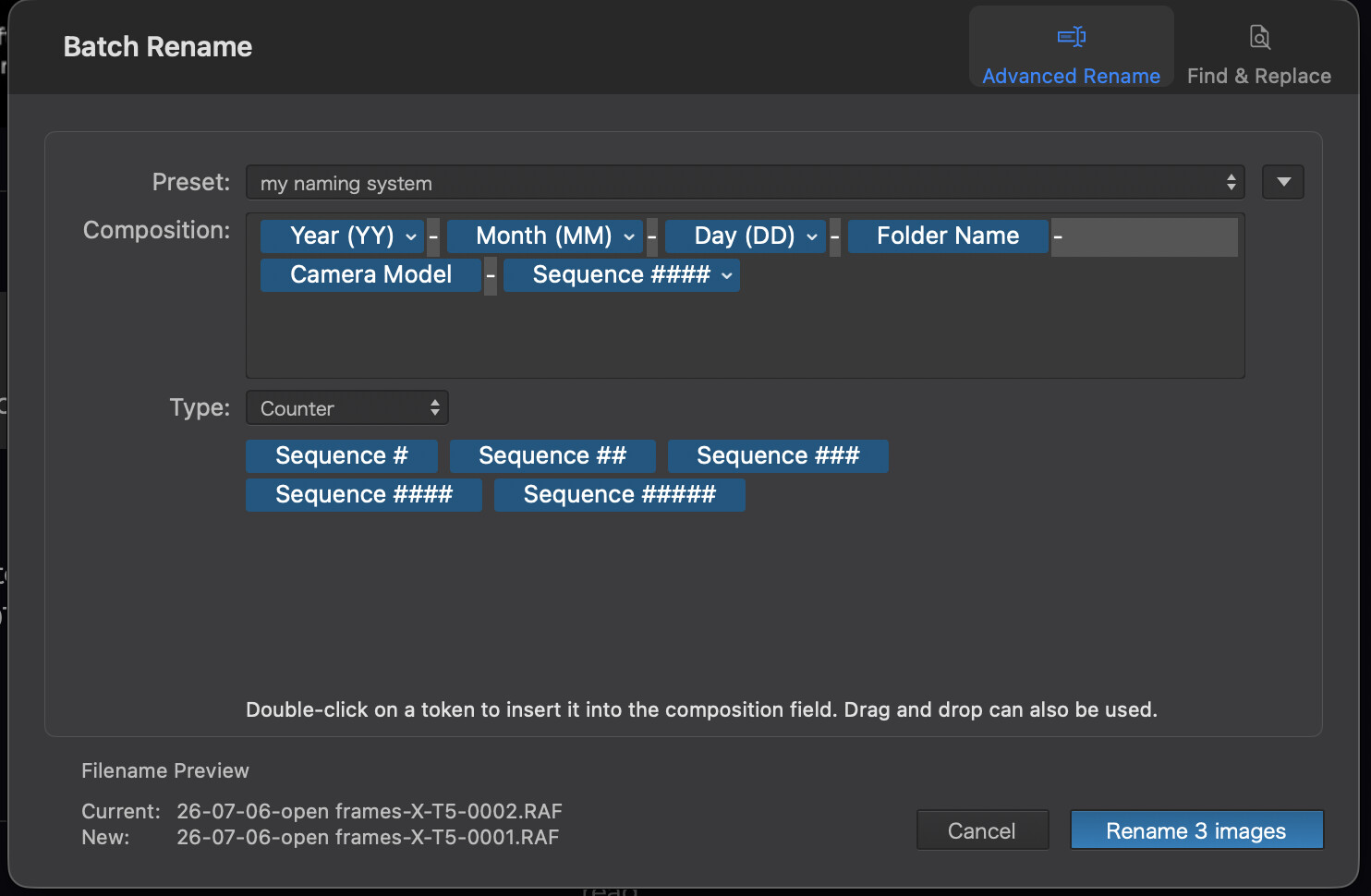
And further-further to good advice from @platypus & @Fineus , don’t forget to take advantage of batch renaming built into PL to make your images easier to locate. I built a custom setting and use file name, date, camera body (I have multiple cameras), and a counter.

Projects are also a great way to keep organized within PL that doesn’t mess with your actual storage location(s).

2 Likes

Wonderful, thanks for a detailed write up. Do you have any recommendation for guides or YT channels to follow? These days its genuinely hard to find legit content for some reason and most of them seems to paid adverts.

How do you usually achieve this? Does PL create that structure for you? Currently I just copy the whole folder to my Mac and open than in PL and i want to start a better structure. I probably go out photography every fortnight, so might be good to sort them via months.

Honestly? Manually!

I usually have most recent projects in a folder on my C: / SSD drive for performance and then, once they’ve been worked on, I’ll move them to a D: HDD drive for storage.

That drive also backs up to another similar-sized drive using a program called FreeFileSync which mirrors the folder structure for me, so I only need to create it once.

Then in PhotoLab I just browse to the relevant year-month-shoot I want to edit.

You’re Welcome!

For youtube, there’s a few out there for DxO PL, but not many. It seems like a bunch are jumping onto the bandwagon since PL9 released but most of them are just chasing an income stream. Check out:

DxO’s own Youtube channel - https://www.youtube.com/@DxOLabs
Robin Whalley (he can be a little dry) - https://www.youtube.com/@RobinWhalley

Steve Miller - https://www.youtube.com/@SnapToEdit

For the ultimate in no holds barred, no corporate schilling, honest as hell…

Andy Hutchinson - https://www.youtube.com/@Andyhutchinson

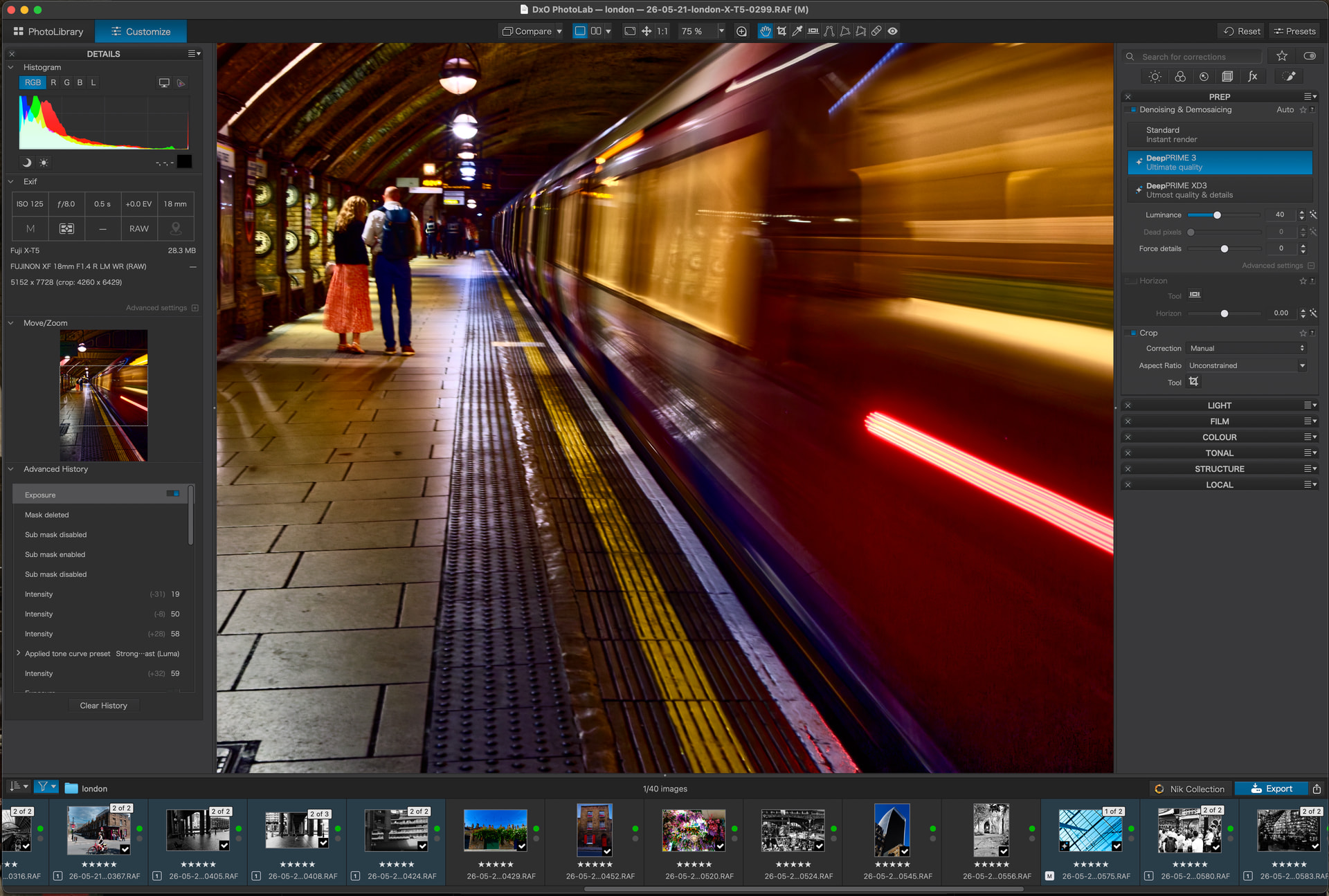
I’ve attached my personal workflow for DxOPL9…warning - this is my workflow that I follow 98% of the time, others may vary! I also created my own Palettes and Workspace to streamline the workflow. Screen shot attached.

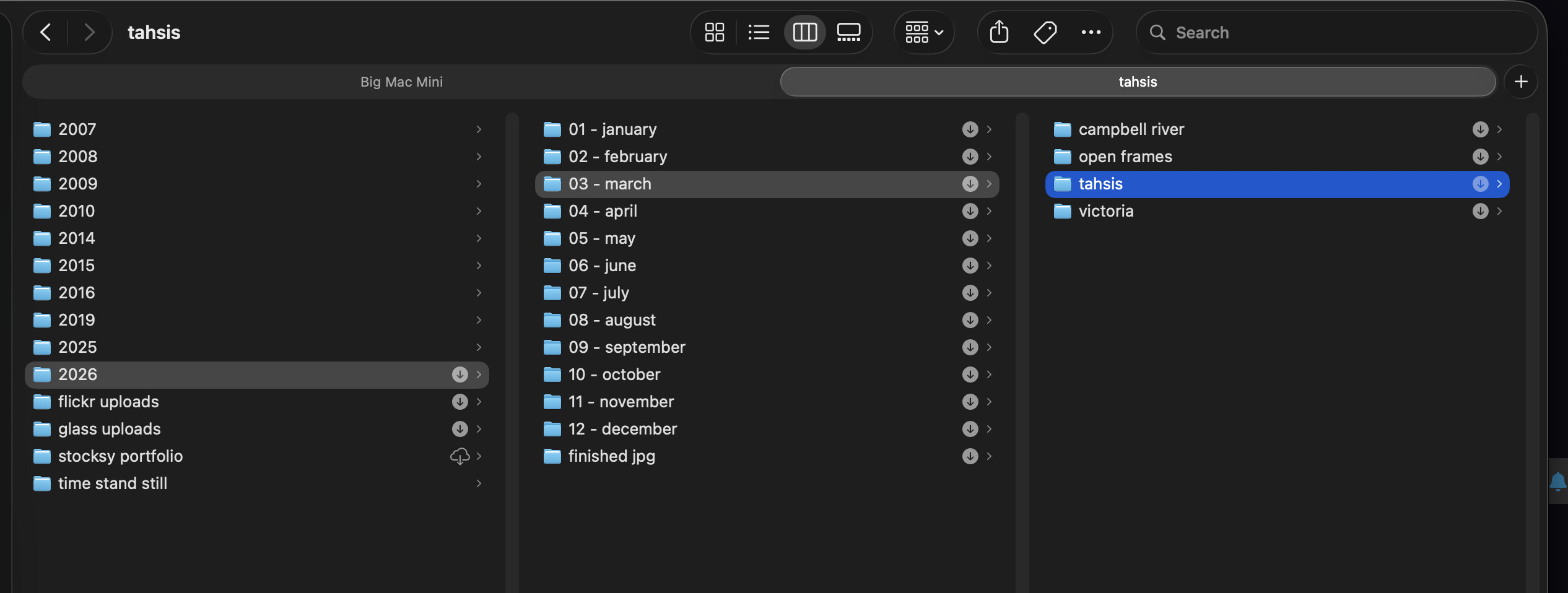
I’ve also attached a screen shot of how I organize my shots. I organize by year, month, and notable shoot; or if it’s just random shots, I have a folder called Open Frames that they go into. Keep it simple, but organized!

I think you’re wise investing the time now to determine the workflow details for both storing and editing. You’ll be glad for it later! Good Luck!

fotf workflow.pdf (26.4 KB)

1 Like

Thanks for the Heads up. I currently have just dumped my images into one massive folder called Olympus as they come from the memory card. Had not thought about oganizing. But i guess good to do it now when i have 2k Photos rather than 10k

That is epic, thank you so much mate. I will ask more questions once im back from this current Photoshoot.

At some point the counter at the start of each image filename will reset to 0001 and you’ll start getting duplicate filenames.

You’ll either need to start giving all files an original filename and/or place images into sub-folders using a structure. The one @platypus described is much the same as the method I use.

Thousands of images in a single folder quickly becomes difficult to navigate. Personally, i like the yymmdd (date) and description folder structure useful because I often have a good idea of when a shoot took place, so I can get to the year quickly and then the description allows me to precisly pinpoint the folder I need.

2 Likes

IMO performance degrades in PL too.

I follow the same folder approach as you (date then description) but for really big shoots, I’ll chop up the selection into 1-100, 101-200, 201-300 etc.

@Dr.Abag , As @Fineus & @CHPhoto have said, renaming your photos is just as important as the file structure. There are a bunch of presets already built into the Batch Renaming tool, but you can create your own based on your needs - I have included a screen shot of how I rename mine, and if you hit the little “down arrow" beside the preset name, you can save your own…With much originality, I called the preset I saved “my naming system”.

@Dr.Abag

That’s what I do with TotalCommander (Win) before I hand them over to PhotoLab.
For details please check here … and here …

  • Now the images retain their names, regardless of where they / or copies end up.

  • However, rename processed images in PhotoLab to ensure that sidecar files and database are handled correctly.