Yes. I noticed that just after posting that screenshot.
So, I masked out everything other than the head…
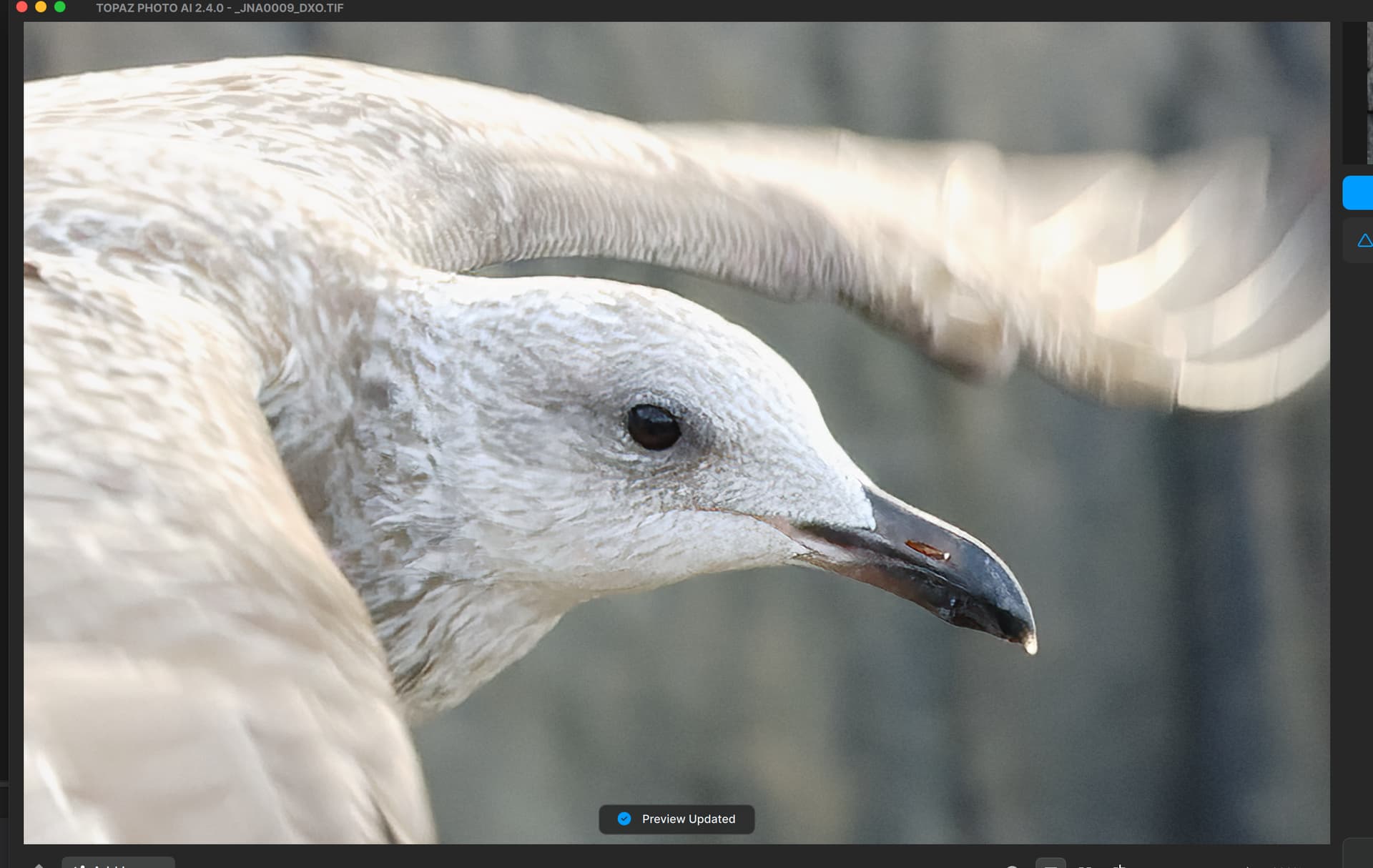
How about that?
Yes. I noticed that just after posting that screenshot.
So, I masked out everything other than the head…
How about that?
Much better! I also like the transition from the sharp part of the head to the back of the bird (or is it top, as it’s facing upwards? Anyway, you know what I mean)
It’s funny as there’s not much to be seen in the eye except a black ball and the (interesting) reflections.
Lovely set of photos - enjoyed viewing this. If I walk towards the beach (after spring break is over) I always find what seems like a gazillion seagulls hanging out, looking for food.
I like your background too. And I especially enjoy that last edited shot.
You seem to know how to get the best out of Topaz, without going too far. I have access to Topaz, but it bothers me to change from a ‘raw’ image to a Tiff. Maybe I shouldn’t let that bother me.
Get a 61 Megapixel FF camera instead of a 24 Megapixel APS-C?
I’ll be happy to oblige, just send me the necessary cash, e.g. for the new Leica. Or send your Sigma fp-l if it’s still working 
Sometimes I wonder, how DxO lets us add 400-odd posts long threads with loads of images. If the saved drive space on the server could only speed up fixing years-old items…but I suppose that drive space is cheap and being tolerant to off-topics can keep things calm.
I hope that DxO can keep their calm in the field of activation and copy protection. The solution that was used with OpticsPro was a pain to remove. Security and usability don’t mix well … but I’m getting off-off-topic here, sorry for that.
PL doesn’t do sophisticated resizing or sharpening to the same degree.
I use Topaz Photo AI specifically for producing large prints for framing, as the last step in the printing process.
Apart from that, if you need to use the sharpening tool, it usually means you are trying to rescue a shot that you should have got right in the camera to start with.
fp-L is still working. I just cannot recall a single bird-in-flight shot with it. It’s more on the Entschleunigung-side of things 
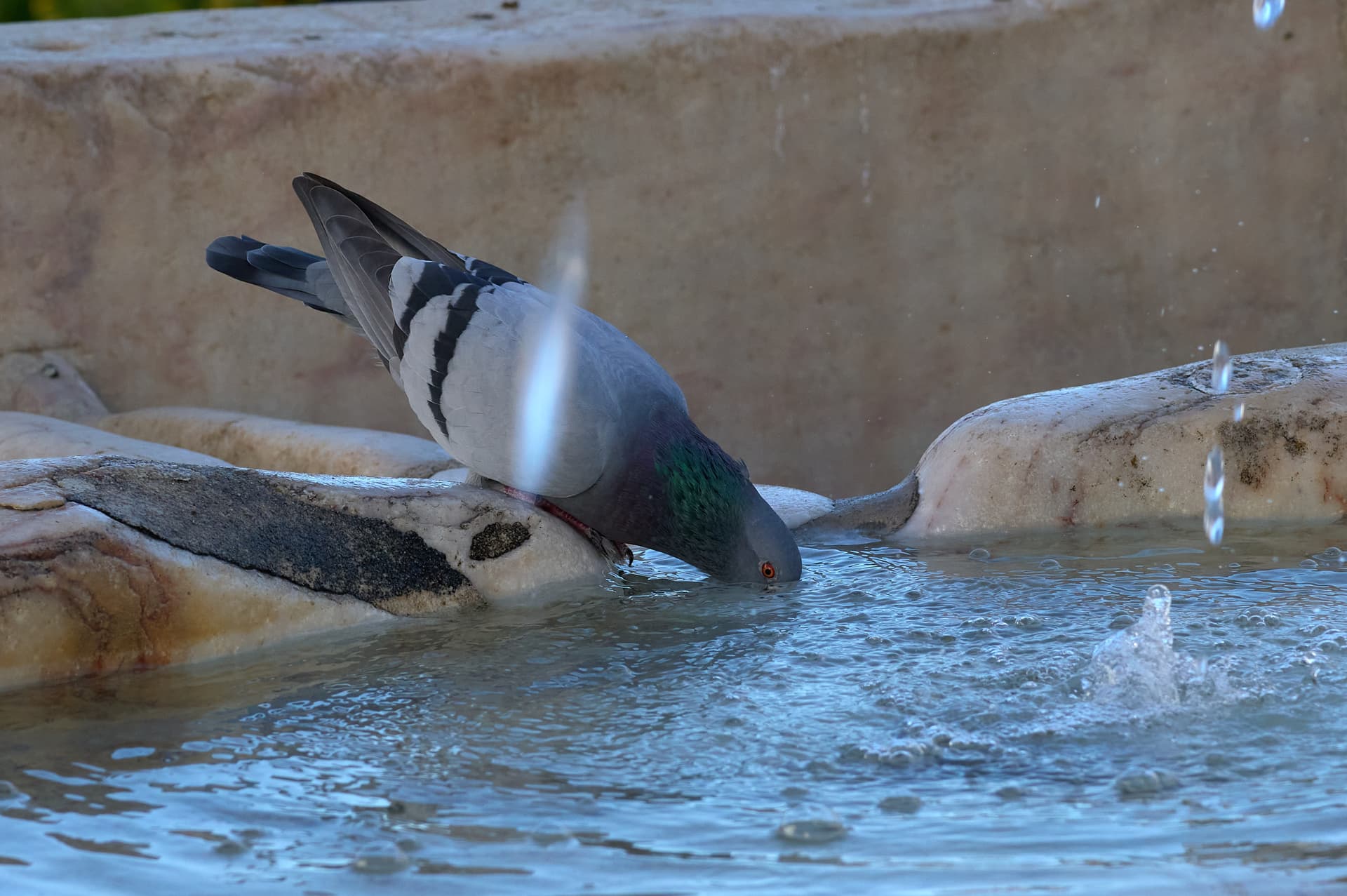
Snorkeling pigeon doesn’t count?
Yeah, I thought so 
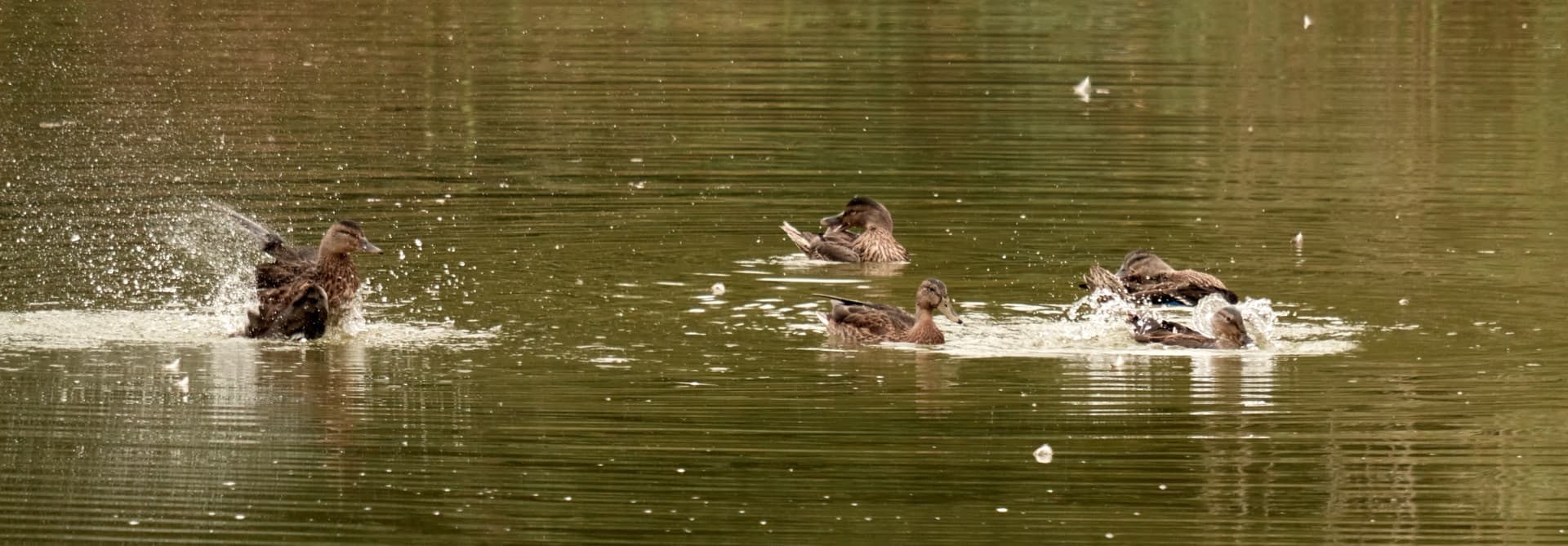
Splashing ducks?
Doesn’t matter if it was a 1200 mm lens? Thought so, too 
Why would you want a Leica SL3? I just came back from Bern where I was hoping to get one to try and feel, although the only tilting display is a “no-buy” reason. It looks beautiful though.
But in this price range I’d go for a α7R V and either the 200-600 (which is very handy for this kind of stuff) or the new 500/5.6 Sigma.
I suspect it’s the same reason parents place their kids in front of a TV - just to keep them busy, occupied and stop asking questions. 

I suspect that the DxO guys enjoy these off-topic posts with lots of photos more than the “regular, PL posts”. They wrote me once, but I declined their offer.
To me, these posts, coming from all of you, are the most enjoyable things to read of my zillion and one other sources of on-line information.
Many different points of view, all of it leading to better photography, But if DxO wasn’t so good to begin with, let alone how interesting everyone here seems to be, maybe the off-topic discussions would never have happened. One thing for sure, this discussion never gets (or stays) boring.  …and unlike the other discussions on this forum, I think the discussion here is more “between real people” than small chunks of text. The personalities shine through. Or, at least they do for me.
Viewing photos like those puts a big smile on my face!!!
Very nice!!!
Sort of like: 40 Funny Animal Pictures That Were Taken at the Perfect Time - Business Insider
Many many times that is not an option Joanna. The world is not a “still leben”.
I prefer the comments here that suggest throwing technology at something to improve images (such as what @Joanna does with Topaz) to suggestions about how to throw money a issues, buying one’s way out of camera limitations.
Many people here have suggested that my using multiple cameras was a bad idea. So, on my last trip to India, I brought my Df and my X100f Fuji. The Df was fine most of the time, but I wished I had brought my D780 instead. Once I got home, the Df got put away (maybe to be sold) and I’ve almost exclusively been using my D780, although I did charge my Leica batteries just in case. I also started watching videos on the 780, and was amazed/shocked at what Nikon did to it, compared to my old D750. In the unlikely chance that Nikon releases a D880, with all the new things they put in the D780, I might get tempted, but I have no immediate plans to buy anything new (well, I’m still thinking about a 600mm lens).
Anyway, with minimal exceptions, the only camera I am now using is my D780.
How do I feel about this? I miss my Leica, for the types of photos I used to enjoy it for. My D3 is begging for me to take it out of the drawer, and use it again. I also now realize that the weakest link in most of my photography is me, not the camera gear.
After a lot of searching, I found this Nikon tele-converter. I will be calling B&H and also Nikon to find out if it is compatible with my Nikon 70-300 “P” lens:
Nikon Tele-Converter
This may be a dead-end street. I’m over 80, and I’m not that strong, and I’m not sure I can hold a camera still enough to shoot at 400-600mm. I haven’t given up, far from it, but I have my doubts.
Save yourself the dime. On the B&H page…
But you do realise it weighs 11oz, which is more than the weight difference to the 28-300mm and it reduces the maximum aperture by one stop.
Monopod with ball head.
And a 600mm is a whole load more weight.
… what YOU still have to prove, while you keep debating endlessly.
.
After a lot of searching, I found this Nikon tele-converter. I will be calling B&H and also Nikon to find out if it is compatible with my Nikon 70-300 “P” lens:
Nikon Tele-Converter
You have NOT read/understood what you linked to … while B&H didn’t list it.
→ The rear glass obstructs the use of Nikon’s Teleconverters.
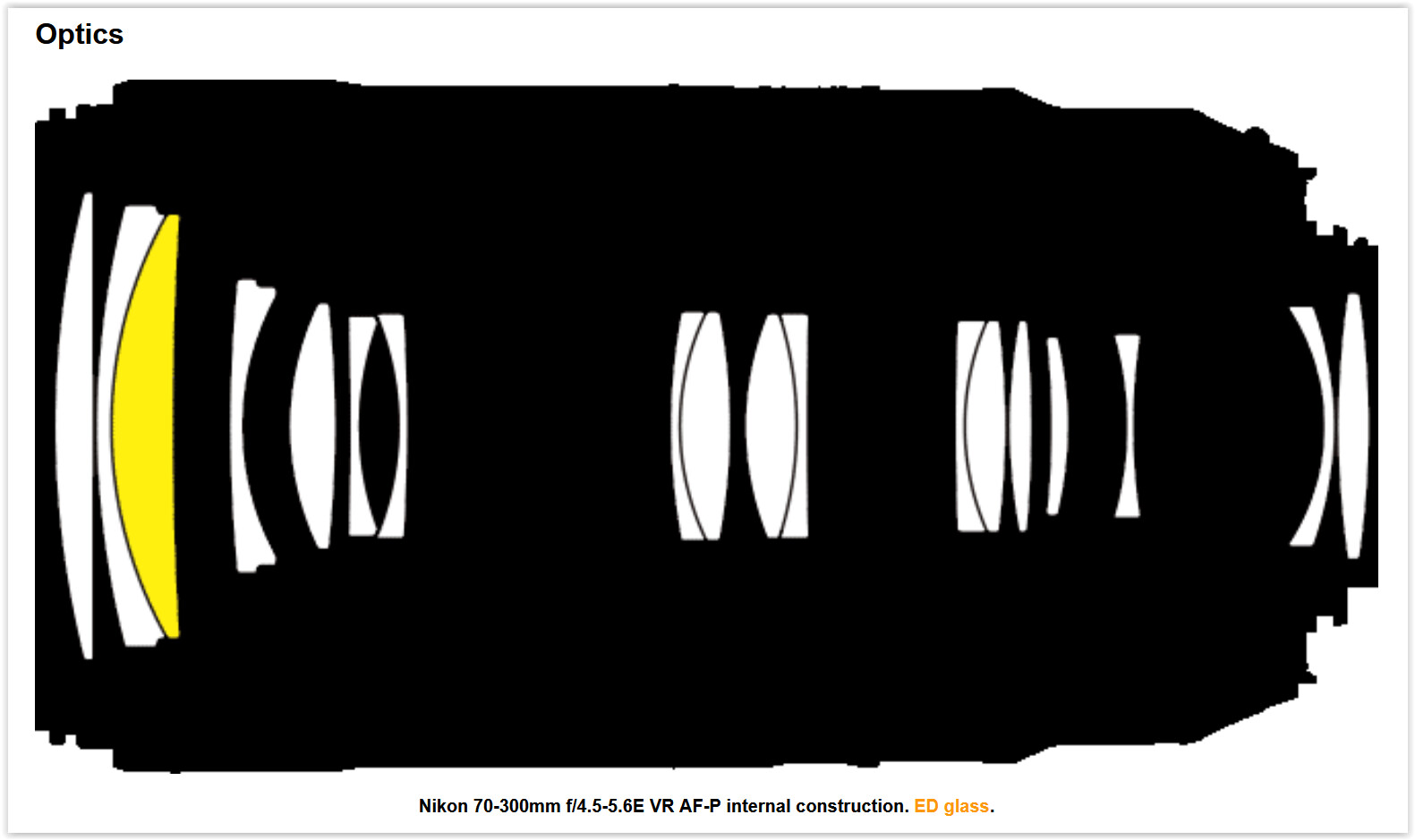
AF-P NIKKOR 70-300mm f/4.5-5.6E ED VR
Not sure why I have to “prove” anything? I have already accepted that several of you are better photographers than me, and you certainly have a better grasp of DxO PhotoLab than I do. I don’t always agree with all of you, but while I may “improve”, I don’t think I will ever “catch up”. Nothing wrong with that, and while I may not be up to “your standards”, I am usually happy with what I end up with. My editors were happy. Eventually I get “better” at many things discussed here (excluding things I have no interest in).
Until now, I was not aware of that - which is almost irrelevant when the tech support person at B&H simply told me that there are no tele-converters suitable for my 300 lens. Nice to finally understand the reason though - thank you for posting.
I don’t have the money to spend/waste on a 600mm lens. I’ve wasted far too much money on other things that I thought I would find useful. The best single thing I did was buying my D780, and my 70-300 is fine for me, even if there may sometimes be better choices, such as what @Joanna suggests. My 24-120 is almost perfect for me, but it is too dang heavy.
At least when it comes to cameras, as I see things, the D780 is far and away the best camera for me, bringing me the best of DSLR as well as the best of Mirrorless, not to mention that it captures 4K video, despite “only” having 24 megs from its sensor.
What you wrote “what YOU have to prove” bothers me. There is nothing I have to prove, and I have no desire or need to prove anything anyway. Some of you want to print huge enlargements, which doesn’t apply to me. What does matter to me, is I learn A LOT from all of you, even if that isn’t obvious from the way I write.
And I VERY MUCH appreciate all the feedback and information I learn in this forum. Maybe I don’t say that often enough. I don’t always agree, but so what?
There is gear and there is ability.
While it is easy to throw money at hardware and software, most people don’t bother to hone their skills in their ability e.g. for composition, light and dark, colour harmonies etc. The need for getting such skills is not obvious either, specially if we’re focused on sharpness and true to life reproduction, but even here, we could add some easthetic/artistic value.
Using what one has is certainly more sensible than buying more stuff. More stuff wants to be learnt, less stuff leaves more room for developing skills beyond what dials to turn and sliders to push. Just another opinion.
The way I think of what you wrote, it’s simple. The more things one has to think about, or worry about, or be concerned about, this decreases that person’s ability to do “the basics”.
Eventually, all those new “tools” and “ability” will be learned, and the person will do them naturally, freeing up more “thought time” to be concerned with what I might call “the basics”.
New tools require time to learn them. Or, crudely put, if I’m putting all my concentration into holding the camera/lens still, that detracts from my time/ability to optimize the best image to capture. Or, more specifically, if I am putting all my effort to keep a bird within the image frame, I’m doing a lesser job of capturing the best instant (which I resolve now by holding in the shutter button, hoping some of the images I’m capturing will be something I like).
I like tools that do a better job of automatically doing more of what I’m supposed to do, such as better/more accurate focusing. Those tools amplify my ability to get a good image. But were I to buy a 600 or 800mm lens, making the subject bigger (a good thing) there is a very good chance I won’t even get the subject completely captured).
Or, a silly comparison, if I have 100 units of ability to capture a good image, I want to use as much/many as possible on the most important things. As much as possible, I’d like to “automate”, so I don’t need to waste time thinking about it, and instead use that time trying to get a good (interesting, composed, sharp, colorful) image.
Also, right now I’m going outside trying to capture images of any birds that get near me. This coming weekend, or the next, I will go to one of the bird watching sites near me, where I ought to have hundreds of opportunities to capture something good (if I do my part correctly).
I’m guessing I only need one piece of new hardware, a good monopod.
@wolfgang and @Joanna have pointed out that I’m getting blurry images because I am not capturing scenes with enough pixels. Of course they are right, but it’s a bigger problem that I wasn’t “freezing” the image. So, for my next opportunity, I need to work on both concerns.
I’m not sure how to respond to this. I think it depends a lot on how good a person’s “stuff” is. I guess that depends on what is being photographed. That’s a dangerous thought though, as I suspect many of us can’t afford the camera gear they wish they had.
This of course leads back to the question of “what is it a person want’s to photograph”.
…along with “how good a photograph does the person want to take?”
How many of us are capable of taking this photo that @Joanna posted, let alone knowing the “trick” she used to be able to capture it?
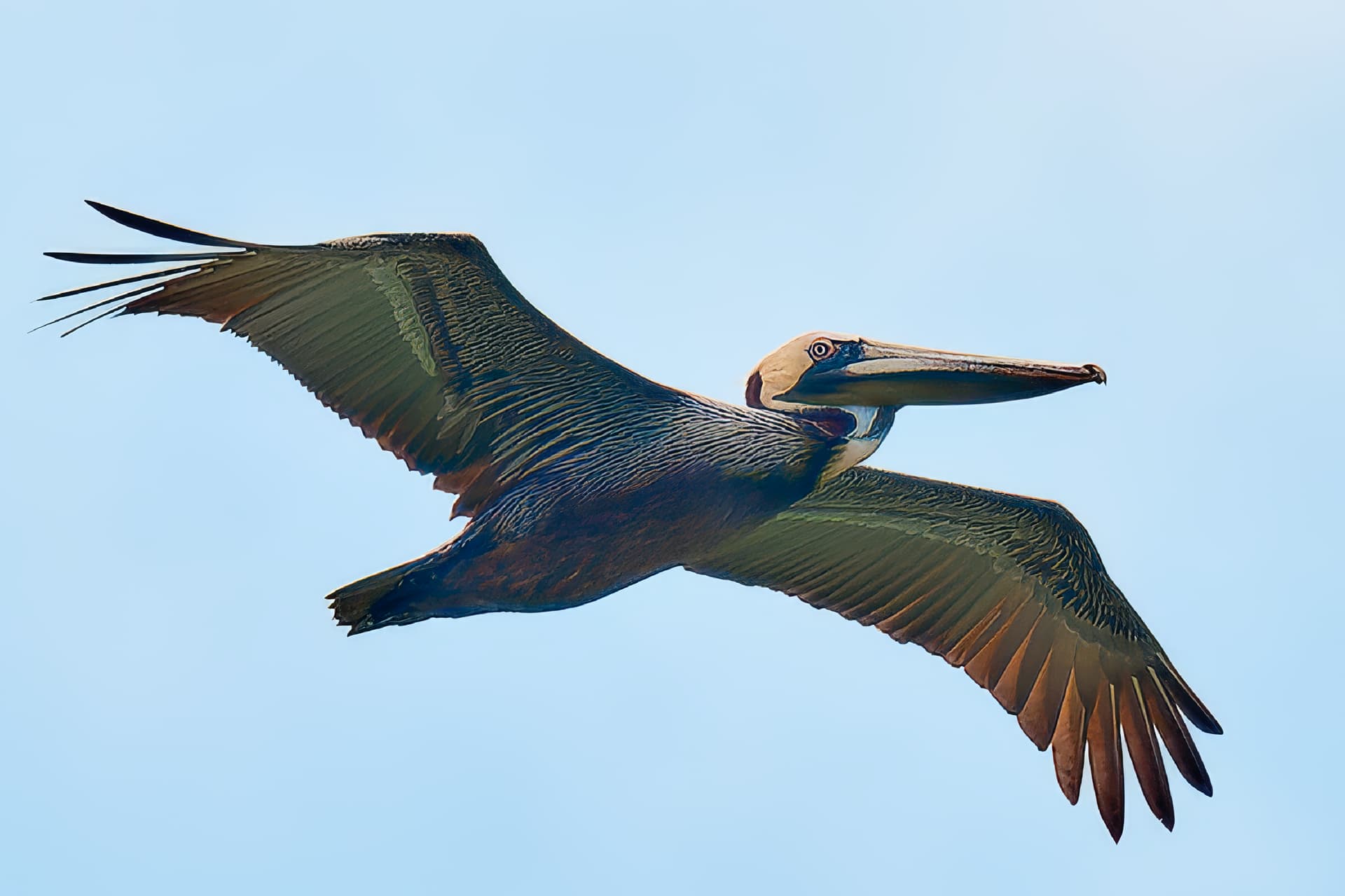
One last thing - I was very happy with my Pelican photo, but got to read here:
It’s not an answer, but my thoughts are “do the best you can with what you’ve got”. …along with knowing how the photo will be used, which in my case is often simply “e-mail”. But I won’t stop until I get photos like this that @Joanna doesn’t complain about.
https://forum.dxo.com/uploads/default/original/3X/1/c/1cfb52fb9295ac6471e1ac810f6fba1cfbf46b29.jpeg
I guess I didn’t pay enough attention to this image - only when I went back to see it again, I found that there was a second bird hidden in the photo!
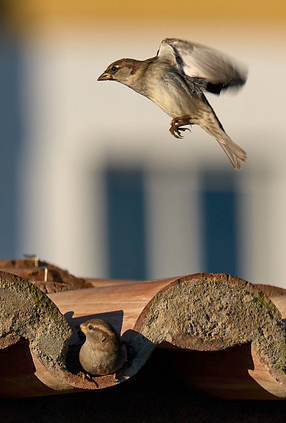
Nice!!!
There are times when I get annoyed with some of the quirks and foibles of PL.
But then there are times when I jump for sheer joy…
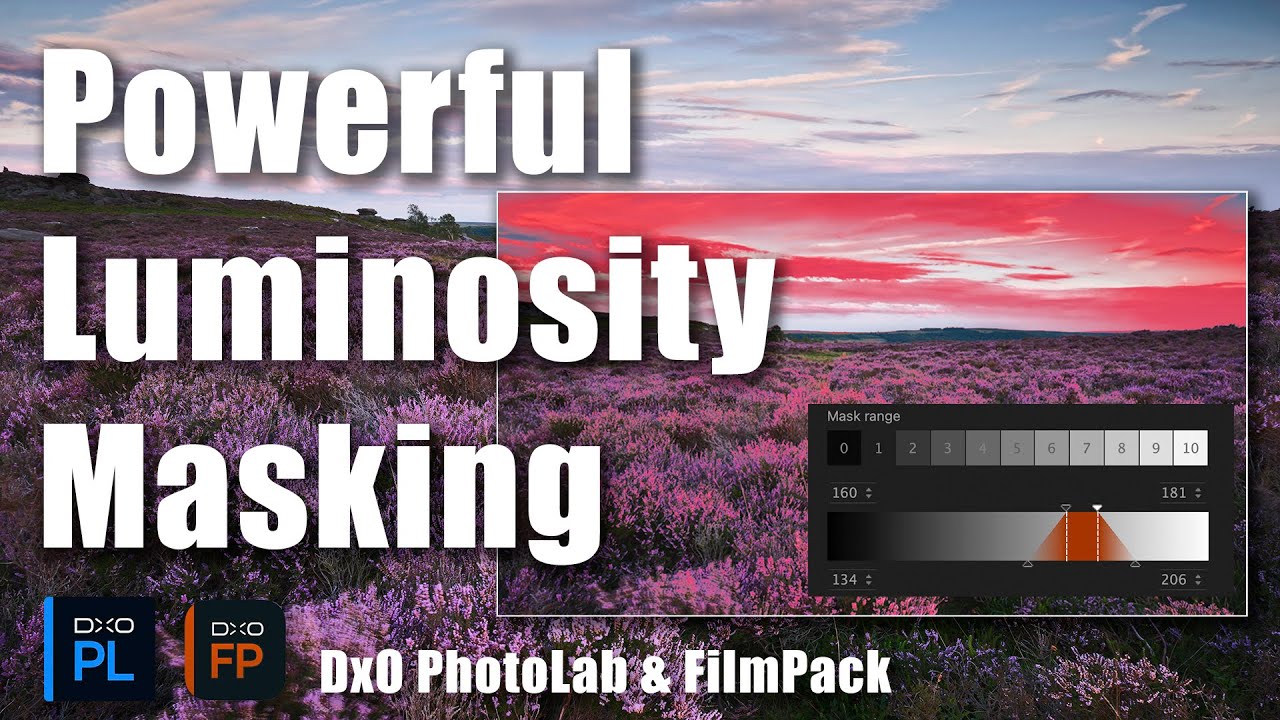
Finely found a use for the Luminosity Mask to bring out the cloud detail, just for the sky area, with no fringing.
To try to understand what you are doing, I did a search and found two videos that might explain this to me:
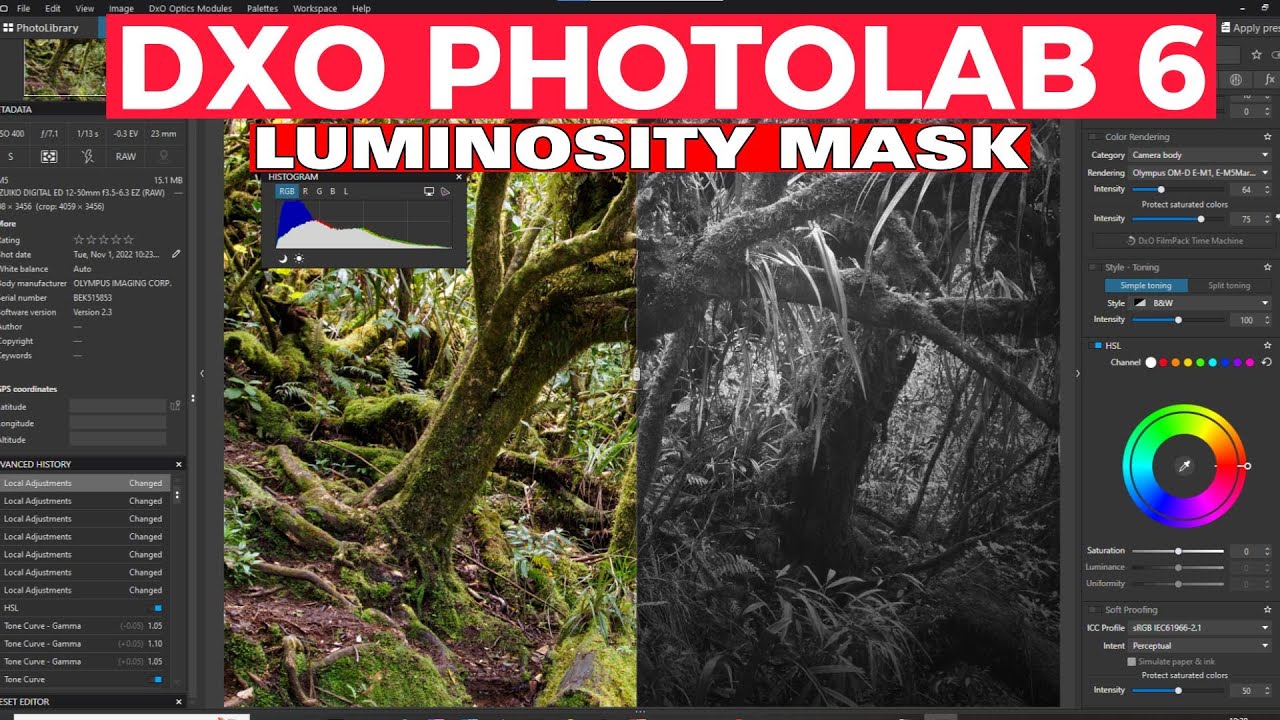
and…
@Joanna, can you please also post a “before” image, so the comparison can show what you’ve achieved?
I’m not sure if the links I just watched (and posted) relate to what you have done - I’m guessing you are adjusting the masks to only include the cloud detail, and not the lamp. The videos I linked to describe functions that are not included in PhotoLab. Do I need to update my other DxO software for this to work?
(It was also fascinating how the creator of those videos did the editing, changing his mind based on the results.)
First of all, totally ignore the first video. Even he doesn’t know what he is doing and he definitely doesn’t use the best image to demonstrate the Luminosity Mask. In fact, he doesn’t even need to use it.
The second video is about using FilmPack standalone, which you simply don’t need since everything about the Luminosity Mask is differently laid out in PhotoLab.
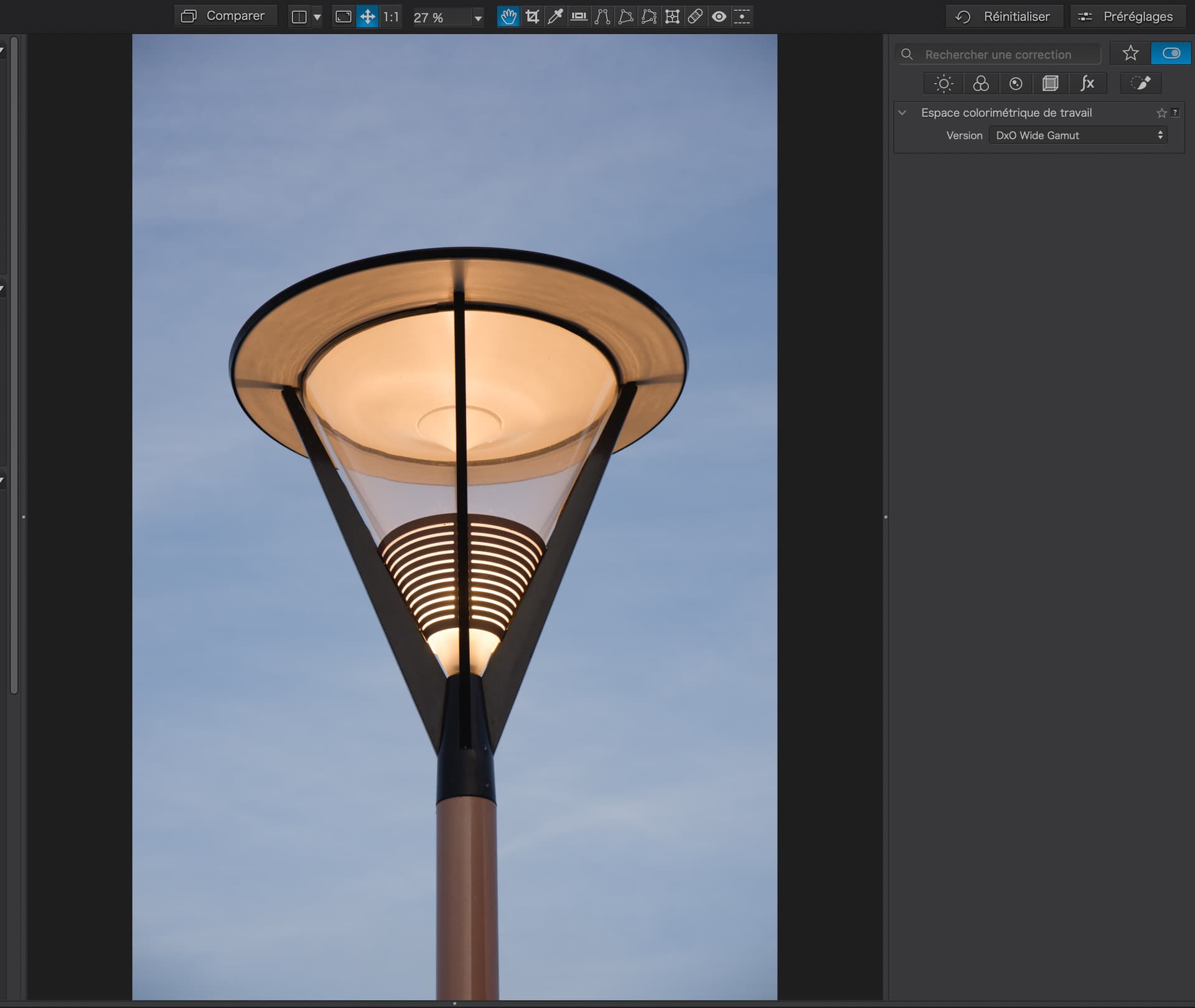
First, here’s the basic image with no adjustments…
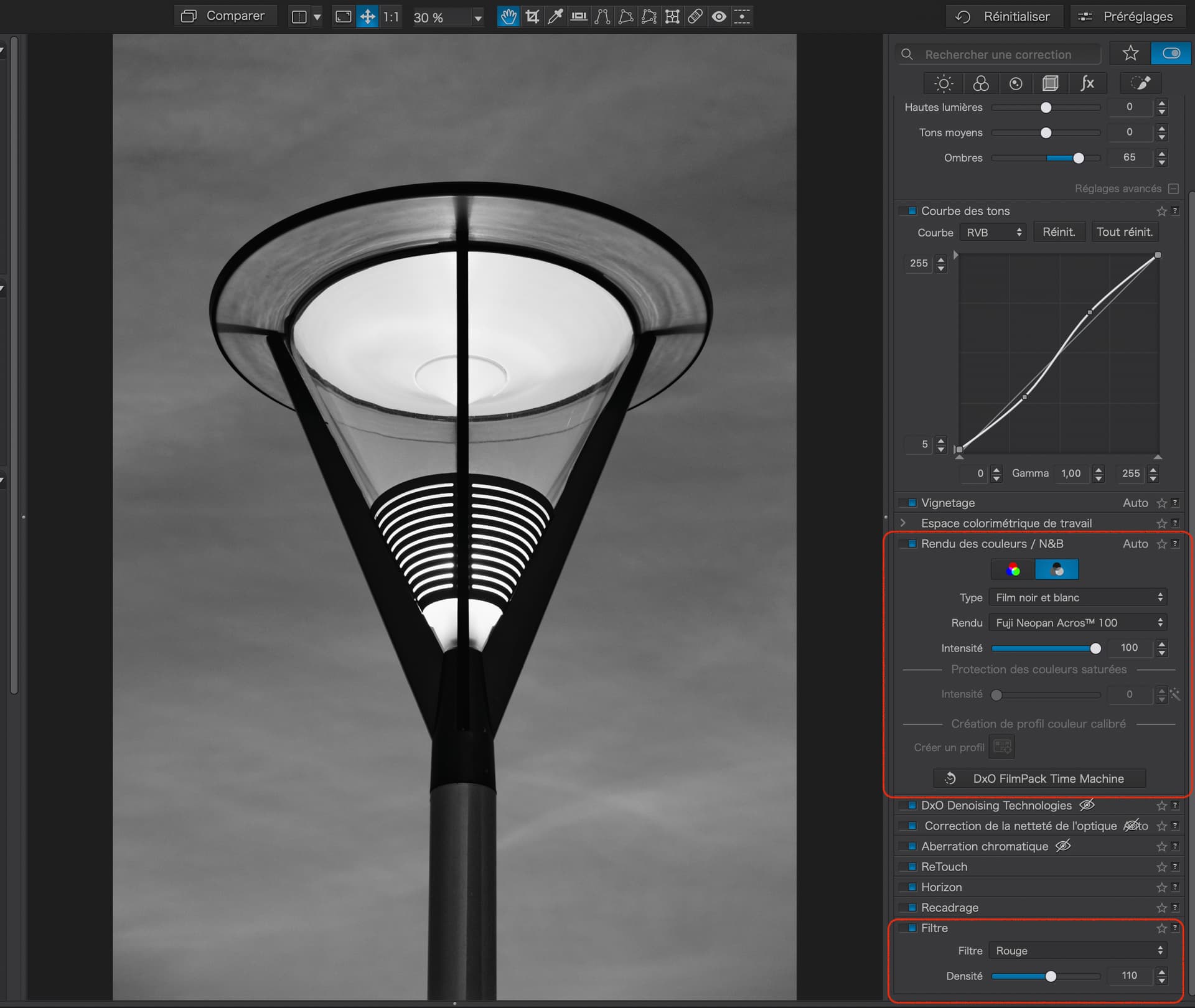
The next thing I did was to apply my favourite Fuji Acros 100 film emulation and make a couple of slight global adjustments to the tonality and contrast…
Notice that the sky is very low contrast, so the next step is to apply a red filter to darken the blue…
… but it is still lacking in. detail and contrast to bring out the clouds, so this is where the Luminosity Mask comes in.
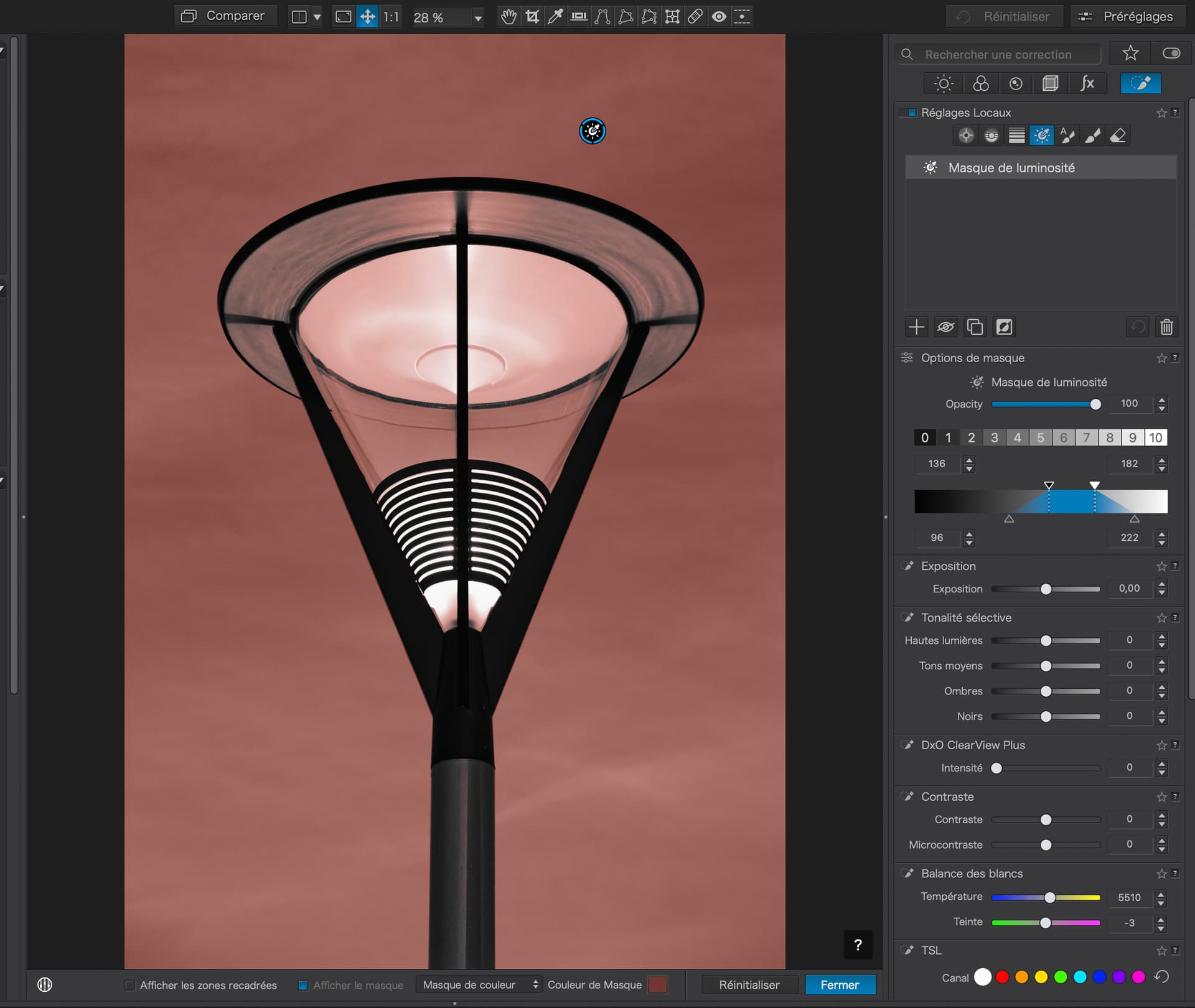
Find the tool and drop the pipette onto the sky…
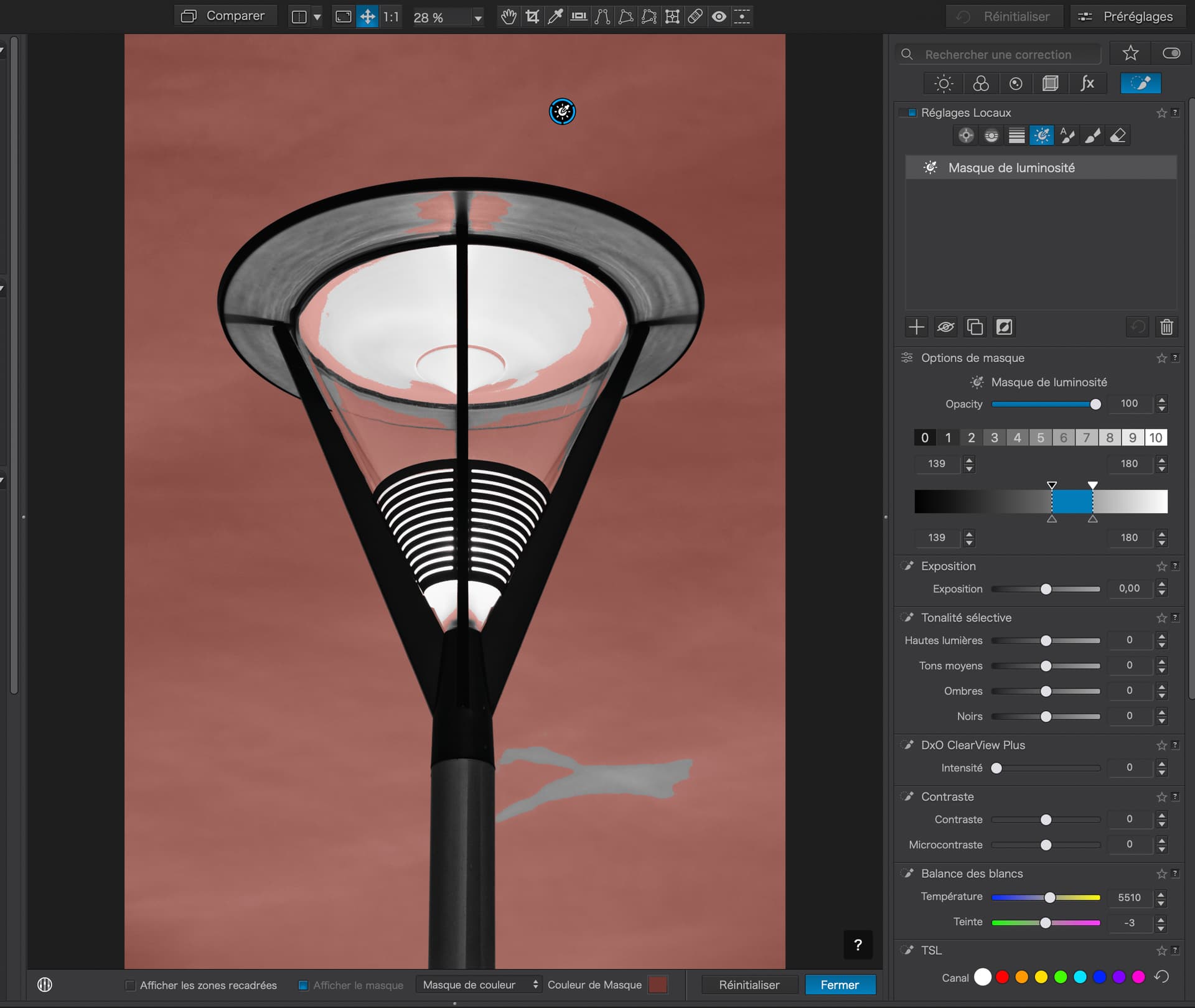
Notice the default setting selects a lot more than we want, so then we need to adjust the shape of the wedge thingy until only the sky is selected…
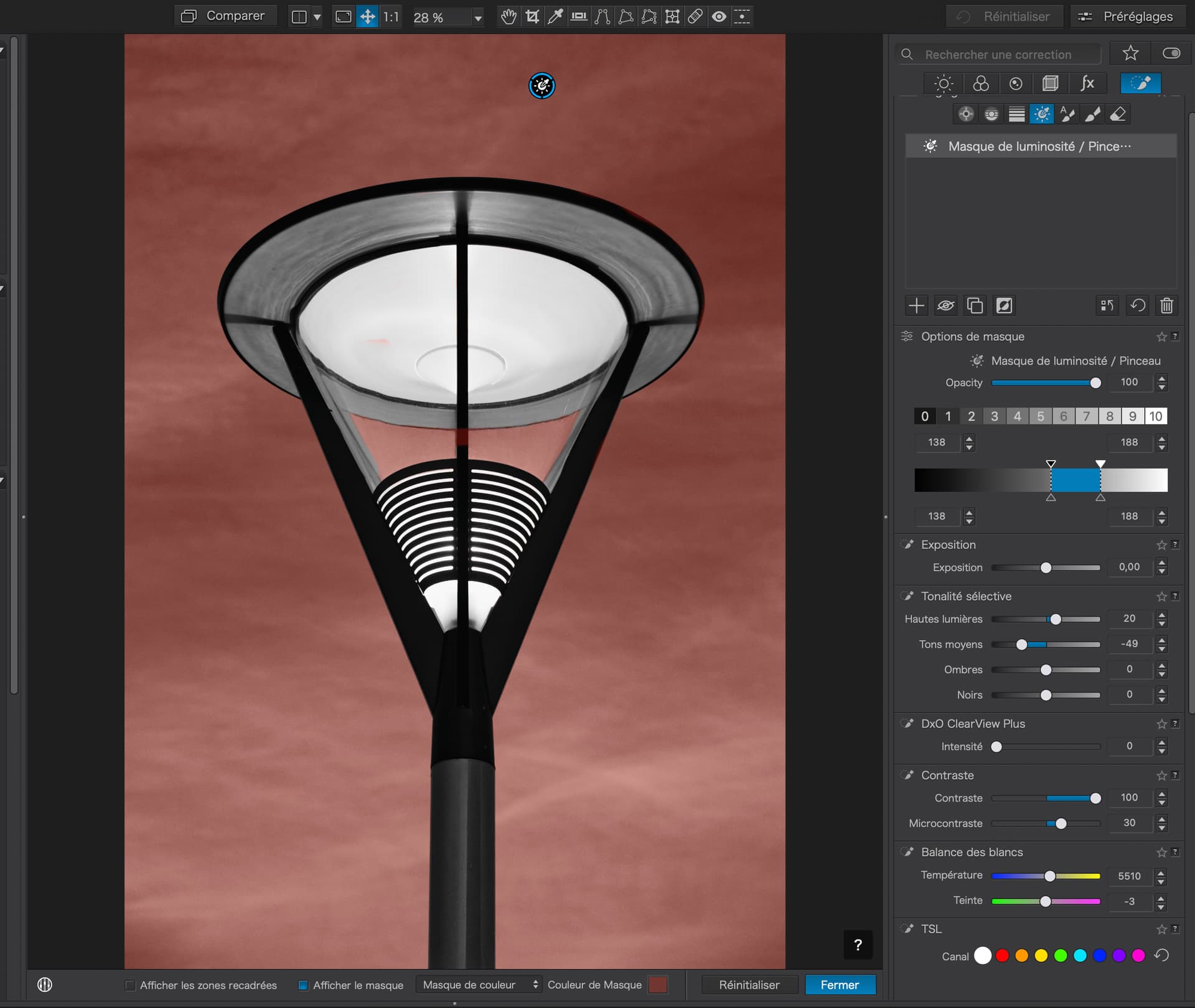
You can see that there are still some areas that should not be masked and you will need to choose the eraser tool to remove them and the brush tool to add anything that should be selected.
This should be the result, with the sky visible through the lamp glass and, if you look carefully at the right palettes, you will see the adjustments I made to further separate out the clouds from the blue of the sky.