Thanks, do you mean that it also adds the effects of Creative Styles including our adjustments for sharpness, contrast, saturation e.t.c like Imaging Edge does? The Sone EXIF additions?
Yes. that’s how I read Gary Friedman’s manual
Clarification.
From Wikipedia…
A common misconception is that ISO is an abbreviation for “International Standardization Organization” or a similar title in another language. In fact, the letters do not officially represent an acronym or initialism. The organization provides this explanation of the name:
Because ‘International Organization for Standardization’ would have different acronyms in different languages (IOS in English, OIN in French), our founders decided to give it the short form ISO. ISO is derived from the Greek word isos(ίσος, meaning “equal”). Whatever the country, whatever the language, the short form of our name is always ISO.[7]
It is purely a standards organisation with whom a certain scale of sensitivity to light has been registered.
When used in the photography world, it is used as a short form term for the measure of sensitivity. For film this is dependent on the emulsion. For digital, it is a measure of how much the signal is amplified, in the A/D converter, after it leaves the sensor.
On Film, increasing the sensitivity of film is achieved by increasing the grain size, which causes either black and white or coloured dots that do not originate in the subject being photographed.
With a digital camera increasing the (apparent) sensitivity of the sensor is achieved by increasing the signal gain in the A/D converter. The resulting coloured dots are a result of random variations of amplification between individual pixels.
As to ISO invariance, here’s a screenshot of two RAW images, taken on my Nikon D850, in Fast Raw Viewer…
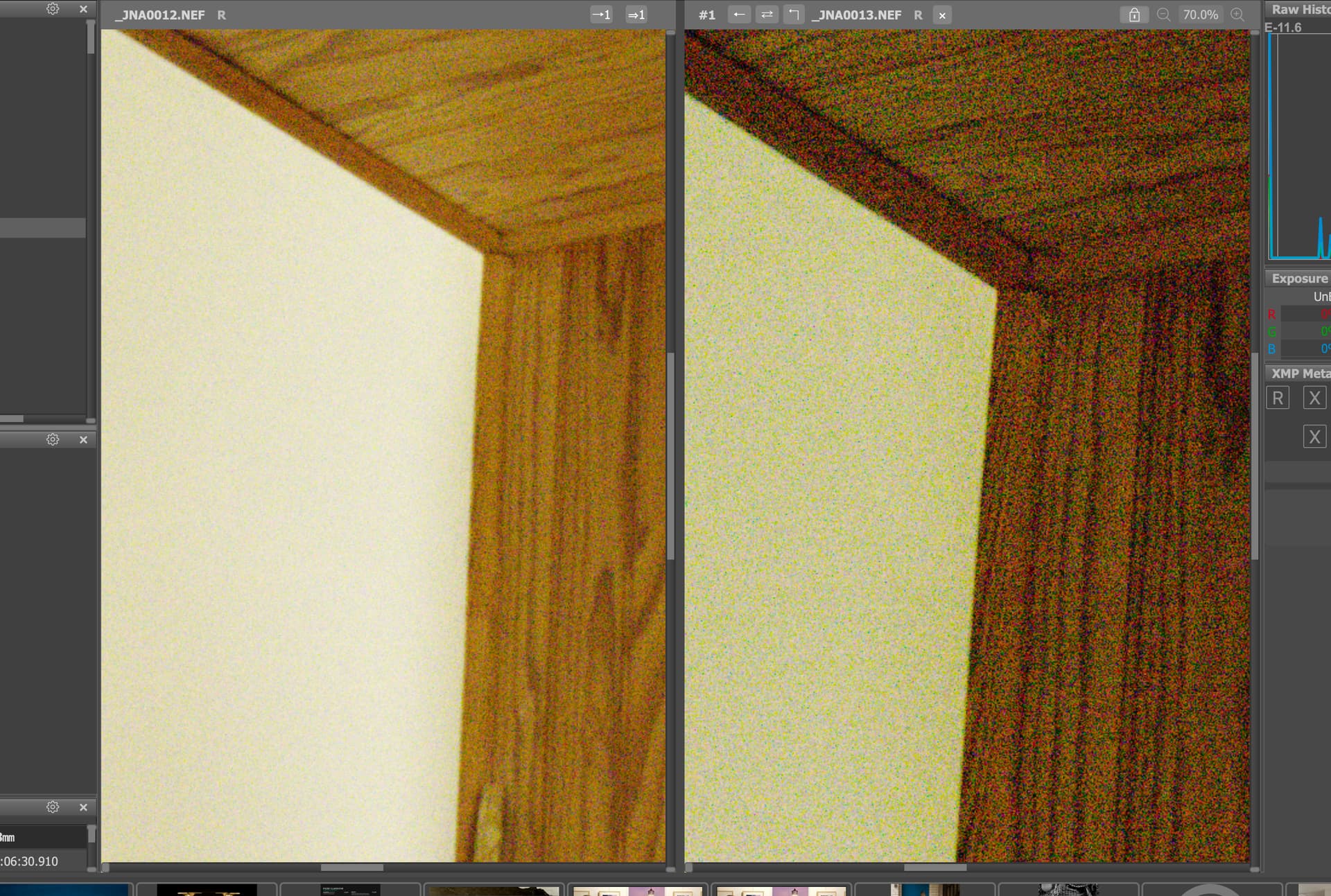
Both parts are taken at 1/500 sec @ f/5. The left one is taken at 25,600 ISO. The right one is taken at 100 ISO and then the exposure slider in FRV was increased to +8EV to give the equivalent exposure.
Given that PhotoLab can’t increase exposure by this much, Guess who’s going to stick with high ISOs in the camera rather than trying to recover highly under-exposed low ISOs? I doubt if I’m ever likely to better this screenshot of the 25,600 ISO in PL9 with DeepPRiME XD…
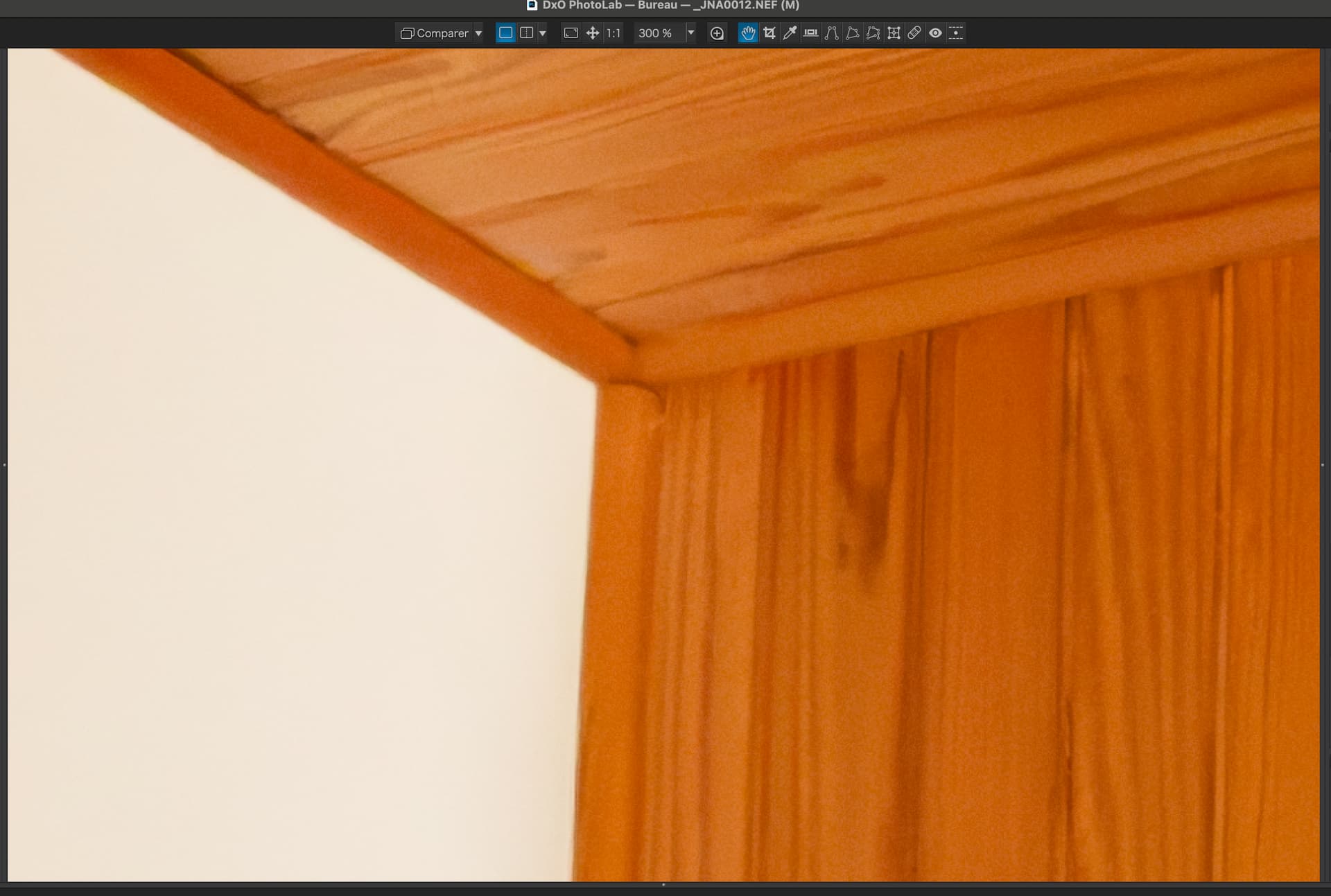
P.S. please excuse the lack of sharp focus.
1 Like
Note: Per the established standards, ISO is a calculated value based on the amount of light that saturates the individual sensor elements and reported as a value to approximate traditional ASA/ISO values used to rate film emulsion light sensitivity.
The ISO values set in cameras are NOT derived from any actual low-light performance measurements so do not indicate anything about low-light sensitivity or image quality.
Here is a link to the formal standard for defining “ISO” in cameras. ISO 12232 - 2019: Photography - Digital Still Cameras - Determination Of Exposure Index, ISO Speed Ratings, Standard Output Sensitivity, And Recommended Exposure Index
A summary and some explanation provided by DXOMARK. (Yes, I know the difference between DXOMARK and DxO.)
ISO Speed
Here is another link for explanation. Sensitivity and ISO 12232
The Sony cameras I use are approximately “iso-invariant” from about ISO 500-12,800 based on the DXOMARK and Photons to Photos data (linear) and my non-scientific tests confirm this. For my photography, this means that I get the same results by adjusting ISO in camera as I do adjusting exposure in post-processing. Tis provides addition flexibility when shooting. DxO PhotoLab has a +/- 4 stop exposure range adjustment so my low-light photography needs to consider this limit too.
Since ISO is not a measure of the camera’s low-light sensitivity, the photographer needs to use different methods or judgment for what is acceptable dynamic range and color fidelity for the intended purpose of the shot.
While not trying to “avoid high ISO”, my choice of ISO depends on my image quality objective as well as available light.
For my main Sony gear and needs, ISO 3200 or better provides excellent image quality with more than enough dynamic range, color fidelity, and very low noise. Up to about 12,800 is usually acceptable for most of my general bird and nature photos, but the noise and color fidelity drops off. Above 12,800 is for “just need a shot” cases. For my older gear, there is less “latitude”.
In other words, my use of ISO is as a general reference for the amount of available light across the scene. ISO 3200 or better means shoot normally; ISO 3200-12,800 means consider changing F-stop and speed; and at higher than ISO 12,800 than add supplemental light (flash) or accept a marginal image. Generally this gets me within the +/- 4 Stop constraint in PhotoLab. (Apparently my eyes see the 2-stop change in dynamic range between ISO 3200 and 12,800 for this camera.)
Just my 2 cents. Others may have a better way of using the flexibility of ISO for their photography. It sure beats changing film cartridges for different shooting conditions!
1 Like
Nikon, like many others, has given us “happy numbers” when it comes to ISO another area where they have fooled us is when it comes to F-numbers on lenses. Many old lenses were at least marked one full stop too high since most old lenses were in practice usable fully open.
ASA - ISO same scale isn´t it?
At that time the germans use DIN (Deutsche Industrie Normen) like for example Agfa and ORWO.
There is NOMINAL ISO and REAL ISO Joanna and Nikon seems like many others have given us too high measured ISO values as can be seen on the DXO Sensor site.
Here is an example with your camera model D850 as I know it measured by DXO
ISO 100

ISO 200

ISO 12800

So ISO 12 8000 isn´t even 9 000 in reality. What kind of effects do we get of that misconseption??
I like Gary Friedman a lot and I think it really adds to get a description of all the functions in the camera you have got together with a lot of every day examples. I have bought quite a few of his “friendly manuals”.
His manuals often can make a huge difference. Our modern cameras has now so many sophisticated functions that also interacts with other functions in a manner that it often just isn´t good enough anymore withg just common “guy´s guesses” to handle. Yestersay I sat and did not understand why my A6400 stayed in “burst mode” of 10 fps desoite it was set in single shot. It took a while to figure out that lack of logic on my own.
Probably most people buying a new Sony- or Fuji-camera would benefit a lot getting the proper friendly manual to from our friend Gary. He is doing a lot of good work and isn´t even having a VIP-status at Sony despite all the good he is making for them. One he mailed me and asked if he could borrow my then new NEX-7 since we in Sweden of some reason had got an early batch NEX-7 several months before they gor released in the U.S.
I don’t know how you could tell this. The F-number is is F-nr=f/D when focused at infinity. But it should be F-nr=imagedistance/D. Digital camera’s can calculate the image distance. So you may get a full number difference when using an old lens with F-numbers and what is shown by the camera, special when focussing close like with macro. Image distance can get twice the focal length.
George
It is very simple. If you buy really expensive and fast lenses say with an F-value of say 1.4 or 1.2 and finds that you just can´t use it fully open because it is so unsharp and useless that you in reality has to stop down to F/2 or F/2.8 then it is my opinion that it should be sold as a F/2 or F/2.8-lens.
I have seen a lot of that with almost all manufacturers’ lenses from the nineteen seventies. I have seen many 40mm and 50mm lenses with F/1.8 or 1.7 that needed to be stopped down a whole stop or to 2.8 many times in order to get usable.
I have always felt pretty irritated over that phenomenon.
1 Like
You mean the quality of many old and fast lenses. That’s past I think.
George
Is it, from what I have read a lot of both Canon and Nikon-users are using older lenses with adapters both on Z- and R-mount. A lot of Sony-users are using older lenses with adapters - in fact the wide adapter support Sony has had for a long time have been one reasons that Sony has grown their market shares in the beginning of E-mount.
I saw myself many years ago a few Leica photographers that had bought Sony NEXT 7 -bodies and using them with Leica-glass as an extra much cheaper body. At that time I think they were after even a body with CMOS-sensor with better low light performance than I think Leica M8 had at tha time with it´s CCD.
Some Canon photographers also used their Canon-lenses on Sony A7r-bodies with better DR than Canon could offer at that time. People have had all sorts of reasons to cross-over and use their lenses on bodies of other brands.
**[quote=“Joanna, post:1, topic:52494, full:true”]
The other day, I came across someone who was telling other members of a group I teach to avoid high ISO.
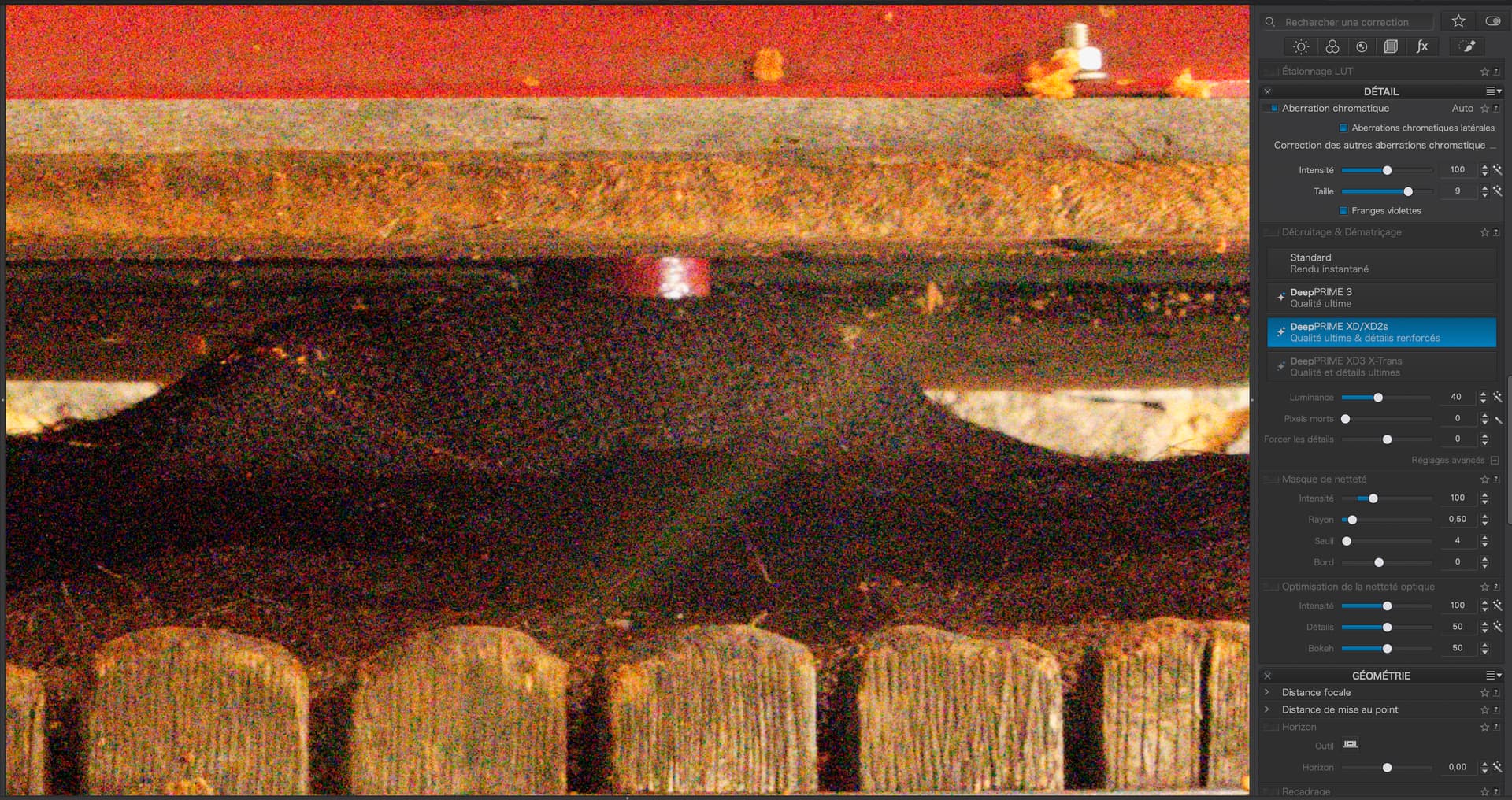
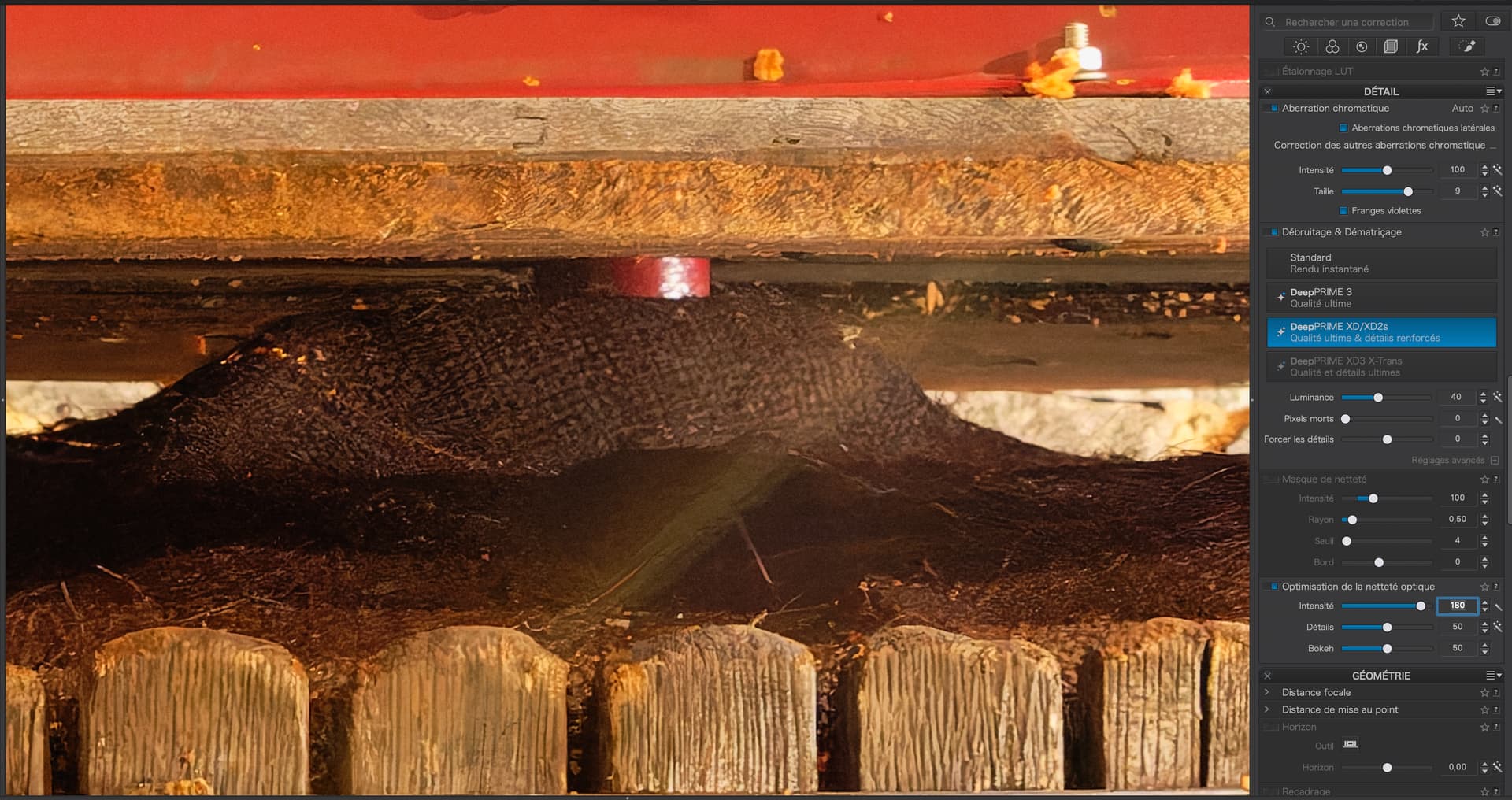
Well, possibly if you don’t have PhotoLab. But, if you do, here is a 200% zoom on an image taken at on my D850 at 25,000 ISO with no noise reduction…
… and here it is with DeepPRIME XD…
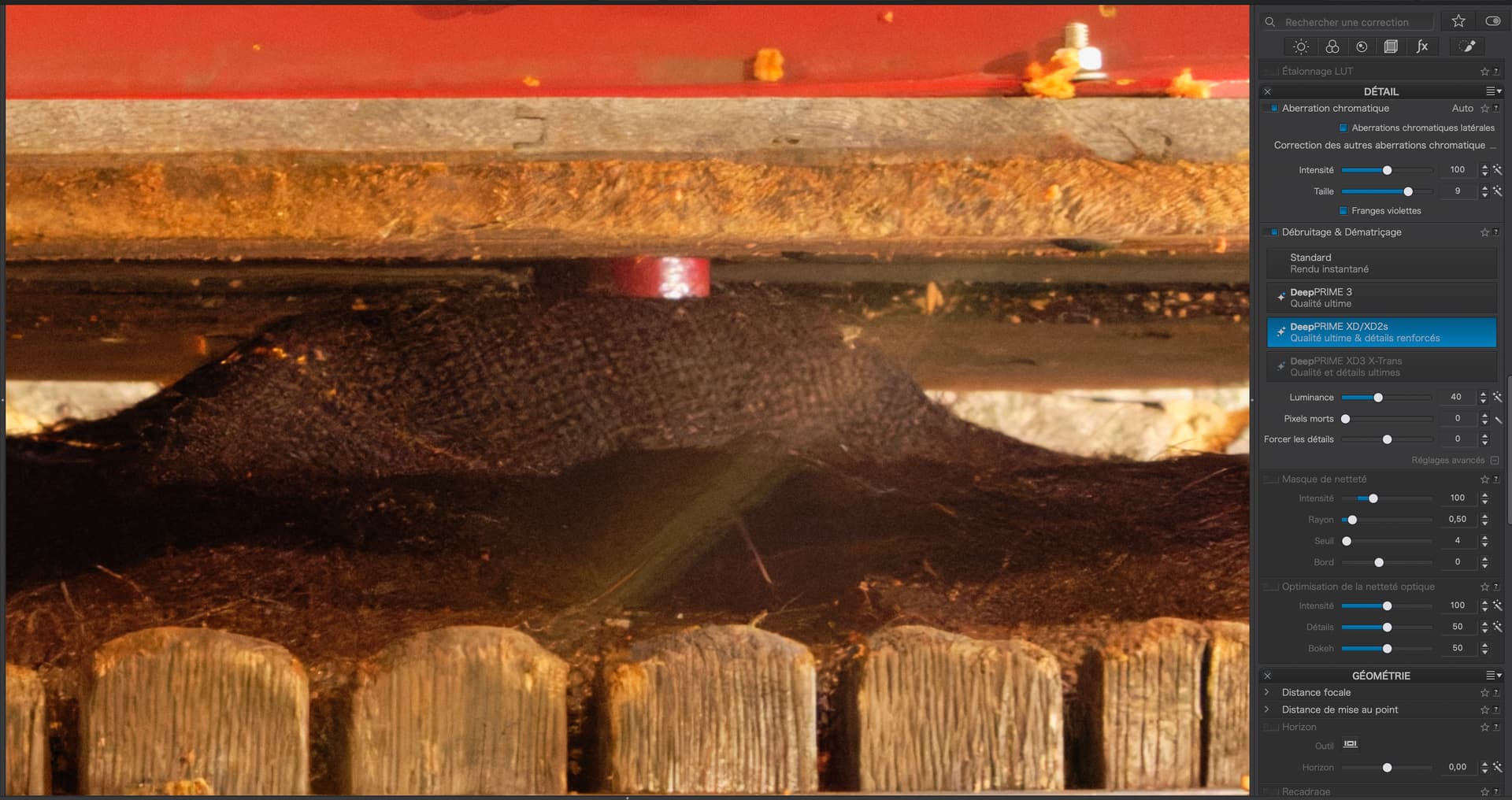
… and just to clean up the detail a tad further with the Lens Sharpness Optimization tool…
Finally, the whole image in PL9 (35% zoom)…
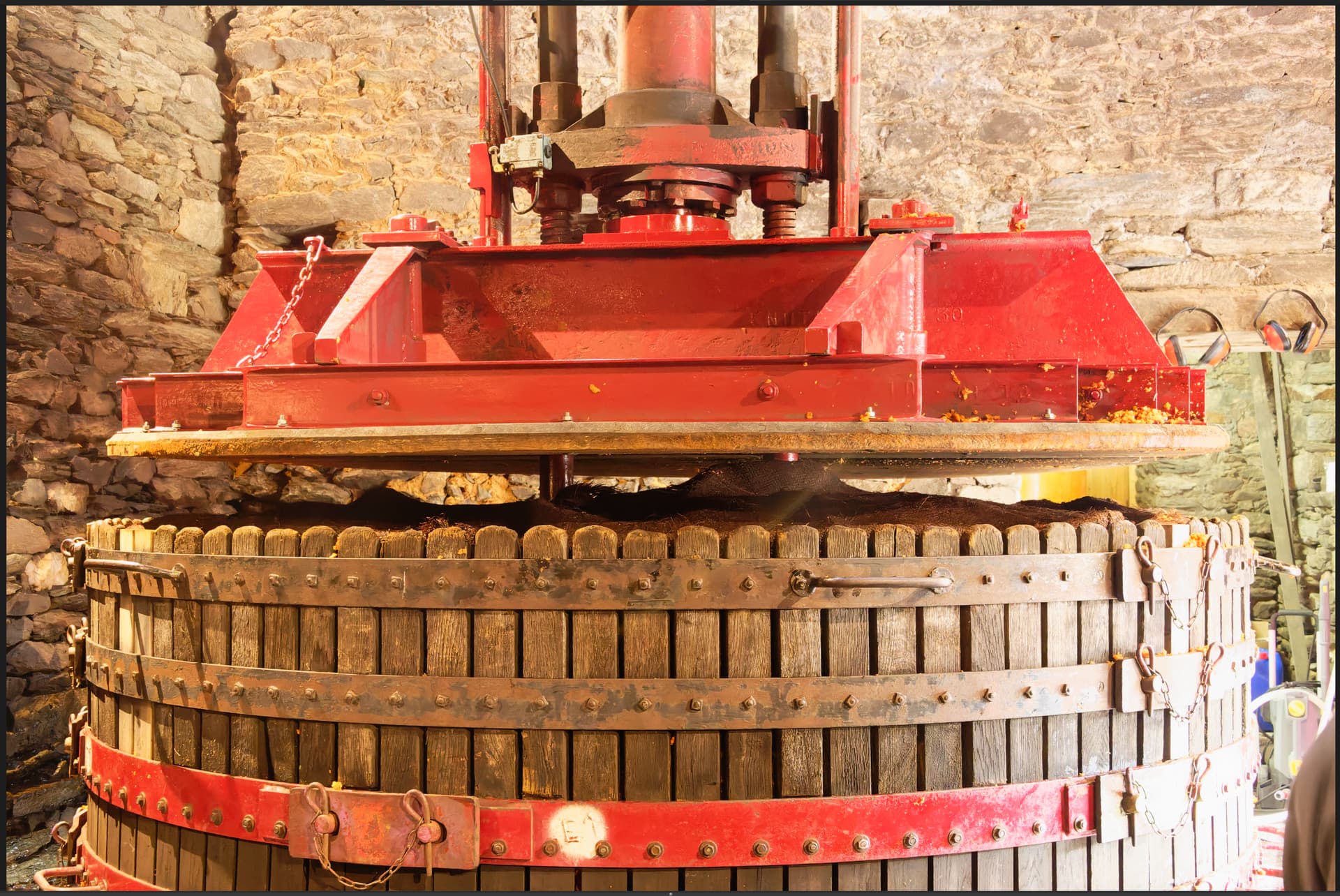
Exposure 0.4sec @ f/11
[/quote]
strong text** It is my understanding that it is lack of light that cause the noise not high ISO.
Depends of which noise you talking about. 
Shotnoise ,like straylight, is always there. The lack of good (enough reflected as a bundle of the object) light is only make it visible.
Electronic noise, noise that is made by the electronics of the sensor til ADC, is also always there but more visible due the low signal ( one sensels charge) and SNR is that close that part of the noise become “signal” in the convertion.
if you make a long exposure shot as base iso you also get noisy images because the straylight and electronic noise due sensor heating and such has longer the time to accummulate in the “signal”
( hence some special longexposure modes to reduce rednoise in camera’s)
ISO is basicly a way to unify lightnes of a image in RGB. (your screen)
and wile you use it the manufactores did some fidling and tinkering of electronic settings to optimise the sensor and ADC circuit for lowlight conditions.
You could say highISO settings give you less noise then base iso underexposures due the optimalisation of the circuits and rawfilemapping. ( At the cost of smaller Dynamic Range in your image.)
if you keep the exposuretime the same and use ISO as compensation for a DoF adjustment, (closing down the lens aperture) in order to keep the oocjpeg the same lightness then theoreticly this image would be less noisy compared to a image which keeps base ISO and adjust Aperture and keep the same exposuretime and relay on post lightness adjustment.
(post exposure adjustment isn’t possible, if you do you take an other photo  )
)
Exposure is time of open shutter and the size of the hole it can be traveling throug.
ISO is the “jpeg” part of the image the lightness on your LCDscreen.
It doesn’t ADD noise it just reveals it by lifting shadowlevels to a point it looks like daylight.
the exposure “tryangle” isn’t a tryangle but more a slider on a line and a “offset”
the line is your desired exposure level: more time means higher number of F to keep the same level of exposure. opening up the lens means shorter time to keep the exposure the same. ( Yoiu slide the slider to more time and smaller hole or les time and bigger hole ) and to have more wiggling room in low light they added a third factor: the choice of film emulsi sensitivity at the cost of less resolution ( bigger grain)
this behaviour was clear for every one. ( you didn’t change film every shot you changed aperture and shuttertime in order to get a good exposure.)
Now we can change “film” at every shot by turning the ISO Knob and its suddenly a part of the Exposure.
long time ago when we first got PRIME Denoising in DxOPL it was unclear in which part of the RAWfile to jpeg the denosing was done.
before or after the conversion from r,g,b,g towards RGB.
if you digg deep in this forum you find the discusions about it and the explaination by the Staff of dxo. To be short ISO values written in the RAWfile doesn’t effect the amount of denoising in PRIME only exposure (chargelevels) of the r,g,b,g pixels.
they claimed that Prime and even more effectively Primeplus/ XD/XXXD ( we have now the fourth generation i believe) targets mostly on low exposed area’s in order to reveal details in those area’s more clean and stripped from noise.
Prime XD did some magic in straigthen lines and adding contrast to “create” non excisting detail in a lowlight image to make it look sharper and more detailed.
the automatic denoise settings in prime doesn’t change when ISO value is high or low. ( atleast not in pl7) in order to have a quick repeatable denoisng balance between smearing out details and deleting noise you must make partial presets of ISO value related denoising values. reminder the slider isn’t lineair but exponeel ( can’t get the official name of this out my head)
but in short 0-20 has smaller steps then 40-60 and 60-80 is even more steeper/ more agression in denoisingstrenght.
So i made partial preset of default iso 200-400 and a 800-1600 and a 3200-6400. and desperate shots are 6400-12800.
( i have to make new ones because of the newest denoising technics in PL but my m43 camera has a drop off at 6400iso. until 3200 your “fine” most of the time for general snapshots and 6400 starts to be visible degerating wile 128000 is well better one then non.

left detail repair magic by XD(2) right second generation PRIME DeepPrime. at 200% on screen.
the inner jpeg of the RW2 
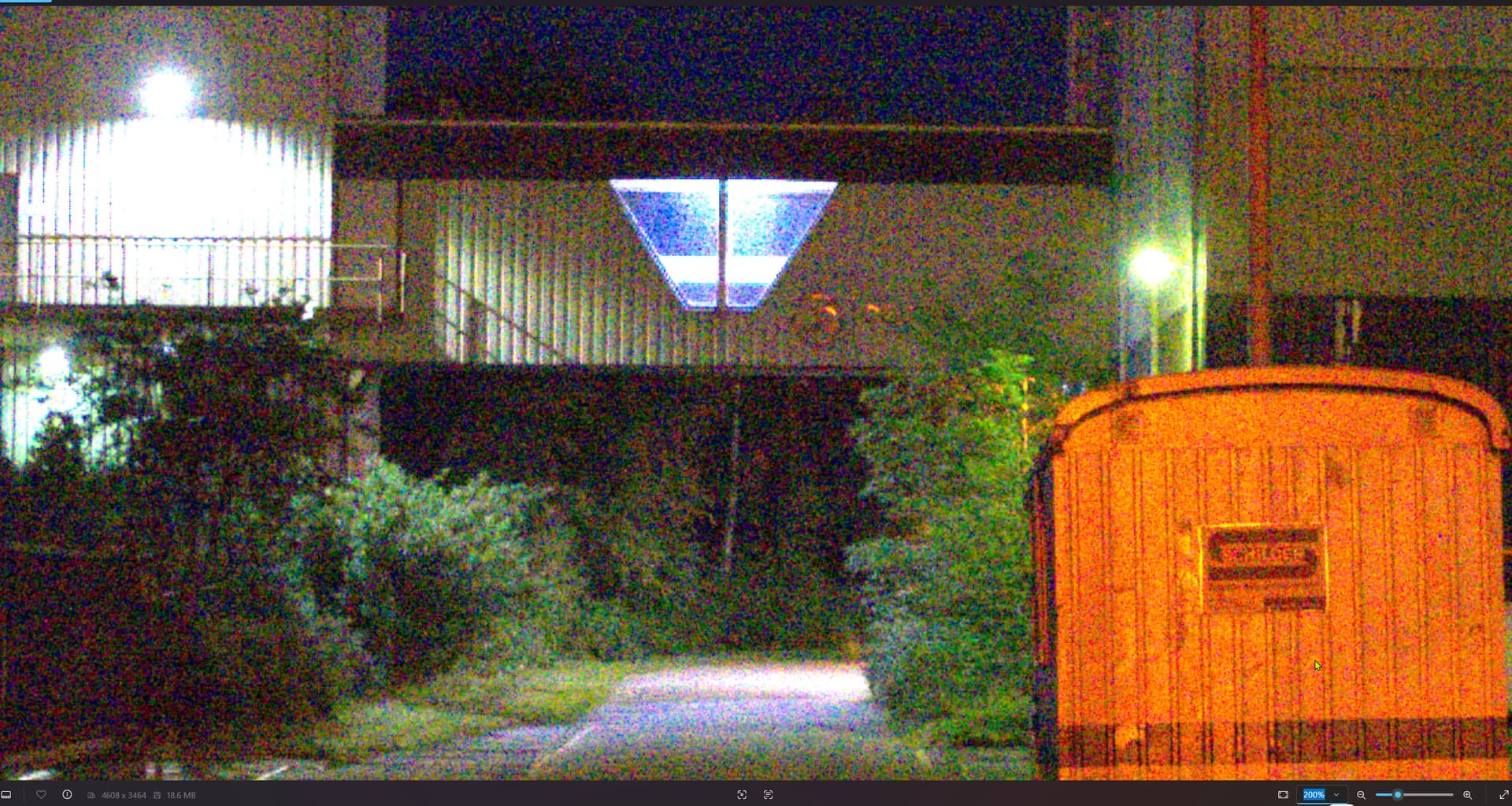
Fast Raw Viewer:

(See iso8000 does nothing to the exposure onlyto the oocjpegs lightness)
the ooc jpeg:

A minor quibble in that I am not a Sony shooter. I do have an option to brighten the display in general, but nothing specific to shooting parameters.
That works for the camera and Imaging Edge because both can read those special Sony data in the EXIF - BUT Photolab cannot because DXO and Photolab doesn´t give a shit for Sony´s or any others proprietary EXIF. They have developed their own camera-profiles. But that said it can be useful for people shooting entirely in JPEG.
@zkarj I apologise. I knew at least one of you was a Sony shooter. Can’t now remember why I thought it was both of you. That said, I don’t know that Sony is the only maker who can allow one to see what the sensor sees, and alternate it with what the “in camera jpeg” will look like,
1 Like
My G9 of panasonic has live view.
Two steps even.
Only aperture and also something else.
Don’t use it often so i dont recall out of my head.
G80 has something similair.
No one has said that I think. I was talking about proprietary EXIF-data and that is not used just by Sony and they are there to be used in proprietary RAW-converters. So the settings we use in the cameras “picture profiles” is in Sonys case used un their converter Imaging Edge thus giving a starting point in the converter that corrwsponds to what is used in camera to produce JPEG-files. In all general converters like Camera RAW these EXIF-metadata are ignored and that gies even for Photolab that has it’s own profiles. That said it definitely can be an advantage for some users to use proprietary converters of that reason.
What about just setting the camera in M. with Auto ISO. Then you decide both f/stop and SS. And in case you need to under- or overexpose your picture, I guess your camera has a setting for that as well…
Just too slow
Auto ISO Minimum Shutter Speed gives my superfast 5 step adjustent if needed and there is always exposure compensation too.
On my A7 IV I always have the fast five step compensation on the rear-wheel and on the front-wheel I can choose whatever ISO I want the system to strive for.
This is all about not stand there with a camera not ready for almost anything and to improve timing. This will do for more than 95% of my needs - the rest is Photolab.
The Manual mode I need realy rarely. For me Aperture is way more important and my Viltrox lenses has an aperture ring also with an option that is Automatic. Whith that set I can chose any combination I want of Aperture - Shutter Speed that the AISS suggest for not getting unsharp pictures under most conditions - if one suspect a need for faster speed it is just to chose Fast or faster. Under “normal” conditions that is usually sufficient. If I shall take pictures of birds I can always easily cater for that but that is really an exception. The M-mode is of these reasons usually a time thief that would make me lose a lot of opportunities and affect my timing in a very negative way.
With this smart Sony-Click configuration based on both AISS and Real Time Tracking almost never let me down. It really gives my the chance to totally focus on motif and timing instead on the whhels, buttons and knobs of my camera. I can never correct a missed composition because poor timing afterwords but most other things I can fix in post.
Maybe I’m slow, but I don’t get what is slow with M and Auto ISO! Just press the button! 