Like a tilt-shift lens?
George
Like a tilt-shift lens?
George
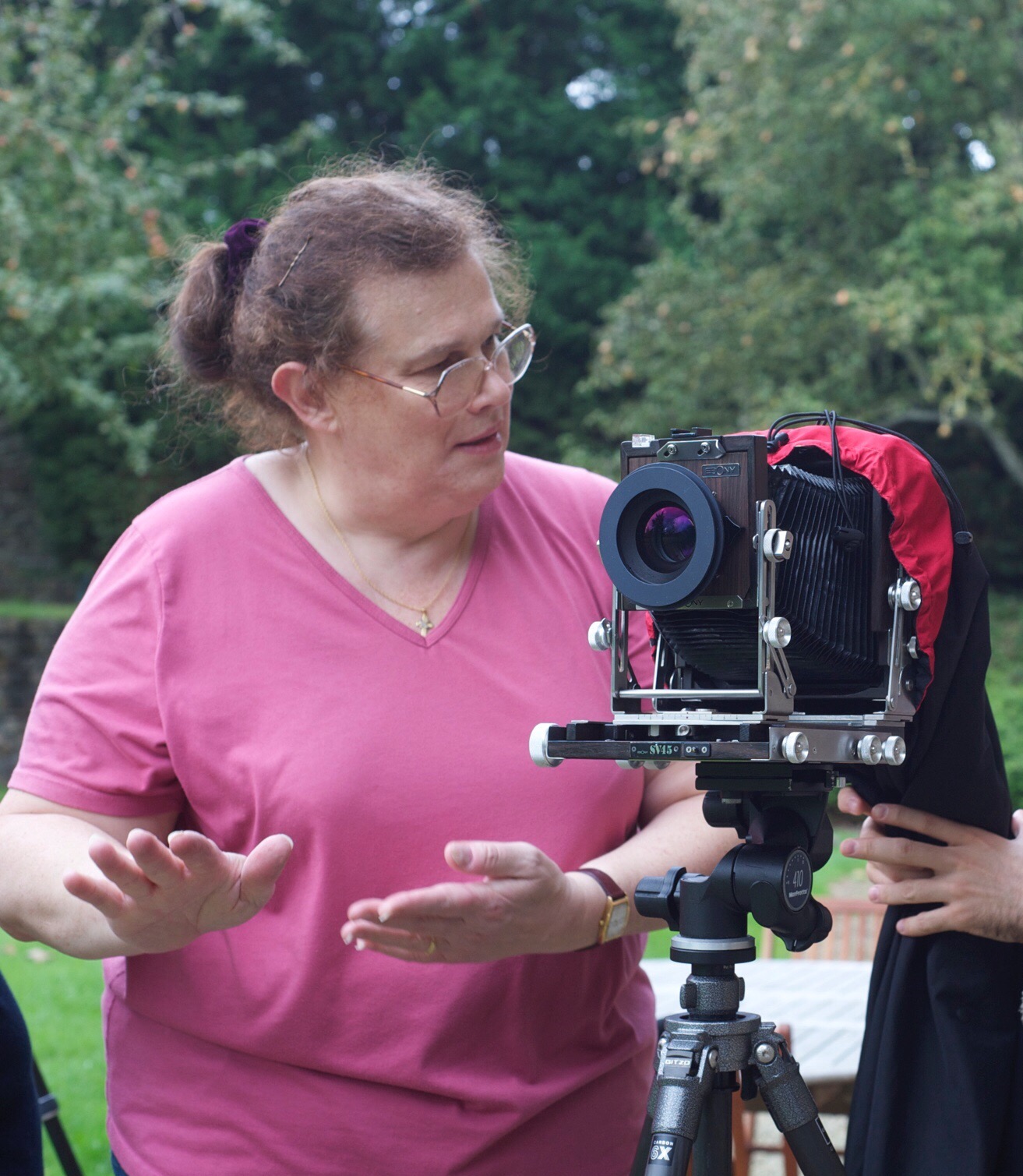
The design of tilt-shift lenses is based on the same principle as a view camera, but such lenses are a lot less flexible due to size constraints.
I’ve been searching what you mean with view camera. I see what’s meant.
A bellow camera.
George
A bellow camera. Lens shifted upwards.
George
YES …
Mike, we all make mistakes and (can) learn from them. While you have been pampered a lot, looking for another ‘excuse’ doesn’t help you to develop.
No one can hinder you to take additional pics, but the point is to try what YOU can do in post to get a result you are contented with. – Work on the pic and see if to make use of some of the many proposals.
It’s up to you to move – otherwise why to spend time on you?
With a view camera, or with one of these Nikon lenses, I can raise the lens while keeping the camera straight ahead. Or, I can rotate the lens 90 degrees, and then I can move it right or left. With a fancier model of these lenses, I can even tilt the lens.
Here’s a summary of some of these lenses:
“shift” lenses
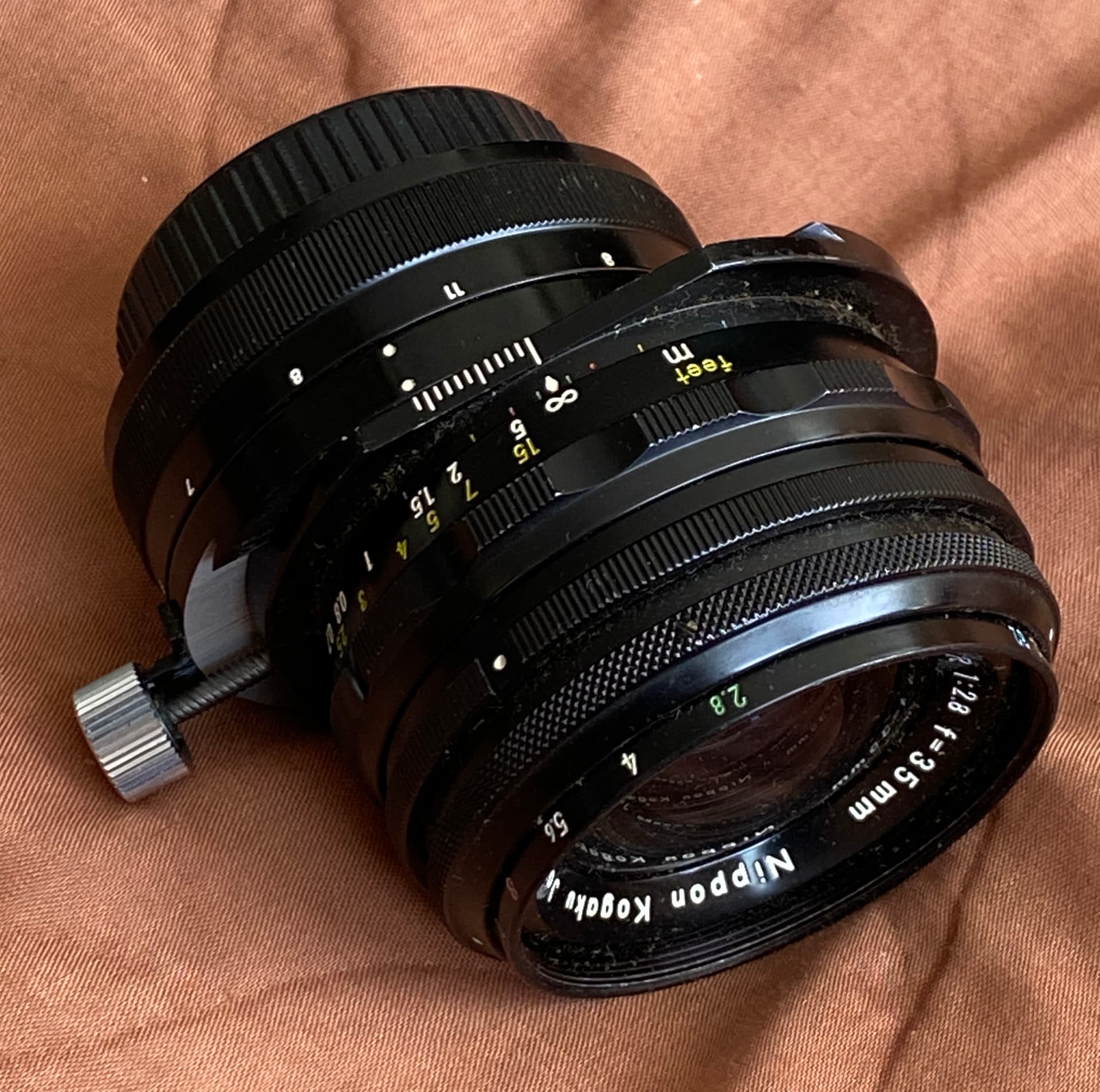
My lens can move like this, and the (much) more expensive lenses can also tilt. Joanna, I never learned why I might want to tilt the lens, and never tried it on my old 4x5 camera. I’ll read your link later this evening.
To me, it’s the opposite - I guess I can correct almost anything in post processing, but I feel it’s best to get it as good as possible in the camera first.
I guess I disagree with you. Most of the time, I don’t have a choice, but think I should FIRST get things as right in the camera as possible, and then do what’s left in post. For me, what’s being lazy is shooting a photo normally, and thinking I can fix it in post. Correcting the perspective in post (or many other things) is a poor substitute for correcting it in the camera… but I rarely have my shift-lens with me, so I don’t usually have this choice. When I was more serious, years ago, this lens was invaluable.
I agree. But to me, PhotoLab is to be used to fine tun an image, not to correct mistakes (although it does that just fine too!!! There is no substitute for getting it right in the camera, and also thinking it doesn’t matter, since PhotoLab can fix it. Just my feelings - nobody has to agree. Being lazy (to me) is letting PhotoLab fix things I should have done better when I took the photo.
With your expertise, I’m amazed you don’t agree with me - or maybe you don’t have the equipment do do this. Joanna does, but I can’t imagine her lugging here view camera and kit with her - but I’m pretty sure Ansel Adams did everything he could to get a perfect negative. If I was really serious, I’d use my tilt-lens more often, or buy a better one.
My lens:
To get a focus plane not parallel to the sensor/film plane.
George
Good to see someone has republished Harold Merklinger’s excellent articles (with animations) https://lensnotes.com/articles/principles-of-view-camera-focus/
New to me - not sure if I ever learned this!
I really need to travel to France and sign up for your course.
I will try to sort this later today or tomorrow - all I knew was the basics.
I bookmarked your link, as it’s going to take a long time for me to digest, if I can even do it at all.
I didn’t even know this was possible.
Can those adjustable lenses for Nikon do this? Would you use one on your D850 if you had one?
The problem with a small camera is a matter of scale.
Just like an APS-C sensor is ⅔ the size of a full frame sensor, we reckon on a 5" x 4" sheet of film is 3.6 times the size.
This means that something like a 1mm tilt at 2.5" from the optical axis becomes “tiny” and difficult to achieve when using the tiny screen on the back of an SLR when compared to adjusting it on the ground glass screen of a view camera.
Personally, I would never bother with a tilt-shift lens on an SLR, preferring to use hyperfocal distance to get everything in focus.
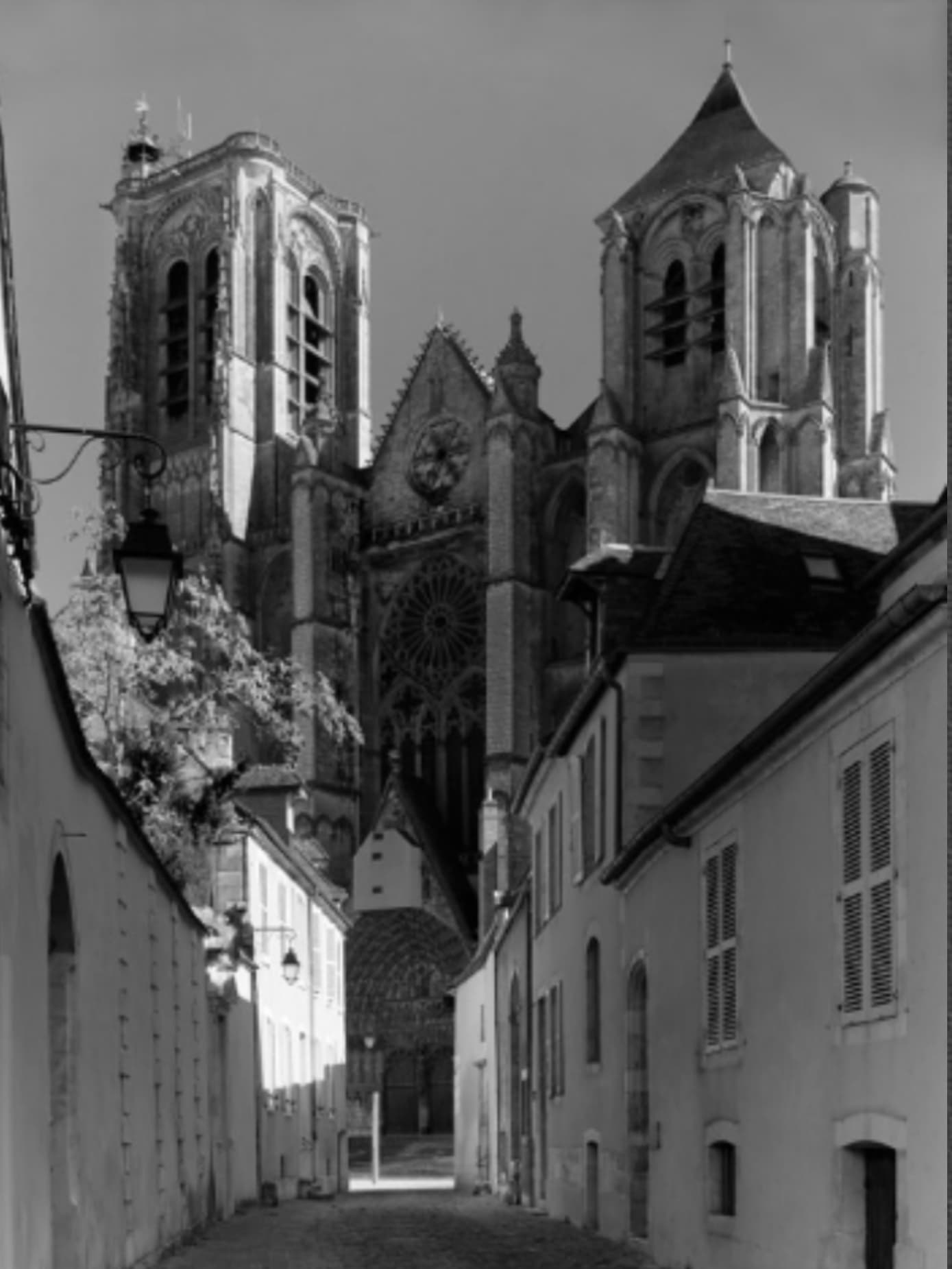
Take this image that Helen made of Bourges cathedral…
She had to use front swing to place the plane of sharp focus from the lamp on the left wall to the left side of the right tower, so that, when she stopped down, the “wedge” of acceptably sharp focus opened out to include everything. Not forgetting to raise the front standard to get the top of the towers in whilst keeping the verticals, well, vertical 
The truth is you don’t need to try and learn that article, just be shown how to make the adjustments on a camera. It’s one of those things that are easier shown than told.
I tried to enlarge the image to full size on the forum, but it just gets blurry. Am I doing something wrong? I wanted to see “inside” the cathedral, and and those details are there, but this much be a small size copy. Fascinating image!
Is that cathedral near your home? If you both went back there at a different time of day, might you have better lighting? I don’t know of any scenes like this in Miami Beach.
If this is a 4x5 image, I think it is cropped?
… says the great expert. Sorry, you are playing (and talking) around instead of focusing … just hopeless.
Photography for most of us is a hobby, something we do for pleasure.
I’m interested in many things. Yeah, as you see it, I’m “hopeless”.
Why do you take photos?
Why do any of us?
I do it because I enjoy it.
No. It is a small thumbnail from our website. The original scan of the neg is a couple of hundred megabytes but we don’t publish anything bigger.
No, it’s nearly eight hours away by road.
But the lighting was/is ideal. Otherwise we wouldn’t have made the image.
No, its full frame, SOOC apart from trimming the edges of the neg.
We try to compose and frame in the camera where possible. If we need a tighter framing we walk forwards, if we need a wider framing we walk backwards.
OK, trimming explains it. The image size here is 1389 x 1851, and it didn’t look to me like a 4x5 image.
I was wondering if my eyes were playing tricks on me. 
Lovely image!! Nicely done!
This doesn’t look to a point to solve with swinging the lens. More something for just the dof.
The shift I can understand.
George
Have you actually used a field camera?
Joanna - I was reading this in bed last night:
Using a Large Format Camera to Make Digital Photographs
You might find it to be interesting to read, but not very practical.
You might be able to buy an adapter board from B&H so you can mount your D850 on your LF cam.
I enjoy reading about things like this, which I never realized even existed.
(I have no intention of doing any of this, for many, many reasons.)
I even found my lens, bought for my F4, available at B&H, with a person asking if it could work with a D850 (yes, but lens data would need to be entered manually).
Specs for my shift lens
For most of my first year photo class, I was expected to take class photos on a 4x5 view camera. Back then, I owned a “Graflex”. It looked like this and took 4x5 images:
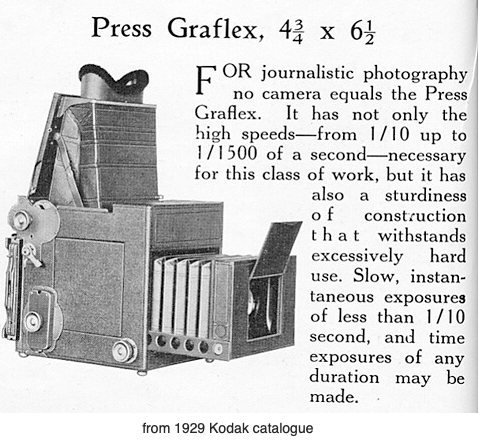
After that class I sold it.
OK, enough of this - I’ll put these thoughts away, and return to 2023 and PhotoLab.
Wolfgang, sorry for the diversion.
…added later, a good explanation for doing this:
https://www.nikonusa.com/en/learn-and-explore/a/tips-and-techniques/the-pc-lens-advantage-what-you-see-is-what-youll-get.html
Seemed like a good idea at the time it came out but, in fact, it is far from practical. As I said in a previous post, it’s all about scale.
The shortest lens I use on my Ebony is 72mm, which is the equivalent of 20mm on a full frame DSLR camera.
Now, add the distance from the mounting adapter to the sensor plane and, all of a sudden, I can no longer get the same wide angle equivalence since I have to add a flange distance of 46.5mm, giving me a total effective focal length of 66.5mm - hardly wide angle.
It might have looked like that but that isn’t a view camera, it is a reflex press camera - and it doesn’t take 4" x 5" images without an adapting back because it is a half plate camera that takes 4¾" x 6½" film.
Except that is not much more than sales blurb for their PC lenses and you can do most everything with ordinary lenses and perspective correction in PL.