Denoising settings on high ISO any structrual preset a good idea or not?

I am rebuilding my knowledge and structures in DxOPL after a long time being too bussy on reallife things like renovating a bought house and al things life trows at you.

Any way i made some before for version plv7 One of those where “Tools” fitted in partial presets. fastlanes for quicksolving. and some are not suited for this version because of new algorithms in v8 and v10.

i know we have, had some deep testing done on the DeepPRIME XD/XD2 when it was launched. I did made some partial presets back then for my panasonic ISO values but i seem to lost them in the upgrade proces to v8.

For most of the time the default does fine and once in a wile having a high iso low exposure image which needs a manual correction i switch to XD/XD2 and use the loupe to fine tune. But now i have almost all images in the near end of ISO capability’s of my G80 (2500-3200iso) and also some what low on exposure.

i know the line isn’t lineair in value so 60 isn’t double of 30 in denoising. But i forgot which way it was: But after searching in my files:

The magic wand is not that magic as it only sets the slider to the (fixed) value we estimated to be the best, and that’s all. Your remark is correct, having value “40” remapped to let more noise as now will make the slider reacts “slower” before value 40, and faster after. As for value 100, in every case, we will let the result unchanged compared to now (100% denoising applied).

Very clear answer how this 40% is set by DxO. and why it’s for all three types the same.
40% of the detected noise by the denoising algoritm, the amount of detected noise is in fact different in the three types so that’s why the 40% has a “step up” in denoising from HQ, PRIME and PRIME+ wile the slider seems the same.

ive more in a word file (from the time that DXOstaff was stil present on dxoforum) but in general each step up is more agressive in denoising. and still KEEP more details. The XD is actively recontructing details which where lost in capture by noise by AI Deeplearning. (testing shows that)

So getting back to making a four partial presest.:slight_smile: I am thinking of this list.

1 base iso(200) til say 800iso no need to use Prime but wile it is making the details come out more due the denoise wile preserving detail i let “DeepPRIME on 40” as always on in my personal workspace.

2 1000-2000 ISO ramp up DeepPRIME to say 50-60?

3 2000-3200 iso ramp up DeepPRIME to say 60-80?

4 above camera’s natural dropping point 3200iso on my g80 and 6400iso on my G9 switch to DeepPRIME XD/XD2’s and go manual with the loupe. ( like 50-90)

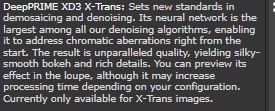
DeepPRIME XD3 X-trans… i remember that one was overshooting sharpening but is it improved sinds the first launch? (Edit this is for fuij Xtrans and don’t work for panasonic/sony sensor .)

So by selecting after importing the rawfiles and set first preset by default by isovalue you can overlay partial preset based on isovalue and expecting degradation by noise.

BUT iso isn’t exposure so a low (-1 or- 2.5 stops) exposed 200iso is worse then a proper exposed 800 or 1000iso so selection by iso value isn’t enough. In general on “autoexposuremodes” a camera exposes just 1 a 2 stops below saturation to get headroom for brightspots in the image (that’s for autoprocessing OOC-Jpegs). And if you have auto dynamicrange active you even get maximal -1stop when a particulair bright section is captured in the lens which infact bringdown the exposure for the rawfile even further down if needed.

if i got this sorted out i am going for the HDR-partial presets on color and lumination.

(i believe i have stil those partial FP presets which @mwsilvers made( if i remember correctly)

If anyone likes to join this road feel free to participate.

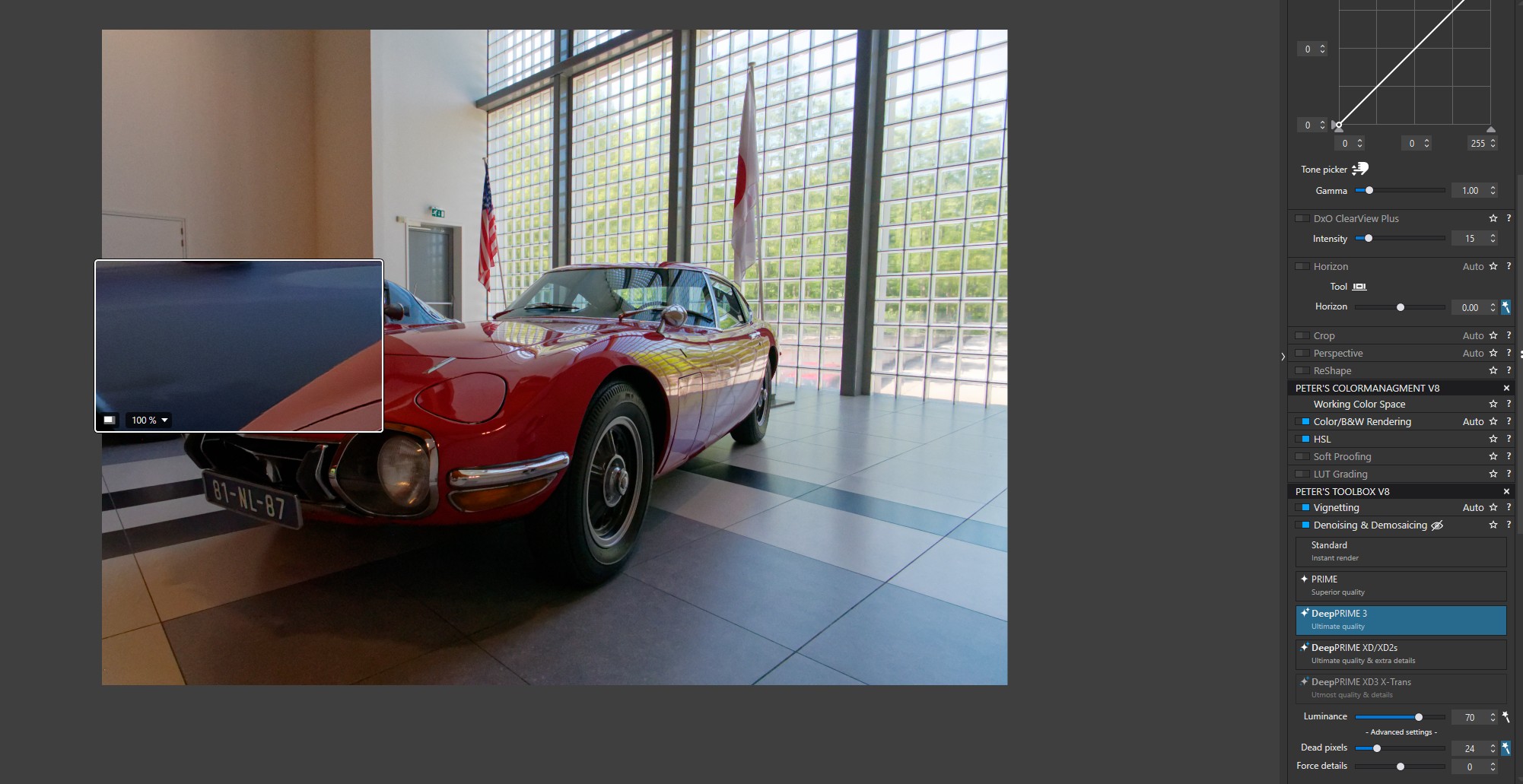
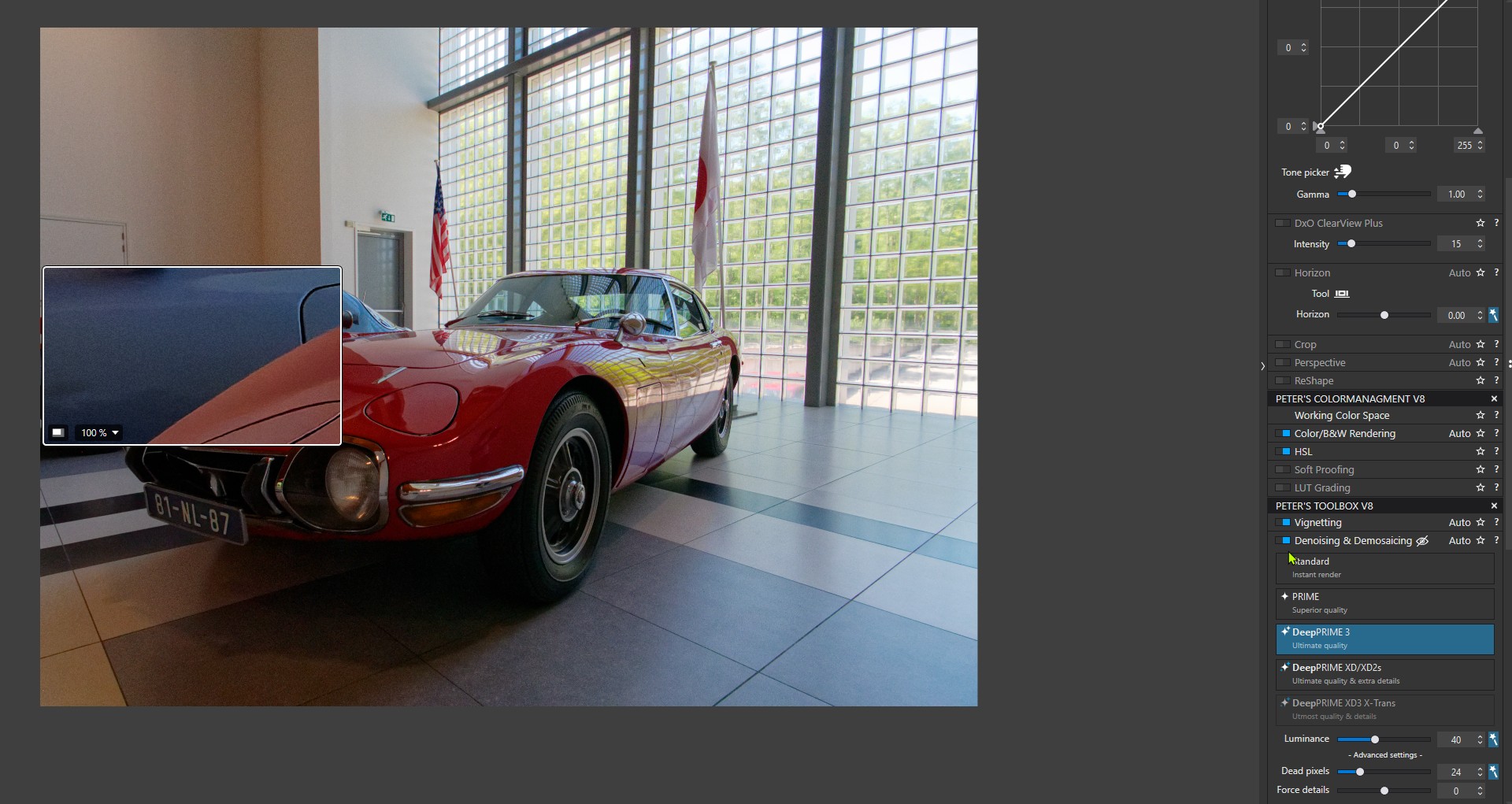
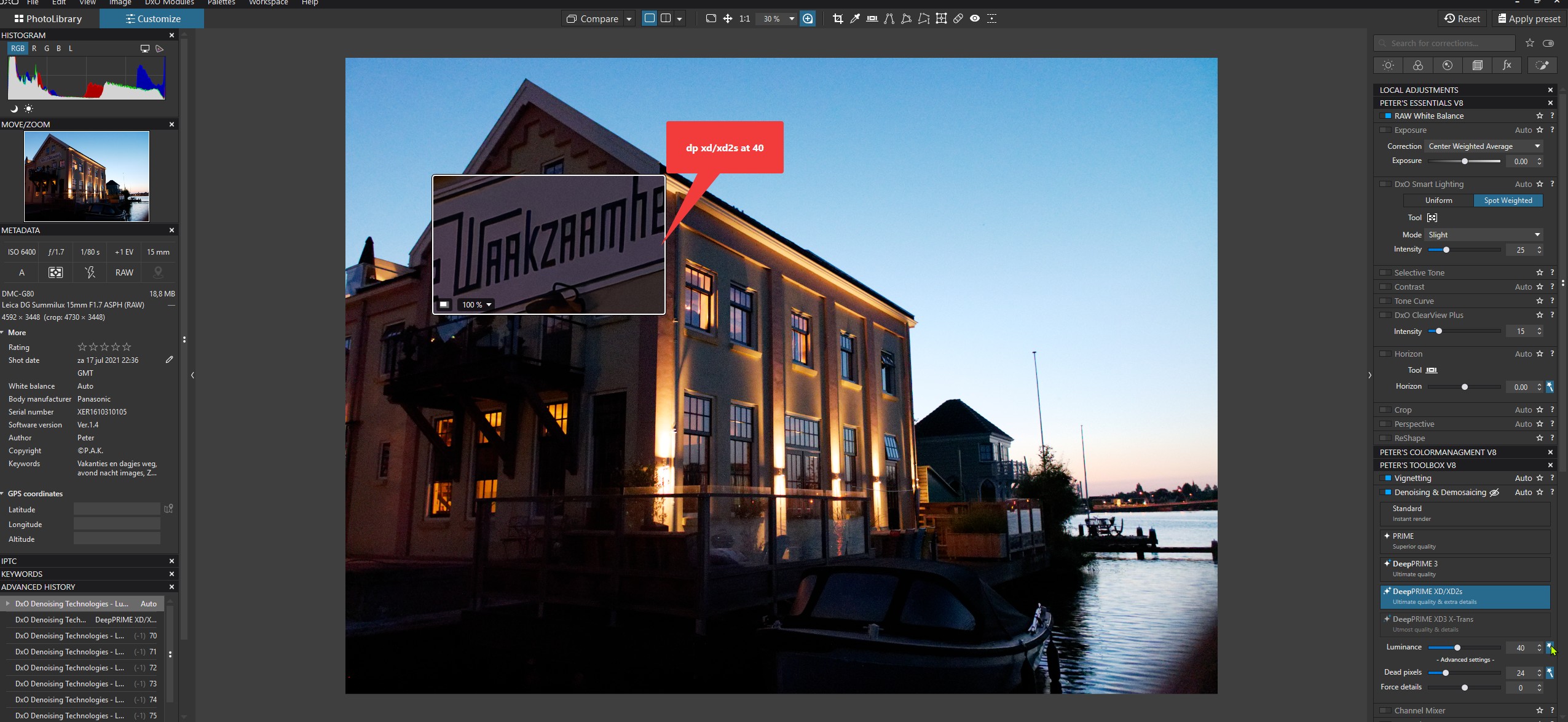
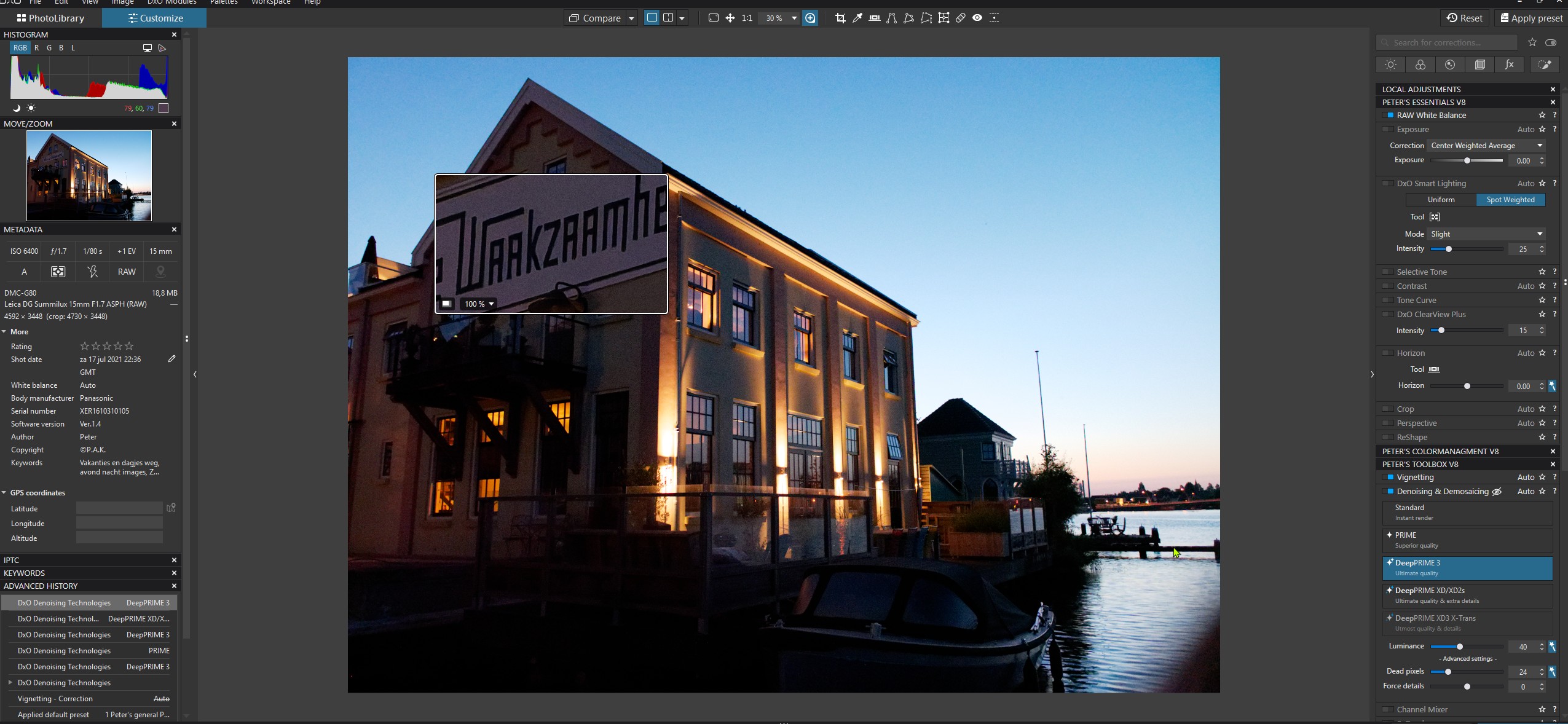
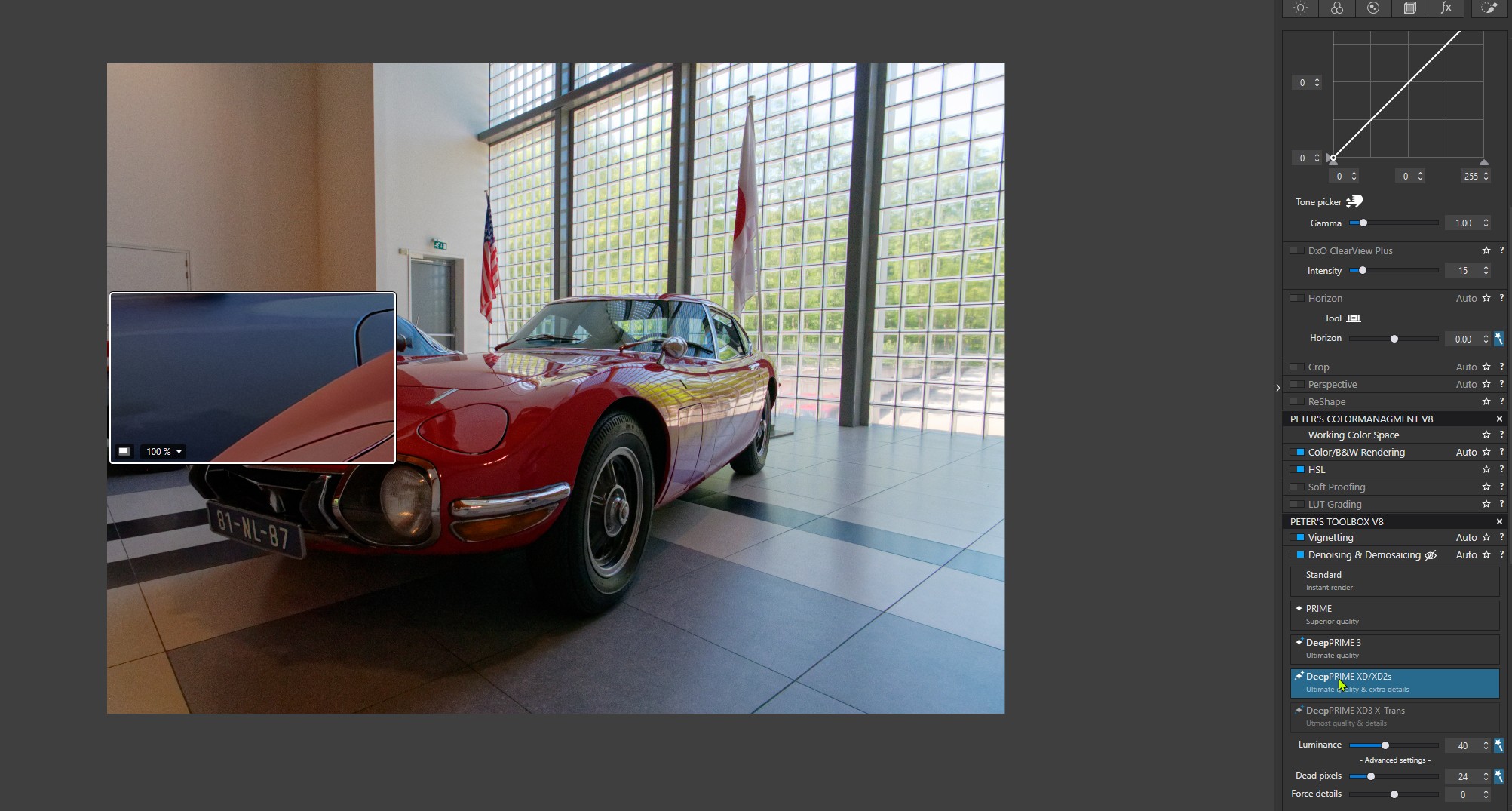
first screenshots:
Hi Peter,

That was quite some time ago. Thanks for remembering.

Mark

I find the vast majority of shots are fine with default XD3 (25). Whether they are noisy or not.

Only occasionally will I drop back to regular DeepPRIME for a ‘lighter touch’ if I think it is warranted. Slightly more often I will push XD3 higher when needed for very noisy shots, but never as high as 80. I think I am more likely to discard the shot (at least don’t edit and share) if 60 is not enough.

I really only have 2 presets I use as a base for edits. One for aviation and one for the rest. Both set XD3 at 25.

My equipment until recently being Pentax DSLR and more recently Canon mirrorless.

I can’t remember who said it, but someone here recommended that the default settings (25? 40?) were overkill for most normal applications by a huge margin.

I gave their advice a go, and have been getting on well with DeepPrime 3 at just 2 or 4 for daytime shots.

Yesterday I was working on a high ISO shot (6400) and switched to XD3 at 15 and it did a good job.

It’s anecdotal but I feel like any more would be overkill. I can’t imagine going above e.g. “30” in DP3 or XD3.

I’m still on PL9, and will be at least until I see what’s in PL11. I use XD3 on ‘Auto’, which always seems to default to ‘40’. Maybe it is overkill but to my eyes everything looks OK. Perhaps because my lenses are not Canon ‘L Series’.

EDITED TO ADD: I use XD3 on ‘Auto’ for all of my images

i knew that my G80 wasn’t working on bayer array so DeepPRIME XD3 is grayed out and not selective. because they removed the Anti-Aliasingfilter for better light reception i believe. my G9 does have a CFA ( color Filter Array) 50% green 25% red 25% blue grid so on that XD3 does work.

My G80 has a signal to noise ratio drop of at 3200iso from 6400ISO is stretching its limits.

So basicly testing shows for the G80: til 3200 iso and properly exposed Deepprime3 is good enough aldoh 40 is a bit low for smooth plains. i have to increase to 50-55-60 to get it flat.(noisefree) which creats a form of “plastic fantastic look” So in practise i think beond 2500 iso Switching to XD/XD2s on 40 default is getting better result. or drag the slider up to 50-60 max on deepprime3 mode not more. ( flat out detial to much)

3200-6400 on 40 xd/xd2s is fine.

@Fineus in my notes DXOStaff told us that the PRIME and DeepPRIME algorithm adjusted the denoising strenght on the noise it found. so no or nearly no noise (thus signal to noise ratio is higher then 1) then it leave that area of pixels alone. it targets only the noisy parts.

For each supported camera body we have a model describing what the noise looks like depending on the ISO of the image. This model is a key element for any denoising algorithm, it allows in the case of deepPRIME and deepPRIME XD to make the right decision for each pixel of the image: based on this model, the network will either smooth the pixel with the neighbor pixels, if the pixel is more likely to be part of noise, or reconstruct the details otherwise. This model is calibrated for each camera body at DxO.

(Remember this was for DeepPRIME original.) now we are on type 3

for the first DeepPrime XD ( the one who can reconstruct details so to speak) And again we are no at generation 3 of this algorithm.

This calibration is precise enough for deepPRIME, but for the XD version we observed that this is not quite the case. Unfortunately, even if the noise model was perfectly calibrated, it would not be suitable for all the images since the noise model also varies according to parameters over which we have no control, for instance, the temperature tends to increase the noise level for shadow areas of the image.
This is why we prefer to give the user the choice to modify this model with this new “details” slider. When you modify this slider, the noise model will be altered and thus, what is considered as details by the network, wont be when moving the slider to negative values and conversely for positive values ​​of this slider. This is the reason why the network starts to hallucinate details, false textures when moving the slider to the right. The value “0” should therefore be preferred by default since this is the value that is calibrated but as you have noticed, depending on the image, it is sometimes better to modify this slider, either because this calibration is not quite precise, or because in some cases, the results simply seem better with another value. Typically, for a landscape, a positive value might allow the network to reconstruct some details, and it might be not that bad if we hallucinate false textures in that case, but on the other hand, for a portrait we generally prefer a value close to the one calibrated “0” or maybe a negative value.

So just let it on default 40 is the bij dxo calibrated level of removal of all kind of noise and not all just enough to make your image look clean. And as note i remember they, DxO technicians, where after the first test recalibrating the sliders strenght increase per digit from 40-> 100 in order to have more control over the denoisingstrenght. it “hallucinated” too much apperrantly :wink: .

So recap:

  • “40” is dxolab callibrated automodes for each modes and every step up on HQ=> Prime=>DeepPRIME3=>DeepPRIME XD/XD@s is not lineair in strenght. aldoh you could say 40+40 = 80 so DeepPRIME3 on level 80 is equal on level 40 DeepPRIME XD/XD2s
  • its best to keep "default denoise on DeepPRIME3 40 so it doesn’t add any non excisting details on your image and switch over to the XD/XD2s and higher when details are flattend/smutched by denoisinglevels so the algorithm can “revive, repair and hallucinate” details which where lost in the proces of demosiacing and denoising the rawfile to a rgb picture.

So thus i set base iso til say 1000iso/1600iso to Normal DeepPRIME3, and switch over to default 40 XD/XD2s above that for now. ( G80 will need some manual care from 2000-3200 and really carefull care from 6400iso and above ( as case better a bad image then no image at all… :slight_smile: )

My G9 will have the same presets but from 3200-6400 it gets default 40 DeepPRIME XD# X-trans. and 6400-xxxxx is manual tuning.

That’s not because of no antialiasing filter. Some bayer sensors do not have one and Deepprime XD3 works (PL10). D850 sensor do not have AAfilter but Deepprime XD3 works.

i think from v8 the naming is changed and the X-trans in v8.22 was only active for Fuij like sensors.

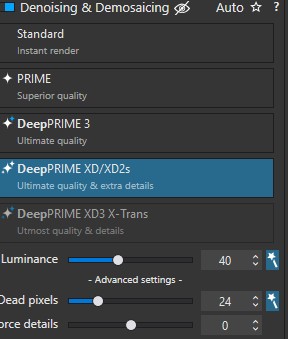
the V8.22 denoising tablet

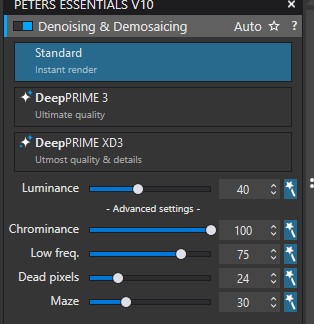
The V10 denosing tablet

“option PRIME” is discarded XD/XD2s is become the "normal XD3 with out the refference of X-trans.

( testing G9 on X-trans was also blank/ noth working. ( Now i remember: when v8 came out they where finaly supporting the X-transsensor rawfiles where every one was asking for and there XD3 was mainly build for that kind of sensor wile they “strugled to get XD3 better then XD2” with the bayer array XD3 and prosponed that one and used a recalibrated XD2 ( hence the “S”) (i can’t remember the details in technical sense why it was and DxOStaff was redraw from the forum backthen due some people where using the forum to flame at them i think.)

Anyway dxo-v8 is a different engine then dxo-v10 is and dxo-v9 is a earlier version of the dxo-v10 engine.