When one looks at the scene with only one’s eyes, THAT is what is “real”, un-processed, un-modified, un-everything. With a digital screen, you are seeing a processed image. With night-vision goggles, everything is processed, which in effect is what the sensor in a mirrorless camera does when you start to make those adjustments. Is it potentially useful? Sure.
I would like to have all these “mirrorless” features, but only in addition to my old OVF where my eyes do the work. I have two devices that do this now, the Visoflex for my Leica, and my Fuji X100 cameras. I think the Fuji X-Pro 3 also does this. This way I have the best of both worlds.
I did some reading on the latest Fuji X-Pro 3, and I suspect if I did want to have these digital features, that is the camera I ought to buy, as I get all the digital stuff in addition to an optical viewfinder. With the flip of a switch, I can select either. If I ever start to get serious about the Nikon Z cameras, I think I will buy this Fuji instead. It doesn’t have to be a choice of OVF or EVF. Why not have both… and I’ve got to be real careful here, or I’ll be talking myself into buying the Fuji.
Absolutely not! If that were the case, we wouldn’t need software to de-mosaïc RAW files on a computer.
RAW data from the sensor is simply a stream of bytes from a bunch of photo sites that have to be interpreted and arranged into a visible image. The Nikon Z9 EVF is an LCD screen, which only has 3.69 million dots. How can it ever hope to display all of the 45Mpx from the sensor without some serious processing to decide which of the 8% of those pixels to display?
They reckon that the human eye has the equivalent of 576Mpx - are you really trying to convince me that a 3.6Mpx EVF, showing 8% of the available RAW pixels is going to show me more detail than my eye?
1 Like
Stenis
(Sten-Åke Sändh (Sony, Win 11, PL 6, CO 16, PM Plus 6, XnView))
83
@Joanna
You are forgetting that a lot of people are getting almost exactly what they see in advance in the EVF before they take the picture. All the people that uses the JPEG:s coming straight out of the camera.
I´m not talking about lousy Live View:s on DSLR or mirrorless displays. I´m talking about EVF:s today. There was a time - when I used Sonys first SLT-camera A55 with fixed mirror (for two weeks before I gave it back because of focusing problems Sony couldn´t fix) - that camera had a really noisy EVF in low light but still it was better to focus in the dark than my A580 DSLR with exactly the same sensor and of exactly the same tech generation.
With the A1 and A7 IV you will see surprisingly little noise even under really dark circumstanses. I just tested in my dark hall with my A7 IV on Auto ISO 12800 and F22. When I press trigger half way most of the noise disappears. Your DSLR would be almost black in the same situation.
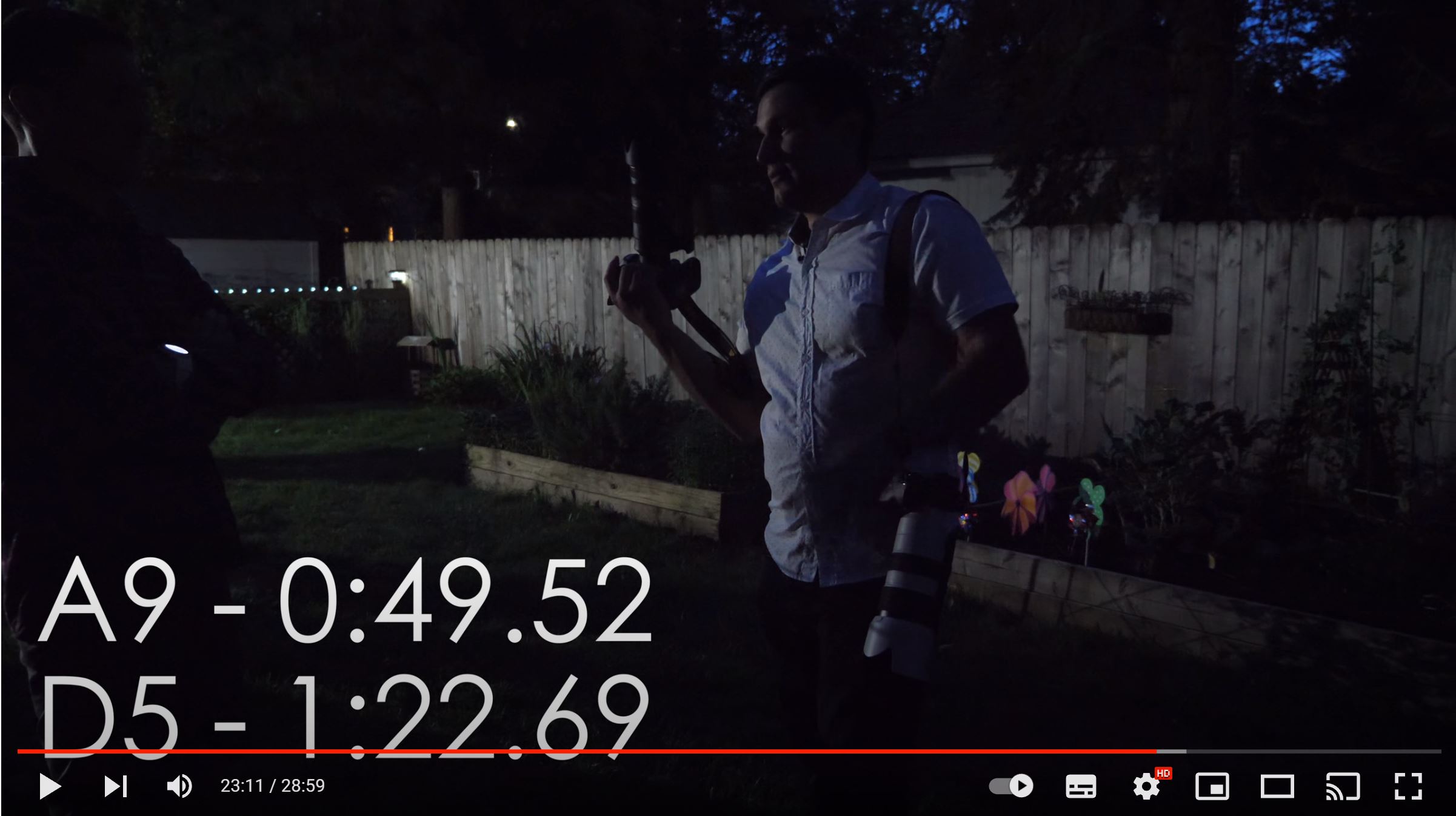
Please lock at this a little bit aged shoot out between a Nikon D5 and Sony A9. Since then the darkness abilities of A1, A7 s III and AIV has come miles.
The task in the test was to take 20 images of two different motifs in the dark and switch between them between the shots. The guy handling the D5 was an experienced Nikon photographer and the other was not as experienced with the then brand new A9.
As you can se below:
A9 finished on 49,92 seconds
D5 needed 1 minute 22,69 seconds
So D5 needed 66% longer time than A9 mainly because of AF-locking problems
One thing that may explain that is that with the EVF the photographer can help the AF-system since he can se contrasty parts of the motif and use them to get the system to lock, which the DSLR-photographer can´t, since he almost cant se anything else than darkness. It almost “sweet dreams and good night” in the OVF.
Clearest possible view of black is what you get there sometimes with your OVF isn´t it?
The thing is that you often can´t se with your naked eye through the OVF but with the EVF you can. The thing is that your camere will not capture what you see but what the sensor see after your settings has kicked in. The last thing is the important thing that differs in this case
In my A7 IV camera I can chose to use “Creative look”, maybe 10-15 I can chose between and even tweek between say 10 different parameters. When I select the CL of BW guess what happens in my EVF? It changes to BW. If I select a “Sepia” CL both my EVF and my back display will get a sepia tone. Does your OVF do the same even during a day with bright sun and not just at the night?
@Joanna and @mikemyers, do we need more examples to get the fact resistance to vanish?
See my response to @sloweddie. The Nikon Z9 EVF is only a 3.6Mpx screen - a JPEG produced by the camera has the same resolution as the RAW file, in the case of the Z9, that is 45Mpx. Even the Sony A1 only has a 9.4Mpx EVF compared with its 49Mpx sensor. I don’t care how nice the image in the EVF might look, it is still only giving me 11% of the sensor data and 1.5% of what my eye can see.
Stenis
(Sten-Åke Sändh (Sony, Win 11, PL 6, CO 16, PM Plus 6, XnView))
87
Yes taking pictures in the dark Wolfgang, no kidding. Sometimes I get really surprised what these new cameras can do with a little help of Deep Prime
No. We need to realise that some of us simply don’t want to have our view of a subject translated into a small screen that has less resolution than the sensor on my old Nikon D200.
You like EVF. I don’t and you are never going to convince me otherwise.
By the way, have you seen the screen on my mirrorless camera?
Stenis
(Sten-Åke Sändh (Sony, Win 11, PL 6, CO 16, PM Plus 6, XnView))
89
@Joanna
Are you really bothered working on a 4K screen? With your stance in this matter some one has to come up with a far better user interface for computers than the ones we have got today.
Are you “saying” that in this moment photographers at the Olympics using A1-, Z9- or R3-cameras shouldn´t be able to do their job because of the resolution on displays or EVF:s and what they see or don´t see in these EVF-windows? … or are all the photographers there still using DSLR:s??
I’m not saying anything of the sort about any other photographers.
What I am saying is that I have absolutely no desire to use a mirrorless camera, apart from my beloved Ebony SV45Te. For the digital work that I do, my Nikon D850 has served and will serve me perfectly well.
Stenis
(Sten-Åke Sändh (Sony, Win 11, PL 6, CO 16, PM Plus 6, XnView))
91
@Joanna
I can´t even dream of convincing you to use anything else than optical viewfinders but soon there will be no manufacturers putting in R&D in that at all. The market will eventually force you, or you have to finish buying anything new but old second hand gear, since all development of DSLR:s is halted now. The DLSR-concept is stone dead and there is just some month since even Canon announced that. That concept had finally come to the end of the road because of it´s technical limitations.
Some of the most useless viewfinders I have seen in cameras was for the record the ones in many thunnel view like optical viewfinders of KonicaMinolta and Sony APS-C DSLR:s. FF Sony DSLR:s were better but they were both hopeless for manual focusing as were my analog bodies from the seventies since their focusing aids like microprisms etc. where of no use when it got dark. The DSLR:s didn´t even have that.
I used that shit and swore over 30 years. Even optical viewfinders offers just a compromised view of the motifs and they totally lack the focusing aids you can get support of that exists in many ways in EVF-equiped cameras both for stills and video. Manual focus has far better support too in mirrorless cameras than in old DSLR:s.
There is a whole lot of things an EVF can do to support the users today that an OVF never will be able to. The OVF still have one advantage though like it`s always on and ready. No start up time but even that has greatly improved the last years so the new generation mirrorless are almost instant now when starting them up.
Of course, use whatever you believe will give you the best results. You love your D850, and for good reason. it’s a terrific camera and is perhaps the best overall camera of its type currently available.
With regard to your statement above which suggests you will never be convinced that an EVF might be superior or more useful than a OVF, I caution you to be careful when using the word “never”. The use of such absolutes have a tendency to eventually come back to haunt us. EVF’s have improved dramatically over the last several years and will likely continue to significantly improve as time goes on. At some point you may find there are compelling reasons for you to use one. I have cameras with both types of viewfinders and appreciate the advantages each one gives me.
Mark
1 Like
Stenis
(Sten-Åke Sändh (Sony, Win 11, PL 6, CO 16, PM Plus 6, XnView))
93
We definitely agree on that the EVF and display doesn´t display a RAW but I have never understood the view that an unprocessed RAW isn´t a picture. I don´t understand either that a display or an EVF should need to have 60 MP because the captured image happen to be of that quality.
You also write that 3,7 million dots just displays 8% of your RAW-file example - but is that a problem when using the camera?? 1080i or 1080p HD with 1920 on the long side was all you had in the highest HD quality in TV-sets. That´s just around 2 Megapixels. My point is what is in the spectators eye and the distance we are watching from.
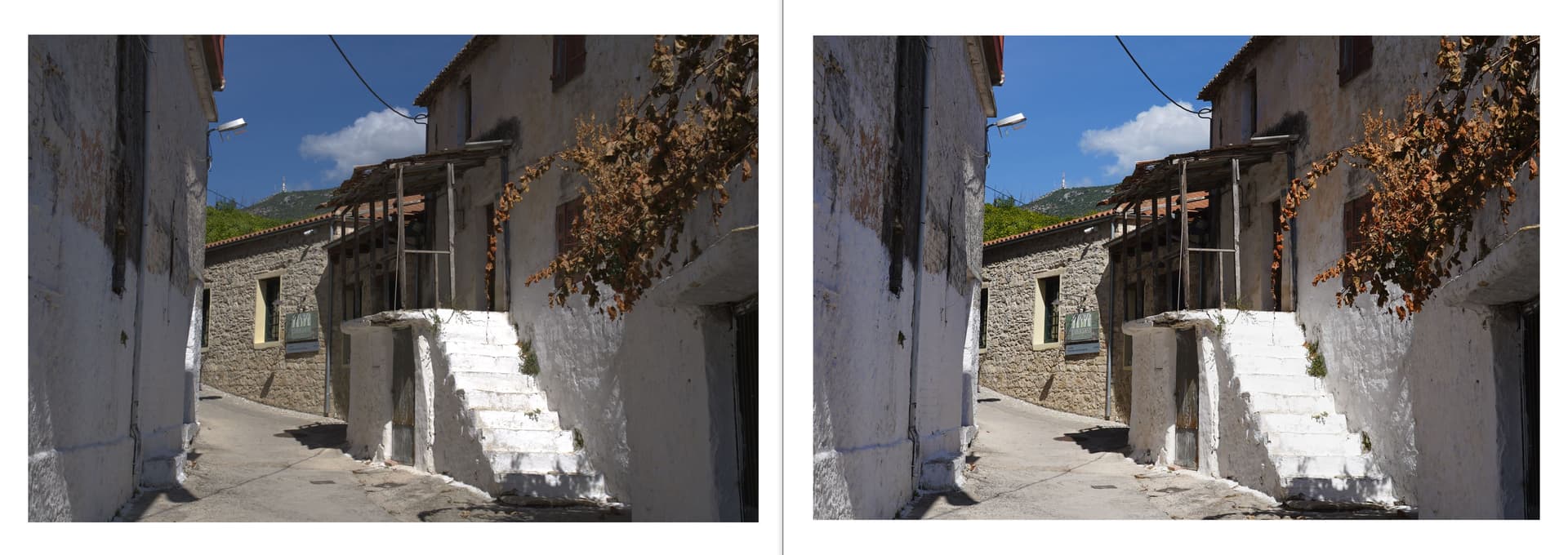
Below is two images, a raw to the left and a processed JPEG to the right. I can´t say I would have any problem with any of them when composing an image to capture. Have you??
Don´t you think the left image is an image too, but just of a slightly different quality?? A little dull and uncontrasty perhaps but still a usable quality for some tasks - the very same we have to face in a RAW-converter without any standard profile automatically applied - just like some like to see it when they start the work with it.
A file is a file is a file, be it raw, jpeg, tiff, dng etc. It’s just a box full of 0s and 1s and is an image both yes and no. No in the sense, that I cannot hang it on a wall and yes, in that it is a digitized image (Abbild) of what was in front of the lens.
I bought my EbonySV45Te, second-hand, almost twenty years ago and, guess what? It still works as well today as it did when I bought it. No batteries, interchangeable lenses and capable of producing prints up to 5ft x 4ft with no problem at all.
It has always been my understand that a raw file is NOT an image - it’s just “data”. The jpg format was created to be an image, but it’s just part of the “image” that a raw file can be developed to show. For composing, all we need to see is what’s there, so we can move and point the camera to get the desired view.
Unfortunately, it took me many years to fully understand this. I used to think the jpg file was everything I needed, until I realized that it severely limited my ability to adjust the image in my computer. This has little to do with ‘composition’, but I often change my mind on composition after taking the picture.
Torture? I’ve had no problems in using any of my cameras in very low light, and capturing what I was after. Besides, chances are that if the scene I’m photographing is very dark, I will want my finished photo to look like what I saw.
This coming weekend I should have an opportunity to check out one of the new mirrorless Nikons. Based on my previous experience with digital displays, I expect it to be useable, but not desirable. When I look through the viewfinder window on my Leica, or look through the (much larger) viewfinder on my D750, I see things just as well as I do in “real life”, and in the case of the D750.
My 60 inch high-tech TV, with a good signal source, never looks as good as looking out my window. Even with broadcast TV, of the highest quality, ditto. For digital video sources, again, ditto. The closest any of my devices come to looking “real” is my 1954 LEICA M3, with a huge optical viewfinder, and a small rangefinder window in the middle. I look at that with my right eye, while my left eye is seeing the world normally. My brain blends all of it into one image. Because the viewfinder is offset from the lens, I’m not seeing the exact image that will be captured, but with an SLR or dSLR, I do see the correct view.
Copied from one of the internet comparison pages, two very simple comparisons:
OVF: When you look through an optical viewfinder, you’re looking through the lens. You’re seeing what the lens sees. This is what you find on all DSLR cameras.
EVF: Instead, EVFs show you what the camera sensor sees–because it’s a little screen inside your camera. Which means you don’t get a simple, straightforward view of the scene. You’re looking at the scene once it’s been processed by the camera–so you essentially see it already exposed.
I do have a camera that does these things (my Fuji) but I have never wanted to do so. What I want to do is capture an excellent view of what I’m looking at, with zero enhancement in any way. All the fancy features that do this stuff in my Nikon are turned off. I try to get as good as possible capture of what I’m seeing, and all this other “stuff” I do later, in my computer. My goal has always been to capture what I see with my eyes.
Bottom line, no, most of my cameras don’t do that stuff, but I have no idea why I would want them to do so? I’m in no way saying you are “wrong”, but I don’t want all that “stuff”.
As to the argument that DSLR cameras will disappear, that was said about RANGEFINDER cameras as well, but Leica is having trouble keeping up with the demand for their new M11 camera. Some people think that cameras themselves will go extinct, with people using mobile phones, which come with software to do the unthinkable just a few years back.
Stenis
(Sten-Åke Sändh (Sony, Win 11, PL 6, CO 16, PM Plus 6, XnView))
98
Johanna it sounds like the analog club in Midsomer:
“No microchips, no batteries and no goddamn pixels!”
Of course you dont´t want a “measly 50Mpx image from one of those new-fangled digital mirrorless doodads?”
Of course. Your D850 is one of the best cameras ever made, and there’s no reason to replace it. (But you might be surprised at the minimal functional difference between a modern mirrorless EVF and an OVF in routine use. As @mwsilvers alludes, each has advantages.)
Stenis
(Sten-Åke Sändh (Sony, Win 11, PL 6, CO 16, PM Plus 6, XnView))
100
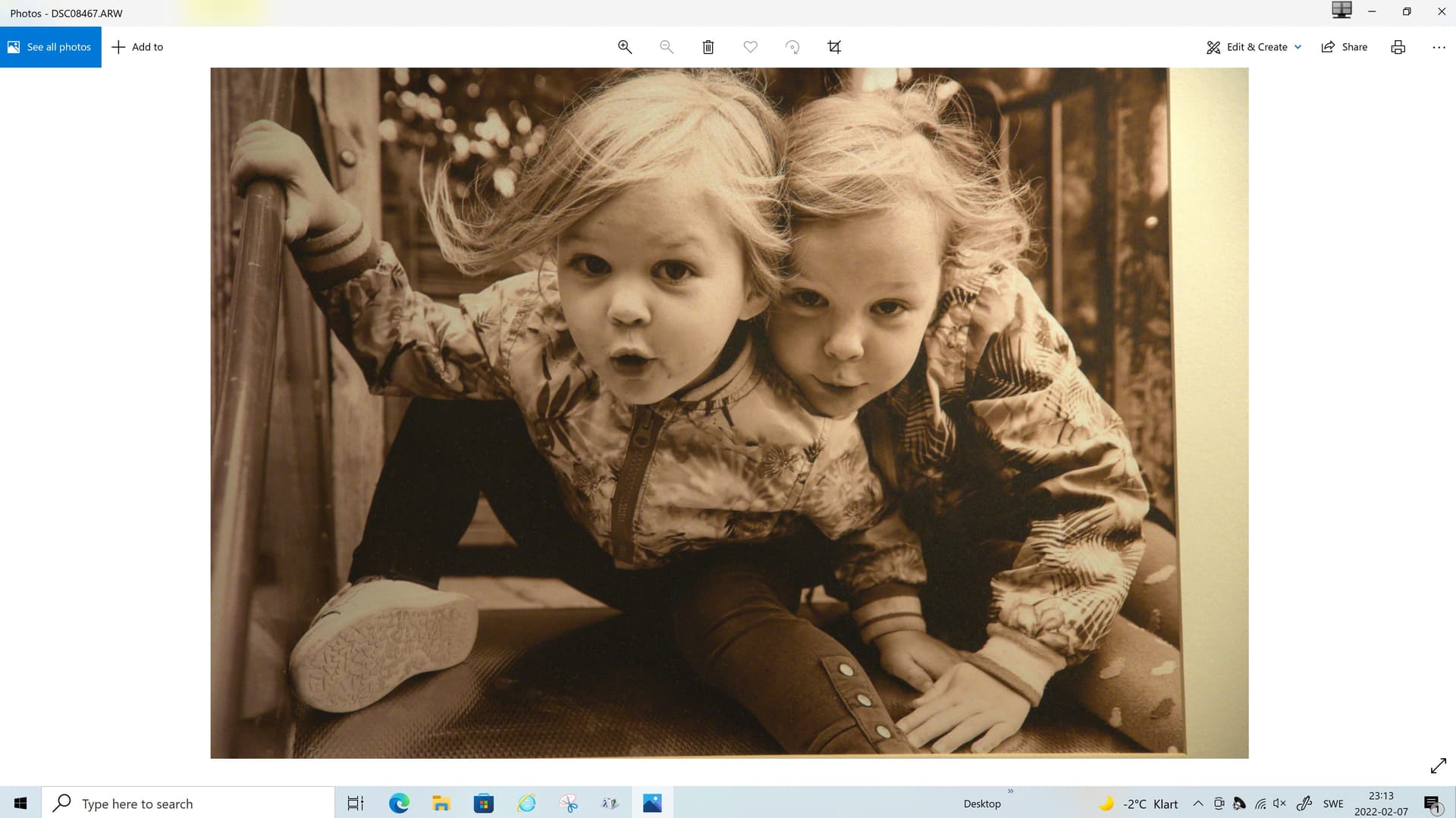
No it´s not two JPEG:s to be correct. It´s one made with the Snipping tool of a screen with one RAW and one JPEG (a derive from the same RAW) opened in the Windows Photo Viewer Win 10.
A less confusing example:
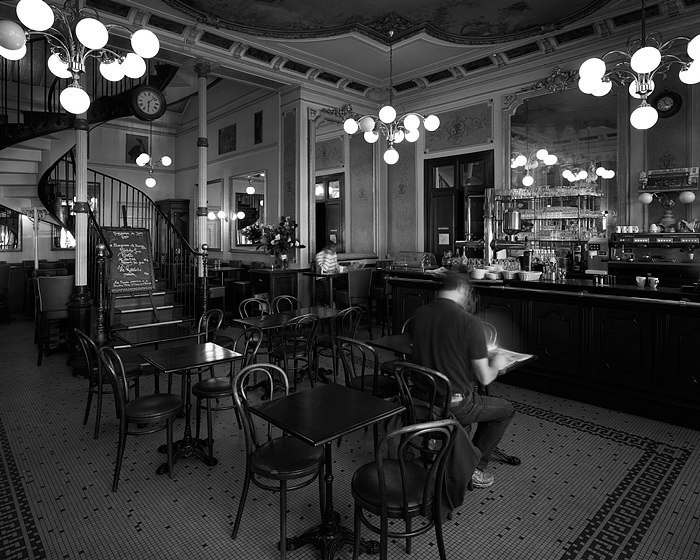
If I was showing this image for anyone I met in the street anywhere in the world, do you think they would answer me “no that is not picture” if I showed them the unprocessed virgin RAW below and asked them it it was a picture?
At least I can definitely see it, can´t you"? Isn´t it just that we of some reason has been told a virgin unpolished RAW isn´t a picture? I´m sure Windows 10:s Photo Viewer isn´t the only viewer today able to open and display RAW-files. It seems like the definition of RAW you are using is becoming a little dated. It´s definitely problematic to say the least, even if a lot of people still use it.

 - YouTube